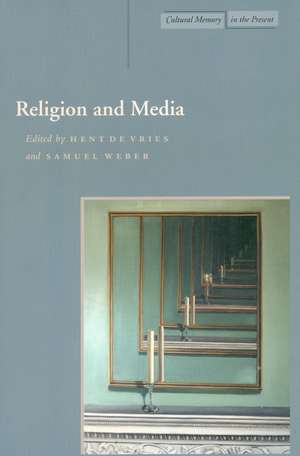
Religion and Media: Cultural Memory in the Present
Editat de Hent de Vries, Samuel Weberen Limba Engleză Paperback – sep 2002
Adresat studenților și cercetătorilor din domeniile studiilor culturale, filosofiei și sociologiei religiei, Religion and Media reprezintă o resursă academică de o densitate teoretică remarcabilă. Putem afirma că acest volum colectiv, coordonat de Hent de Vries și Samuel Weber, nu este doar o culegere de eseuri, ci o investigație sistematică asupra modului în care noile tehnologii de comunicare au reconfigurat categoriile umane de interacțiune, simultan cu o prezență tot mai accentuată a sacrului în spațiul public global. Notăm cu interes structura tripartită a lucrării, care ghidează cititorul de la fundamentele istorice și teologice — cum ar fi interdicția biblică a imaginilor — până la analize contemporane asupra iconurilor care „gândesc” în viziunea lui Deleuze.
Ca și Rethinking Media, Religion, and Culture de Stewart M. Hoover, lucrarea explorează declinul instituțiilor religioase tradiționale în favoarea unor practici individualizate, dar se diferențiază printr-o metodologie mult mai ancorată în filosofia continentală și teoria critică. Dacă titlurile similare tind spre o abordare pur sociologică, volumul de față propune un dialog interdisciplinar între antropologie și gândire conceptuală pură. Hent de Vries continuă aici temele explorate în lucrări precum Violence, Identity, and Self-Determination, menținând aceeași rigoare în analizarea modului în care identitatea și violența simbolică se manifestă prin intermediul medierii tehnologice. Prezența unor studii de caz din zone geografice vaste, de la Indonezia la Venezuela, oferă o perspectivă empirică necesară, echilibrând secțiunile finale semnate de titani precum Adorno și Luhmann.
Din seria Cultural Memory in the Present
-
 Preț: 197.90 lei
 -
 Preț: 203.23 lei
 -
 Preț: 173.57 lei
 - 23%
 Preț: 776.60 lei
 -
 Preț: 194.38 lei
 -
 Preț: 270.62 lei
 -
 Preț: 156.33 lei
 -
 Preț: 215.78 lei
 - 19%
 Preț: 666.52 lei
 - 23%
 Preț: 749.24 lei
 -
 Preț: 201.43 lei
 -
 Preț: 207.49 lei
 -
 Preț: 156.69 lei
 -
 Preț: 161.65 lei
 -
 Preț: 177.83 lei
 -
 Preț: 201.69 lei
 -
 Preț: 237.77 lei
 - 19%
 Preț: 703.84 lei
 -
 Preț: 218.49 lei
 -
 Preț: 273.04 lei
 -
 Preț: 288.78 lei
 -
 Preț: 237.13 lei
 -
 Preț: 210.16 lei
 -
 Preț: 158.20 lei
 -
 Preț: 236.86 lei
 -
 Preț: 212.37 lei
 - 19%
 Preț: 607.95 lei
 -
 Preț: 244.32 lei
 -
 Preț: 194.76 lei
 -
 Preț: 152.77 lei
 -
 Preț: 175.91 lei
 -
 Preț: 234.80 lei
 -
 Preț: 202.13 lei
 -
 Preț: 534.64 lei
 -
 Preț: 201.69 lei
 -
 Preț: 171.73 lei
 -
 Preț: 200.85 lei
 -
 Preț: 201.64 lei
 - 19%
 Preț: 728.80 lei
 - 19%
 Preț: 577.54 lei
 - 23%
 Preț: 755.88 lei
 -
 Preț: 219.86 lei
 -
 Preț: 233.59 lei
 -
 Preț: 197.07 lei
 -
 Preț: 214.83 lei
 - 23%
 Preț: 748.96 lei
Preț: 286.38 lei
Carte disponibilă
Livrare economică 14-28 noiembrie
Specificații
ISBN-10: 0804734976
Pagini: 672
Dimensiuni: 152 x 229 x 38 mm
Greutate: 0.89 kg
Ediția:1
Editura: Stanford University Press
Colecția Stanford University Press
Seria Cultural Memory in the Present
V-ar putea interesa
-
 Aesthetics and the Incarnation in Early Medieval BritainTiffany Beechy-19%Preț: 475.91 lei587.55 lei
 -
 Benjamin's -abilitiesSamuel WeberPreț: 217.83 lei
 -
 Institution and Interpretation: Expanded EditionSamuel Weber-23%Preț: 781.06 lei1014.36 lei
 -
 The Legend of Freud: Expanded EditionSamuel WeberPreț: 200.44 lei
 -
 Theatricality as MediumSamuel WeberPreț: 367.08 lei
 -
 Targets of OpportunitySamuel WeberPreț: 221.68 lei
 -
 Drawing the Natural WorldTim PondPreț: 112.09 lei
 -
 -23%Preț: 846.80 lei1099.73 lei
 -
 An Exhibition History of Victorian LeedsRebecca Wade-27%Preț: 849.63 lei1163.87 lei
 -
 -27%Preț: 846.92 lei1160.16 lei
 -
 Preț: 356.30 lei
 -
 Symphonie in SchwarzAndreas DehmerPreț: 148.54 lei
 -
 Diskursanalysen 2: Institution UniversitätFriedrich A. KittlerPreț: 278.60 lei
 -
 -18%Preț: 955.83 lei1165.66 lei
De ce să citești această carte
Recomandăm această carte cititorilor care doresc să înțeleagă mecanismele profunde prin care media modelează experiența religioasă modernă. Este un volum esențial pentru cei care studiază intersecția dintre tehnologie și credință, oferind o perspectivă globală și contribuții de la cei mai influenți gânditori contemporani. Veți câștiga o viziune nuanțată asupra modului în care „întoarcerea la religie” este, de fapt, indisolubil legată de evoluția mijloacelor de comunicare în masă.
Despre autor
Hent de Vries este profesor de gândire europeană modernă la Johns Hopkins University și profesor de filosofie la Universitatea din Amsterdam. Expertiza sa vastă în filosofia religiei este reflectată în lucrări de referință precum „Philosophy and the Turn to Religion” și Minimal Theologies. În calitate de co-editor al prestigioasei serii Cultural Memory in the Present, De Vries s-a impus ca o voce autoritară în analiza relației dintre violență, etică și sacru, colaborând frecvent cu figuri centrale ale deconstrucției și teoriei critice pentru a explora condiția religiei în modernitatea târzie.
Descriere scurtă
The book's introductory section offers a prolegomenon to the multiple problems raised by an interdisciplinary approach to these multifaceted phenomena. The essays in the following part provide exemplary approaches to the historical and systematic background to the study of religion and media, ranging from the biblical prohibition of images and its modern counterparts, through theological discussion of imagery in Ignatius and Luther, to recent investigations into icons and images that "think" in Jean-Luc Marion and Gilles Deleuze. The third part presents case studies by anthropologists and scholars of comparative religion who deal with religion and media in Indonesia, India, Japan, South Africa, Venezuela, Iran, Poland, Turkey, present-day Germany, and Australia.
The book concludes with two remarkable documents: a chapter from Theodor W. Adorno's study of the relationship between religion and media in the context of political agitation (The Psychological Technique of Martin Luther Thomas' Radio Addresses) and a section from Niklas Luhmann's monumental Die Gesellschaft der Gesellschaft (Society as a Social System).
Recenzii
Notă biografică
Textul de pe ultima copertă
“The collection of essays Religion and Media is an important contribution to a variety of disciplines, including but not limited to philosophy, media studies, sociology, religious studies, anthropology and literary theory. It is huge in scope, theoretically ambitious and is sure to become a stardard work in courses and seminars in media studies, literary theory and comparative religion where the status of the religious is at issue. . . . The volume itself offers a panorama of the most recent developments in the emergent nexus of religious studies, media studies, philosophy and sociology.”—MEDIENwissenschaft