
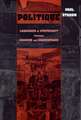
Politique – Languages of Statecraft between Chaucer and Shakespeare: Conway Lectures in Medieval Studies
Autor Paul Strohmen Limba Engleză Hardback – 2 mai 2005
| Toate formatele și edițiile | Preț | Express |
|---|---|---|
| Paperback (1) | 268.62 lei 6-8 săpt. | |
| MR – University of Notre Dame Press – 2 mai 2005 | 268.62 lei 6-8 săpt. | |
| Hardback (1) | 568.11 lei 6-8 săpt. | |
| MR – University of Notre Dame Press – 2 mai 2005 | 568.11 lei 6-8 săpt. |

Preț: 568.11 lei
Preț vechi: 668.36 lei
-15% Nou
Puncte Express: 852
Preț estimativ în valută:
100.51€ • 117.10$ • 87.77£
100.51€ • 117.10$ • 87.77£
Carte tipărită la comandă
Livrare economică 17-31 ianuarie 26
Preluare comenzi: 021 569.72.76
Specificații
ISBN-13: 9780268041137
ISBN-10: 026804113X
Pagini: 312
Dimensiuni: 152 x 229 x 21 mm
Greutate: 0.61 kg
Editura: MR – University of Notre Dame Press
Seria Conway Lectures in Medieval Studies
ISBN-10: 026804113X
Pagini: 312
Dimensiuni: 152 x 229 x 21 mm
Greutate: 0.61 kg
Editura: MR – University of Notre Dame Press
Seria Conway Lectures in Medieval Studies
V-ar putea interesa
-
 The Divine Comedy of Dante Alighieri: Volume 2: PurgatorioDante AlighieriPreț: 105.22 lei
 -
 -23%Preț: 424.61 lei554.42 lei
 -
 De Rerum Natura VLucretius-11%Preț: 260.58 lei293.78 lei
 -
 Homeric Soundings: The Shaping of the IliadOliver Taplin-34%Preț: 578.74 lei872.83 lei
 -
 -14%Preț: 504.41 lei586.51 lei
 -
 De Generatione et CorruptioneAristotle-11%Preț: 359.30 lei403.71 lei
 -
 An Introduction to HomerW. a. Camps-17%Preț: 254.84 lei305.25 lei
 -
 Aeneid: Book 4Virgil-7%Preț: 239.14 lei256.80 lei
 -
 Horace: Odes II: Vatis AmiciHorace-11%Preț: 445.59 lei500.67 lei
 -
 Oxford Readings in Greek ReligionRichard Buxton-24%Preț: 374.87 lei493.08 lei
 -
 -11%Preț: 421.13 lei473.18 lei
 -
 -31%Preț: 450.94 lei653.96 lei
 -
 -23%Preț: 383.64 lei498.30 lei
 -
 Conscience: A Very Short IntroductionPaul Strohm-22%Preț: 52.97 lei67.59 lei
 -
 Preț: 207.02 lei
 -
 Preț: 234.54 lei
 -
 InfernoDantePreț: 34.78 lei
Notă biografică
Recenzii
“This book will prove useful not only to scholars of the fifteenth and sixteenth centuries, but to all interested in political rhetoric. . . . Strohm’s illuminating study reveals the oft-undervalued political and literary discourses of the mid-fifteenth century to be both ambitious and provocative. Undoubtedly, scholars will hail Strohm’s book with the same honors.” — Sixteenth Century Journal
"Once again, Strohm . . . has written what is sure to be an often-cited study, and thus a significant scholarly step forward in the field of fifteenth-century English literature, politics, and historiography. . . . Strohm masterfully illustrates the artistry of late-medieval English statecraft." —Choice
“Paul Strohm's Politique is an important and challenging revision of scholarly attitudes towards the fifteenth century, specifically the period of the Yorkist-Lancastrian dynastic struggles from 1450 to 1485. . . . For any scholar interested in the political texts and contexts of the fifteenth and sixteenth centuries, Politique will be essential reading.” —Mystics Quarterly
“'Discourse' and 'language' represent two current and fruitful approaches to understanding political thinking and actions in fifteenth-century England, displacing 'medieval' and 'renaissance' or 'early modern' and the baggage which they have accumulated over a century and a half. This book is a seductive search for roots of language and political attitudes rather than a rounded analysis of fifteenth-century political thinking and behaviour.” —English Historical Review
Textul de pe ultima copertă
“This book will prove useful not only to scholars of the fifteenth and sixteenth centuries, but to all interested in political rhetoric. . . . Strohm’s illuminating study reveals the oft-undervalued political and literary discourses of the mid-fifteenth century to be both ambitious and provocative. Undoubtedly, scholars will hail Strohm’s book with the same honors.” — Sixteenth Century Journal
"Once again, Strohm . . . has written what is sure to be an often-cited study, and thus a significant scholarly step forward in the field of fifteenth-century English literature, politics, and historiography. . . . Strohm masterfully illustrates the artistry of late-medieval English statecraft." —Choice
“Paul Strohm's Politique is an important and challenging revision of scholarly attitudes towards the fifteenth century, specifically the period of the Yorkist-Lancastrian dynastic struggles from 1450 to 1485. . . . For any scholar interested in the political texts and contexts of the fifteenth and sixteenth centuries, Politique will be essential reading.” —Mystics Quarterly
“'Discourse' and 'language' represent two current and fruitful approaches to understanding political thinking and actions in fifteenth-century England, displacing 'medieval' and 'renaissance' or 'early modern' and the baggage which they have accumulated over a century and a half. This book is a seductive search for roots of language and political attitudes rather than a rounded analysis of fifteenth-century political thinking and behaviour.” —English Historical Review
Paul Strohm is Anna S. Garbedian Professor Emeritus of Humanities at Columbia University.
"Once again, Strohm . . . has written what is sure to be an often-cited study, and thus a significant scholarly step forward in the field of fifteenth-century English literature, politics, and historiography. . . . Strohm masterfully illustrates the artistry of late-medieval English statecraft." —Choice
“Paul Strohm's Politique is an important and challenging revision of scholarly attitudes towards the fifteenth century, specifically the period of the Yorkist-Lancastrian dynastic struggles from 1450 to 1485. . . . For any scholar interested in the political texts and contexts of the fifteenth and sixteenth centuries, Politique will be essential reading.” —Mystics Quarterly
“'Discourse' and 'language' represent two current and fruitful approaches to understanding political thinking and actions in fifteenth-century England, displacing 'medieval' and 'renaissance' or 'early modern' and the baggage which they have accumulated over a century and a half. This book is a seductive search for roots of language and political attitudes rather than a rounded analysis of fifteenth-century political thinking and behaviour.” —English Historical Review
Paul Strohm is Anna S. Garbedian Professor Emeritus of Humanities at Columbia University.
Descriere
Descriere de la o altă ediție sau format:
Based on the 2003 Conway Lectures Strohm delivered at the University of Notre Dame, this book states that England experienced its own "pre-Machiavellian" moment between 1450 and 1485. In support of this thesis, he analyzes a range of fifteenth-century English political texts along with several contemporary writings from Burgundy, France, and Italy.
Based on the 2003 Conway Lectures Strohm delivered at the University of Notre Dame, this book states that England experienced its own "pre-Machiavellian" moment between 1450 and 1485. In support of this thesis, he analyzes a range of fifteenth-century English political texts along with several contemporary writings from Burgundy, France, and Italy.