
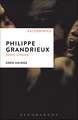
Philippe Grandrieux: Sonic Cinema: Ex:Centrics
Autor Associate Professor Greg Haingeen Limba Engleză Hardback – 23 feb 2017
Preț: 899.40 lei
Preț vechi: 1365.77 lei
-34%
Puncte Express: 1349
Carte tipărită la comandă
Livrare economică 05-19 decembrie
Livrare prin curier în România Termenul estimat este afișat lângă disponibilitate.
Transport gratuit pentru acest produs Plată online sau ramburs, în funcție de opțiunile comenzii.
Retur gratuit în 14 zile Comandă securizată și suport în română.
Specificații
ISBN-13: 9781628923131
ISBN-10: 162892313X
Pagini: 310
Ilustrații: 14 bw illus; 6 color
Dimensiuni: 140 x 220 x 22 mm
Greutate: 0.54 kg
Editura: Bloomsbury Publishing
Colecția Bloomsbury Academic
Seria Ex:Centrics
Locul publicării:New York, United States
ISBN-10: 162892313X
Pagini: 310
Ilustrații: 14 bw illus; 6 color
Dimensiuni: 140 x 220 x 22 mm
Greutate: 0.54 kg
Editura: Bloomsbury Publishing
Colecția Bloomsbury Academic
Seria Ex:Centrics
Locul publicării:New York, United States
V-ar putea interesa
-
 WanderlustRebecca SolnitPreț: 112.31 lei
 -
 Agnes MartinNancy Princenthal-16%Preț: 123.40 lei147.25 lei
 -
 Why I Love BarthesAlain Robbe-GrilletPreț: 87.37 lei
 -
 Ontology of the AccidentCatherine MalabouPreț: 88.36 lei
 -
 LeibnizRichard T W ArthurPreț: 212.39 lei
 -
 Preț: 73.59 lei
 -
 Preț: 234.81 lei
 -
 Preț: 160.85 lei
 -
 Preț: 355.70 lei
 -
 Eric Rohmer: Filmmaker and PhilosopherProfessor Vittorio Hösle-10%Preț: 177.94 lei197.95 lei
 -
 The Vagina: A Literary and Cultural HistorySenior Lecturer Emma L. E. Rees-18%Preț: 168.10 lei205.61 lei
 -
 Walter Benjamin's ArchiveWalter BenjaminPreț: 231.00 lei
 -
 La JetéeChris Darke-41%Preț: 67.54 lei113.86 lei
 -
 The MinerNatsume SosekiPreț: 90.72 lei
Cuprins
List of Illustrations
Acknowledgements
Introduction
Chapter 1. In the Beginning.
Chapter 2. The Television Years.
Chapter 3. Long-Form Documentaries.
Chapter 4. Intermezzo.
Chapter 5. Sombre (1998).
Chapter 6. La Vie nouvelle [A New Life] (2002).
Chapter 7. The Turn to Nature.
Chapter 8. Un lac [A Lake] (2008).
Chapter 9. Recent Works.
Conclusion
Afterword - Sonic Cinema
References
Acknowledgements
Introduction
Chapter 1. In the Beginning.
Chapter 2. The Television Years.
Chapter 3. Long-Form Documentaries.
Chapter 4. Intermezzo.
Chapter 5. Sombre (1998).
Chapter 6. La Vie nouvelle [A New Life] (2002).
Chapter 7. The Turn to Nature.
Chapter 8. Un lac [A Lake] (2008).
Chapter 9. Recent Works.
Conclusion
Afterword - Sonic Cinema
References
Recenzii
This book offers the very first comprehensive study of a major contemporary filmmaker and artist. From Grandrieux's work as a producer to the deepest challenges posed by his films and installations, the study conducted by Greg Hainge illuminates the consistency and magnitude of an exceptional artistic career, organically structured by experimental values.
Deploying a vocabulary derived from sonic principles, and in dialogue with questions about aesthetic logics of sensation, Greg Hainge reveals the Philippe Grandrieux of choreography, improvisation, dynamic contrast, rhythm, force, cacophony, all that is intensely immersive and (thereby) inventive. Hainge's exploration takes the form of an abyssal unfolding-of Grandrieux's corpus, extending from film through television, video, photography, installation and critical reflection; of the speculative potential of film-theoretical concepts derived from the sonic in place of the haptic or visual; of the inventive and political possibilities of (all) cinemas of cruelty; and of the new conceptual lives enabled by the promise of closely reading for form.
Philippe Grandrieux is one of the very rare truly innovative filmakers who has appeared in french cinema since Chantal Akerman and Philippe Garrel. Altogether powerfully visual, haptic and sonic, his images excel to express all possible states of the body, from the most extremes to the most daily. Here is what shows at the best the book of Greg Hainge, stressing particularly the sonic dimension which allows him to harmonize all the components of a cinema of the Figure, in the sense that Gilles Deleuze has given to this word through the painting of Francis Bacon.
Deploying a vocabulary derived from sonic principles, and in dialogue with questions about aesthetic logics of sensation, Greg Hainge reveals the Philippe Grandrieux of choreography, improvisation, dynamic contrast, rhythm, force, cacophony, all that is intensely immersive and (thereby) inventive. Hainge's exploration takes the form of an abyssal unfolding-of Grandrieux's corpus, extending from film through television, video, photography, installation and critical reflection; of the speculative potential of film-theoretical concepts derived from the sonic in place of the haptic or visual; of the inventive and political possibilities of (all) cinemas of cruelty; and of the new conceptual lives enabled by the promise of closely reading for form.
Philippe Grandrieux is one of the very rare truly innovative filmakers who has appeared in french cinema since Chantal Akerman and Philippe Garrel. Altogether powerfully visual, haptic and sonic, his images excel to express all possible states of the body, from the most extremes to the most daily. Here is what shows at the best the book of Greg Hainge, stressing particularly the sonic dimension which allows him to harmonize all the components of a cinema of the Figure, in the sense that Gilles Deleuze has given to this word through the painting of Francis Bacon.
Notă biografică
Greg Hainge is Reader in French and Head of the School of Languages and Comparative Cultural Studies at the University of Queensland, Australia. He is the author of Capitalism and Schizophrenia in the Later Novels of Louis-Ferdinand Céline and has published widely on cinema, music, critical theory and French literature.
Caracteristici
Grandrieux
is
very
popular
right
now
with
a
recent
teaching
position
at
Harvard
and
a
Whitney
retrospective