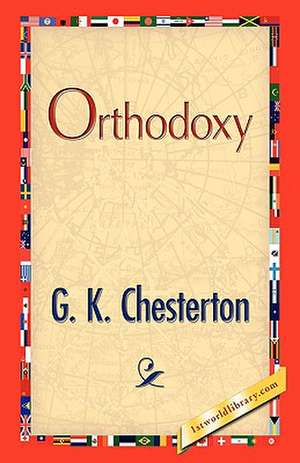
Orthodoxy
Autor G. K. Chestertonen Limba Engleză Hardback – 30 sep 2008
Observăm că Orthodoxy completează o lacună esențială în literatura apologetică a secolului XX: nevoia unei justificări a credinței bazate nu pe autoritate dogmatică externă, ci pe experiența umană și pe rațiune. Scrisă ca replică la criticile aduse volumului Heretics, lucrarea nu se prezintă ca un tratat teologic arid, ci ca o explorare personală a modului în care autorul a ajuns să accepte creștinismul ca răspuns la „ghicitoarea” existenței. Apreciem modul în care G. K. Chesterton extinde cadrul propus de Heretics cu date noi din propria sa evoluție spirituală, transformând apărarea ortodoxiei dintr-o obligație morală într-o aventură intelectuală.
Structura volumului reflectă această progresie logică, începând cu analiza limitărilor raționalismului extrem în capitolul „The Maniac” și culminând cu sinteza dintre autoritate și libertate în „Authority and the Adventurer”. Remarcăm utilizarea paradoxului și a alegoriei — elemente distinctive ale stilului chestertonian — pentru a demonstra că dogmele creștine sunt, de fapt, soluții la nevoile psihologice fundamentale. Această abordare rezonează cu temele explorate în The Everlasting Man, unde autorul plasează creștinismul în contextul mai larg al istoriei umanității. Ediția de față, publicată în seria Dover Thrift Editions, oferă accesibilitate fără a sacrifica profunzimea textului original din 1908, fiind un punct de referință pentru studiul filozofiei religiei.
Preț: 157.53 lei
Carte tipărită la comandă
Livrare economică 14-28 iulie
Specificații
ISBN-10: 1421894807
Pagini: 196
Dimensiuni: 140 x 216 x 14 mm
Greutate: 0.39 kg
Editura: 1st World Publishing
Locul publicării:United States
V-ar putea interesa
-
 Mere ChristianityC. S. LewisPreț: 78.00 lei
 -
 Paul Through Mediterranean EyesKenneth BaileyPreț: 146.79 lei
 -
 Philip Yancey Recommends: OrthodoxyG. K. ChestertonPreț: 70.91 lei
 -
 G K Chesterton: a ReappraisalConlon DenisPreț: 247.25 lei
 -
 BhagavadgitaVyasaPreț: 31.32 lei
 -
 Why I Am Not a ChristianBertrand RussellPreț: 102.06 lei
 -
 A Life of ObedienceAndrew MurrayPreț: 74.05 lei
 -
 Collected Works of G.K. ChestertonG. K. ChestertonPreț: 119.10 lei
 -
 The Cultural Revolution: A People's History, 1962—1976Frank Dikötter-27%Preț: 78.01 lei106.97 lei
 -
 St. Thomas AquinasG. K. ChestertonPreț: 46.53 lei
 -
 What's Wrong with the WorldG. K. ChestertonPreț: 44.19 lei
 -
 OrthodoxyGilbert K. ChestertonPreț: 47.95 lei
 -
 Tao-Te-ChingLao-TzuPreț: 91.03 lei
 -
 Heretics and OrthodoxyG. K. ChestertonPreț: 90.29 lei
 -
 The Everlasting ManG. K. ChestertonPreț: 51.81 lei
 -
 HereticsG. K. ChestertonPreț: 43.77 lei
 -
 The Everyman ChestertonG. K. Chesterton-17%Preț: 121.48 lei146.91 lei
 -
 Philosophy of MindEdward FeserPreț: 78.83 lei
 -
 The Man Who Was ThursdayG. K. ChestertonPreț: 38.11 lei
 -
 The Ball and the CrossG. K. ChestertonPreț: 43.16 lei
 -
 The New JerusalemG. K. ChestertonPreț: 42.59 lei
 -
 Everlasting Man (Edition2023)G. K. ChestertonPreț: 97.74 lei
De ce să citești această carte
Recomandăm această carte cititorilor care caută o perspectivă proaspătă, lipsită de clișee, asupra credinței. Veți descoperi un text plin de umor și vitalitate care transformă apologetica într-o narațiune captivantă. Este lectura ideală pentru cei care apreciază argumentația logică împletită cu metafora literară, oferind un model de gândire care reconciliază miraculosul cu bunul simț, într-un format compact și accesibil.
Despre autor
G. K. Chesterton (1874–1936) a fost un scriitor, filozof și critic englez, supranumit „prințul paradoxului”. Stilul său unic, care răstoarnă proverbe și idei primite de-a gata pentru a releva adevăruri profunde, l-a impus ca pe unul dintre cei mai influenți gânditori creștini ai modernității. Autor prolific, a creat celebrul personaj Father Brown și a scris lucrări fundamentale de apologetică, precum Orthodoxy și The Everlasting Man. Deși a scris Orthodoxy în perioada sa anglicană, viziunea sa s-a îndreptat constant către catolicism, la care a aderat oficial 14 ani mai târziu, devenind un succesor spiritual al marilor autori victorieni precum Newman sau Ruskin.
Descriere scurtă
Notă biografică
Descriere
Orthodoxy, as G. K. Chesterton employs the term here, means "right opinion." In this, the masterpiece of his brilliant literary career, he applies the concept of correct reasoning to his acceptance of Christianity. Written in a down-to-earth and familiar style, he presents formal and scholarly arguments in the explanation and defense of the tenets underlying his faith.
Paradox and contradiction, Chesterton maintains, do not constitute barriers to belief; imagination and intuition are as relevant to the processes of thought and understanding as logic and rationality. "Whenever we feel there is something odd in Christian theology," he observes, "we shall generally find that there is something odd in the truth." He defines his insights with thought-provoking analogies, personal anecdotes, and engaging humor, making this century-old book a work of enduring charm and persuasion.
Cuprins
Introduction by Jon M. Sweeney
CHAPTER I.-Introduction in Defence of Everything Else
CHAPTER II.-The Maniac
CHAPTER III.-The Suicide of Thought
CHAPTER IV-The Ethics of Elfland
CHAPTER V.-The Flag of the World
CHAPTER VI.-The Paradoxes of Christianity
CHAPTER VII.-The Eternal Revolution
CHAPTER VIII.-The Romance of Orthodoxy
CHAPTER IX.-Authority and the Adventurer