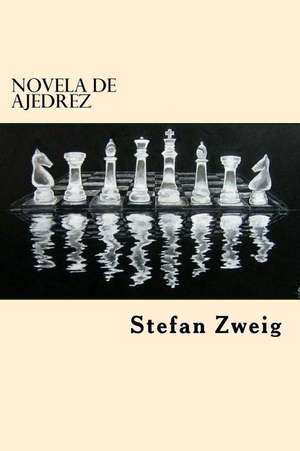
Novela de Ajedrez
Autor Stefan Zweiges Limba Spaniolă Paperback
Preț: 51.73 lei
Puncte Express: 78
Carte disponibilă
Livrare economică 06-20 noiembrie
Livrare prin curier în România Termenul estimat este afișat lângă disponibilitate.
Transport gratuit de la 400.00 lei Plată online sau ramburs, în funcție de opțiunile comenzii.
Retur gratuit în 14 zile Comandă securizată și suport în română.
Specificații
ISBN-13: 9781542480314
ISBN-10: 1542480310
Pagini: 96
Dimensiuni: 152 x 229 x 5 mm
Greutate: 0.14 kg
ISBN-10: 1542480310
Pagini: 96
Dimensiuni: 152 x 229 x 5 mm
Greutate: 0.14 kg
V-ar putea interesa
-
 El Juego del AngelCarlos Ruiz ZafónPreț: 143.06 lei
 -
 Preț: 48.71 lei
 -
 Preț: 60.89 leiRecomandat
 -
 Espacios literarios B1. Callejón con salidaElsa OsorioPreț: 87.86 lei
 -
 El ingenioso hidalgo Don Quijote de la ManchaMiguel de CervantesPreț: 63.38 lei
 -
 Preț: 112.50 lei
 -
 Preț: 77.93 lei
 -
 Preț: 124.05 lei
 -
 Preț: 121.57 lei
 -
 MarinaCarlos Ruiz ZafónPreț: 133.44 lei
 -
 Nerd Libro 2: Jaque Mate / Nerd, Book 2: CheckmateAxael VelazquesPreț: 114.65 lei
 -
 El Juego de la Reina / Queen's GambitElizabeth FremantlePreț: 145.57 lei
 -
 El tunelErnesto SabatoPreț: 113.59 lei
 -
 Mundo de Ayer, ElStefan ZweigPreț: 247.45 lei
 -
 El Tablero de la Reina / The Queen's BoardLuis ZuecoPreț: 149.12 lei
 -
 El Último Judío / The Last JewNoah GordonPreț: 90.22 lei
 -
 Tres MaestrosStephan ZweigPreț: 119.59 lei
 -
 Cronica de una muerte anunciadaGabriel Garcia MarquezPreț: 118.33 lei
 -
 -24%Preț: 86.69 lei114.22 leiRecomandat
Notă biografică
Stefan Zweig (Viena, 1881 - Río de Janeiro, 1942) fue uno de los escritores más polifacéticos de la primera mitad del siglo XX. De origen judío, estudió en Berlín y Viena, tras lo cual acabó viajando gran parte de su vida. Durante la Primera Guerra Mundial se trasladó a Zúrich, donde se adhirió a las causas pacifistas del escritor francés Romain Rolland. Más tarde volvió a su país, concretamente a Salzburgo, pero el nazismo le obligó a exiliarse en 1934. Así, Zweig y su segunda esposa se instalaron primero en Londres y más tarde en Brasil, donde, profundamente desilusionados por el ambiente bélico que imperaba en todo el mundo, se suicidaron en 1942.
Zweig cultivó todos los géneros literarios, aunque destacó especialmente como narrador. Sus obras consideradas imprescindibles son: Novela de ajedrez, Carta de una desconocida, El mundo de ayer, Momentos estelares de la humanidad y Veinticuatro horas en la vida de una mujer.
Tras décadas de relativo olvido, la obra de Stefan Zweig ha experimentado un notable resurgimiento internacional, recuperando el prestigio y la popularidad que por justicia literaria le correspondían.
Stefan Zweig (Vienna, 1881 - Rio de Janeiro, 1942) was one of the most versatile writers of the first half of the twentieth century. Born into a Jewish family, he studied in Berlin and Vienna before spending much of his life traveling. During World War I, he moved to Zurich, where he embraced the pacifist ideals of French writer Romain Rolland. He later returned to Austria, settling in Salzburg, but the rise of Nazism forced him into exile in 1934. Zweig and his second wife first moved to London and later to Brazil, where, deeply discouraged by the climate of war spreading across the world, they died by suicide in 1942.
Zweig wrote in virtually every literary genre, though he is best remembered as a master storyteller. His most essential works include The Royal Game, Letter from an Unknown Woman, The World of Yesterday, Decisive Moments in History, and Twenty-Four Hours in the Life of a Woman.
After decades of relative neglect, Stefan Zweig's work has enjoyed a remarkable international revival, regaining the recognition and popularity it has long deserved.
Zweig cultivó todos los géneros literarios, aunque destacó especialmente como narrador. Sus obras consideradas imprescindibles son: Novela de ajedrez, Carta de una desconocida, El mundo de ayer, Momentos estelares de la humanidad y Veinticuatro horas en la vida de una mujer.
Tras décadas de relativo olvido, la obra de Stefan Zweig ha experimentado un notable resurgimiento internacional, recuperando el prestigio y la popularidad que por justicia literaria le correspondían.
Stefan Zweig (Vienna, 1881 - Rio de Janeiro, 1942) was one of the most versatile writers of the first half of the twentieth century. Born into a Jewish family, he studied in Berlin and Vienna before spending much of his life traveling. During World War I, he moved to Zurich, where he embraced the pacifist ideals of French writer Romain Rolland. He later returned to Austria, settling in Salzburg, but the rise of Nazism forced him into exile in 1934. Zweig and his second wife first moved to London and later to Brazil, where, deeply discouraged by the climate of war spreading across the world, they died by suicide in 1942.
Zweig wrote in virtually every literary genre, though he is best remembered as a master storyteller. His most essential works include The Royal Game, Letter from an Unknown Woman, The World of Yesterday, Decisive Moments in History, and Twenty-Four Hours in the Life of a Woman.
After decades of relative neglect, Stefan Zweig's work has enjoyed a remarkable international revival, regaining the recognition and popularity it has long deserved.