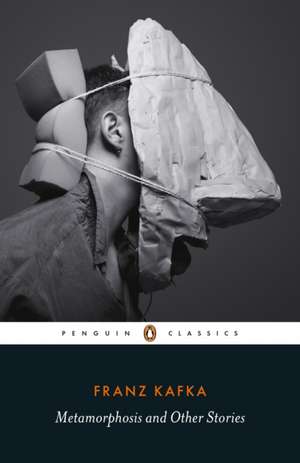
Metamorphosis and Other Stories: Penguin Modern Classics
Autor Franz Kafka Traducere de Michael Hofmannen Limba Engleză Paperback – 7 mar 2019
Ne-a atras atenția în mod deosebit această ediție din seria Dover Thrift Editions, care reușește să sintetizeze esența universului kafkian într-un format accesibil, fără a sacrifica profunzimea academică. The Metamorphosis and Other Stories nu este doar o culegere de proză, ci o poartă de intrare în psihicul unuia dintre cei mai influenți scriitori ai secolului XX. Poziționând „Metamorfoza” în centrul selecției, volumul oglindește temele fundamentale pe care Franz Kafka le-a explorat obsesiv și în romanele sale postume, precum The Trial sau The Castle: individul strivit de mecanisme birocratice absurde și izolat de propria familie. Notăm cu interes structura riguroasă a cărții. Dincolo de narațiunile celebre — unde transformarea lui Gregor Samsa într-o insectă devine o metaforă a condiției umane — ediția include un aparat critic valoros. Secțiunea „In Context” oferă o perspectivă rară asupra influențelor autorului, punând textul în dialog cu ideile lui Friedrich Nietzsche sau Sigmund Freud. Descoperim aici forța narativă a lui Kafka combinată cu sensibilitatea filosofică a modernismului timpuriu, dar cu un glas propriu, inconfundabil. Comparând acest volum cu antologia Best Short Stories, observăm că ediția de față pune un accent mai mare pe documentarea biografică, oferind fragmente din faimoasa „Scrisoare către tatăl său”, esențială pentru a înțelege rădăcinile sentimentului de vinovăție ce străbate întreaga sa operă. Tonul este unul de o precizie chirurgicală, unde fantasticul este tratat cu o sobrietate ce amplifică sentimentul de neliniște metafizică.
Din seria Penguin Modern Classics
-
 Preț: 57.35 lei
 -
 Preț: 80.02 lei
 -
 Preț: 62.95 lei
 -
 Preț: 59.80 lei
 - 27%
 Preț: 56.90 lei
 - 20%
 Preț: 55.59 lei
 - 25%
 Preț: 59.40 lei
 - 26%
 Preț: 58.70 lei
 - 26%
 Preț: 57.58 lei
 - 26%
 Preț: 58.53 lei
 - 25%
 Preț: 58.72 lei
 - 28%
 Preț: 50.94 lei
 - 25%
 Preț: 59.62 lei
 - 25%
 Preț: 59.83 lei
 - 25%
 Preț: 59.12 lei
 - 27%
 Preț: 57.30 lei
 - 26%
 Preț: 57.63 lei
 - 29%
 Preț: 49.73 lei
 - 24%
 Preț: 61.06 lei
 - 20%
 Preț: 50.90 lei
 - 27%
 Preț: 51.50 lei
 - 26%
 Preț: 57.70 lei
 - 25%
 Preț: 54.21 lei
 - 26%
 Preț: 53.76 lei
 - 25%
 Preț: 59.22 lei
 - 27%
 Preț: 57.19 lei
 - 25%
 Preț: 59.39 lei
 - 28%
 Preț: 51.26 lei
 -
 Preț: 107.89 lei
 - 26%
 Preț: 53.57 lei
 - 28%
 Preț: 50.90 lei
 - 18%
 Preț: 88.47 lei
 - 27%
 Preț: 56.92 lei
 - 26%
 Preț: 57.93 lei
 - 30%
 Preț: 66.18 lei
 - 20%
 Preț: 56.53 lei
 - 27%
 Preț: 57.22 lei
 - 26%
 Preț: 58.43 lei
 - 25%
 Preț: 59.19 lei
 - 25%
 Preț: 53.76 lei
 - 33%
 Preț: 64.11 lei
 - 36%
 Preț: 60.43 lei
 - 27%
 Preț: 57.17 lei
 - 27%
 Preț: 57.32 lei
 - 27%
 Preț: 46.63 lei
 - 28%
 Preț: 49.96 lei
 - 28%
 Preț: 45.82 lei
 - 27%
 Preț: 51.36 lei
 - 26%
 Preț: 57.69 lei
 - 18%
 Preț: 76.38 lei
Preț: 53.56 lei
Preț vechi: 72.03 lei
-26%
Carte disponibilă
Livrare economică 13-25 noiembrie
Livrare express 29 octombrie-04 noiembrie pentru 38.15 lei
Specificații
ISBN-10: 0241372550
Pagini: 272
Dimensiuni: 128 x 194 x 21 mm
Greutate: 0.21 kg
Editura: Penguin Books
Colecția Penguin Classics
Seria Penguin Modern Classics
Locul publicării:London, United Kingdom
V-ar putea interesa
-
 Blood of ElvesAndrzej SapkowskiPreț: 53.85 lei
 -
 The Catcher in the RyeJ. D. SalingerPreț: 54.87 lei
 -
 KafkaNicholas Murray-26%Preț: 79.07 lei106.80 lei
 -
 The Lord of the Rings Box SetJ. R. R. Tolkien-8%Preț: 521.48 lei566.82 lei
 -
 Lasker's Manual of ChessE. LaskerPreț: 134.69 lei
 -
 Civil Disobedience and Other EssaysHenry David Thoreau-29%Preț: 17.63 lei24.96 lei
 -
 Doctor FaustusChristopher MarlowePreț: 32.25 lei
 -
 On the Origin of SpeciesCharles Darwin-19%Preț: 71.42 lei88.32 lei
 -
 The Book of MemoryMary CarruthersPreț: 271.45 lei
 -
 BioShock: RaptureJohn ShirleyPreț: 63.69 lei
 -
 Chess: 5334 Problems, Combinations and GamesBruce Pandolfini-26%Preț: 165.71 lei223.34 lei
 -
 -27%Preț: 66.57 lei91.73 lei
 -
 Testament of Friendship: The Story of Winifred HoltbyVera Brittain-26%Preț: 80.87 lei108.66 lei
 -
 Doctor Who: Magic of the AngelsJacqueline Rayner-57%Preț: 17.95 lei42.14 lei
 -
 The Picture of Dorian GrayOscar WildePreț: 30.08 lei
 -
 A Tale of Two CitiesCharles DickensPreț: 37.55 lei
 -
 Madame Bovary (Wordsworth Classics)Gustave FlaubertPreț: 37.66 lei
 -
 Christmas BooksCharles DickensPreț: 37.35 lei
De ce să citești această carte
Recomandăm această carte oricărui cititor care dorește să exploreze originile termenului „kafkian”. Veți câștiga nu doar plăcerea lecturii unor texte fundamentale pentru literatura universală, ci și un context documentar prețios care explică legătura dintre viața chinuită a autorului și viziunea sa artistică. Este o ediție esențială pentru studenți și pasionații de filosofie existențialistă, oferind o privire integrată asupra geniului lui Kafka.
Despre autor
Franz Kafka (1883–1924) a fost un scriitor evreu de limbă germană, născut în Praga, a cărui operă a redefinit literatura modernă prin fuziunea dintre realism și fantastic. Deși a profesat ca avocat la o companie de asigurări, și-a dedicat timpul liber scrisului, explorând teme precum alienarea și puterea socio-birocratică de neînțeles. Majoritatea operelor sale, inclusiv romanele celebre, au fost publicate postum, împotriva dorinței sale. Kafka a murit prematur de tuberculoză la vârsta de 40 de ani, lăsând în urmă o moștenire literară ce continuă să fascineze prin complexitatea sa psihologică.
Notă biografică
Franz Kafka (1883-1924) was born of Jewish parents in Prague. Several of his story collections were published in his lifetime and his novels, The Trial, The Castle, and Amerika, were published posthumously by his editor Max Brod.
Michael Hofmann (Translator)
Michael Hofmann is a poet and translator from the German. For Penguin he has translated four books by Hans Fallada, in addition to works by Franz Kafka, Ernst Jünger, Irmgard Keun and Jakob Wassermann.
Descriere scurtă
Descriere
Only yesterday, Gregor Samsa was a meek salesman, browbeaten by his unappreciative employer and depended on fiercely by his ungrateful family. This morning, Gregor awakens to discover that, overnight, he has been transformed into a monstrous insect. As Gregor frantically tries to conceal his predicament, neither his family nor his unsympathetic employer accept that a terrible metamorphosis has upended his existence. Is Gregor’s condition only temporary? Will he eventually revert back to the person he was and resume his normal life? Or might he have to accept that his transformation is only an outward expression of how he—and those in his life—actually see him? First published in 1915, Kafka’s best-known tale has inspired numerous interpretations for more than a century and helped to establish the term “Kafkaesque” as a reference to a bizarre and nightmarish experience. This collection of his short fiction, in a new translation, includes more than 30 of his short stories and sketches, including “In the Penal Colony,” “The Stoker,” “The Judgment,” “A Country Doctor,” “A Hunger Artist,” and more.
Textul de pe ultima copertă
In addition to the title selection, considered by many critics Kafka's most perfect work, this collection includes "The Judgment," "In the Penal Colony," "A Country Doctor," and "A Report to an Academy." Stanley Appelbaum has provided excellent new English translation of the stories and a brief Note placing them within Kafka's oeuvre.
Recenzii
This volume presents “The Metamorphosis”—together with several other of Kafka’s best and best-known stories—in a nuanced, clear, and powerful translation by Ian Johnston. The appendices provide philosophical, literary, and cultural context, as well as valuable selections from Kafka’s own letters and drawings.
“Simply remarkable! The translator … has done a superb job of making the uncannily ‘untranslatable’ Kafka accessible (especially in ‘The Metamorphosis’) in a manner that is fresh, vivid, and faithful as possible to the author’s original style.” — Gregory Maertz, St. John’s University
“In a fine balancing act, Ian Johnston’s translation blows the dust off of some of Kafka’s major short stories: its formality is never stiff and its colloquialisms never wooden. Johnston transports into modern English the unnatural syntactic and lexical clarity through which Kafka expresses such unnerving ambiguity. A compact yet wide-ranging introduction by Paul Johnson Byrne and the addition of excerpts from Kafka’s literary influences, as well as from his letters, make clear that Kafka was not some brilliant, inexplicable aberration, but rather a product of his background, experience, and reading: a ‘normal,’ yet still exceptional, author. This is a fine brief introduction to Kafka and his work.” — Paul Malone, University of Waterloo
“Equally attractive [as Ian Johnston’s translation] is the historical-philosophical background material on Kafka ‘In Context,’ which includes not only Sacher-Masoch, Nietzsche, Freud, and Mirbeau, but also lesser-known texts and cartoons from popular culture on the Hagenbeck Zoo and hunger artists. These texts are carefully selected to enhance our understanding of Kafka’s writings, and they make this innovative edition a valuable tool for teaching.” — Iris Bruce, McMaster University
Cuprins
Introduction
Before the Law
The Metamorphosis
A Report for an Academy
An Imperial Message
In the Penal Colony
A Hunger Artist
In Context
- Kafka’s Life and Writing
- Selections from Kafka’s Letters
- from Franz Kafka, Letter to His Father (written 1919)
- Photographs of Kafka and His Family
- Philosophical and Literary Contexts
- from Leopold von Sacher-Masoch, Venus in Furs (1870)
- from Friedrich Nietzsche, On the Genealogy of Morals: A Polemical Tract (1887)
- from Friedrich Nietzsche, Thus Spake Zarathustra: A Book for All and None(1883–92)
- from Sigmund Freud, On the Interpretation of Dreams (1899)
- from Octave Mirbeau, The Torture Garden (1899)
- Hagenbeck and the Modern Zoo
- from Carl Hagenbeck, Beasts and Men (1908)
- Hunger Artists
- from “Professional Fasting,” Daily News (3 April 1890)
- from “Succi Breaks His Fast,” The New York Times (21 December 1890)
- from “Succi, the Fasting Man,” The Lancet (28 April 1888)