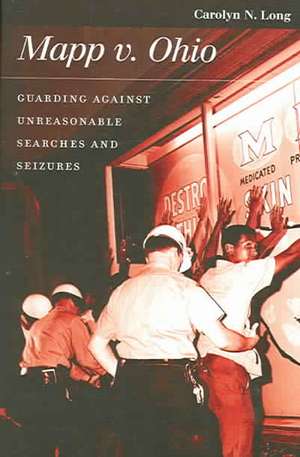
Mapp V. Ohio: Guarding Against Unreasonable Searches and Seizures: Landmark Law Cases & American Society
Autor Carolyn N. Longen Limba Engleză Paperback – 31 mar 2006
Vezi toate premiile Carte premiată
Remarcăm adesea eroarea de a considera că drepturile constituționale au fost dintotdeauna bariere de netrecut în fața abuzurilor polițienești. În realitate, până la decizia istorică din 1961, protecția împotriva perchezițiilor nerezonabile era un concept fragil, aplicat inconsecvent la nivelul statelor americane. Mapp V. Ohio demontează mitul conform căruia probele obținute prin forță sau fără mandat au fost mereu inadmisibile în instanță, prezentând povestea lui Dollree Mapp, femeia care a sfidat poliția din Cleveland și a declanșat o revoluție în procedura penală.
Carolyn N. Long construiește o narațiune riguroasă despre modul în care un raid vizând dovezi ale unui atentat cu bombă s-a transformat într-un caz despre „cărți obscene” și, ulterior, într-o piatră de temelie a libertăților civile. Stilul autoarei este analitic dar accesibil, reușind să ghideze cititorul prin labirintul juridic al Curții Supreme sub conducerea lui Earl Warren. Descoperim aici nu doar cronica unei victorii legale, ci și portrete vii ale personajelor implicate, de la sergentul Carl Delau la judecătorii care au formulat opiniile divergente.
Pe linia practică a lucrării The Evolution of the Fourth Amendment, dar cu un focus mult mai pronunțat pe biografia umană și contextul social al anilor '50, volumul de față este o piesă esențială în seria Landmark Law Cases & American Society. Această abordare continuă preocuparea autoarei pentru momentele de cotitură ale justiției americane, temă centrală și în Religious Freedom and Indian Rights, unde Carolyn N. Long a investigat modul în care deciziile Curții Supreme rezonează în psihicul colectiv. Premiată cu Langum Prize for Historical Literature, cartea oferă o perspectivă clară asupra modului în care limitele autorității statului sunt trasate în momente de criză.
Din seria Landmark Law Cases & American Society
-
 Preț: 235.32 lei
 -
 Preț: 243.52 lei
 -
 Preț: 245.50 lei
 -
 Preț: 222.95 lei
 -
 Preț: 231.75 lei
 -
 Preț: 239.63 lei
 -
 Preț: 285.74 lei
 -
 Preț: 241.10 lei
 -
 Preț: 233.48 lei
 -
 Preț: 225.56 lei
 -
 Preț: 237.13 lei
 -
 Preț: 224.79 lei
 -
 Preț: 225.56 lei
 -
 Preț: 239.12 lei
 -
 Preț: 225.16 lei
 -
 Preț: 241.71 lei
 -
 Preț: 241.26 lei
 -
 Preț: 243.62 lei
 -
 Preț: 240.32 lei
 -
 Preț: 241.49 lei
 -
 Preț: 231.55 lei
 -
 Preț: 269.63 lei
 -
 Preț: 222.60 lei
 -
 Preț: 242.69 lei
 -
 Preț: 223.69 lei
 -
 Preț: 225.16 lei
 -
 Preț: 221.84 lei
 - 23%
 Preț: 562.33 lei
 -
 Preț: 222.75 lei
 -
 Preț: 221.49 lei
 -
 Preț: 225.56 lei
 -
 Preț: 221.64 lei
 -
 Preț: 225.56 lei
 -
 Preț: 225.56 lei
 -
 Preț: 223.69 lei
 -
 Preț: 224.43 lei
 -
 Preț: 263.01 lei
 -
 Preț: 225.56 lei
 -
 Preț: 224.79 lei
Preț: 225.16 lei
Carte disponibilă
Livrare economică 16-30 noiembrie
Specificații
ISBN-10: 0700614419
Pagini: 228
Dimensiuni: 155 x 212 x 18 mm
Greutate: 0.31 kg
Editura: University Press of Kansas
Seria Landmark Law Cases & American Society
V-ar putea interesa
-
 To Kill a MockingbirdHarper Lee-18%Preț: 52.91 lei64.56 lei
 -
 One Flew Over the Cuckoo's NestKen Kesey-24%Preț: 59.98 lei79.37 lei
 -
 -14%Preț: 182.67 lei212.08 lei
 -
 -17%Preț: 217.04 lei260.01 lei
 -
 -9%Preț: 278.73 lei307.39 lei
 -
 State Constitutions and Criminal JusticeBarry Latzer-23%Preț: 501.43 lei651.20 lei
 -
 -24%Preț: 120.78 lei159.93 lei
 -
 -25%Preț: 71.30 lei94.44 lei
 -
 Turmoil: The Official AutobiographyNeil Basu-18%Preț: 118.96 lei144.32 lei
 -
 Howl and Other PoemsAllen GinsbergPreț: 42.32 lei
 -
 The Law Officer's Pocket Manual: 2025 EditionJohn G. Miles Jr.Preț: 291.20 lei
 -
 Nuclear CopperMatt OkuharaPreț: 167.23 lei
 -
 Disclosure: Unravelling the Spycops FilesKate WilsonPreț: 145.79 lei
 -
 -21%Preț: 228.93 lei291.57 lei
 -
 Preț: 170.21 lei
 -
 Preț: 116.38 lei
 -
 -18%Preț: 64.72 lei79.01 leiRecomandat
 -
 The Crime Writers Casebook: Third EditionStuart Gibbon-15%Preț: 75.21 lei88.82 lei
De ce să citești această carte
Recomandăm această carte studenților în drept și istorie care doresc să înțeleagă originea regulii excluderii probelor. Veți câștiga o perspectivă detaliată asupra Amendamentului al Patrulea și a modului în care un singur caz poate schimba regulile jocului pentru întregul sistem judiciar. Este un studiu de caz esențial despre echilibrul dintre securitate și viața privată, extrem de relevant în contextul legislației moderne privind supravegherea.
Descriere scurtă
Premii
- Langum Prize for Historical Literature Honorable Mention, 2006