Cantitate/Preț
Produs

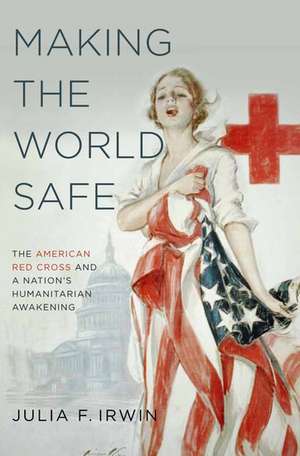
Making the World Safe: The American Red Cross and a Nation's Humanitarian Awakening

Autor Julia F. Irwin
en Limba Engleză Hardback – 23 mai 2013

În volumul Making the World Safe, Julia F. Irwin analizează emergența Statelor Unite ca putere globală la începutul secolului XX, proces realizat nu doar prin forță militară, ci și printr-o redefinire a responsabilităților civice internaționale. Subliniem modul în care Crucea Roșie Americană a funcționat ca un vehicul esențial pentru acest „internaționalism umanitar”, operând la granița dintre sectorul privat și cel de stat. Reținem că această lucrare reprezintă fundamentul cercetărilor autoarei, precedând tematic volumul Catastrophic Diplomacy, unde Julia F. Irwin extinde analiza asistenței în caz de dezastre naturale până în anii '70. Dacă în lucrările ulterioare accentul cade pe intervenții în situații de criză climatică, aici explorăm eforturile deliberate de modernizare și democratizare prin sănătate publică și educație în regiuni precum Polonia, Cehoslovacia sau Italia postbelică.

Cititorii familiarizați cu Saving Europe de Tammy M. Proctor vor aprecia modul în care Irwin completează tabloul asistenței americane, oferind o perspectivă instituțională asupra modului în care elitele progresiste au utilizat filantropia pentru a proiecta valori democratice. Spre deosebire de Benevolent Empire de Stephen R. Porter, care se concentrează pe criza refugiaților și relocare, Making the World Safe investighează cum asistența externă a devenit o obligație politică asumată, transformând radical identitatea externă a SUA dintr-o națiune izolaționistă într-un lider al bunăstării globale. Stilul narativ este cel al unei monografii riguroase, publicată de Oxford University Press, care reușește să sintetizeze teme complexe de istorie diplomatică și asistență socială într-o argumentație fluidă despre începuturile puterii „soft” americane.

Citește tot Restrânge

Preț: 33216 lei

Preț vechi: 40131 lei
-17%

Puncte Express: 498

Carte tipărită la comandă

Livrare economică 29 mai-09 iunie


Specificații

ISBN-13: 9780199766406
ISBN-10: 0199766401
Pagini: 288
Ilustrații: 15 hts
Dimensiuni: 239 x 163 x 28 mm
Greutate: 0.52 kg
Editura: Oxford University Press
Colecția OUP USA
Locul publicării:New York, United States

De ce să citești această carte

Recomandăm această carte istoricilor și studenților interesați de rădăcinile diplomației moderne. Cititorul va înțelege cum asistența umanitară a încetat să fie un act caritabil izolat, devenind un pilon strategic al politicii externe americane. Este o resursă esențială pentru a vedea cum asociații precum Crucea Roșie au modelat percepția globală asupra democrației prin programe practice de sănătate și educație.


Despre autor

Julia F. Irwin este o istorică specializată în relațiile externe ale Statelor Unite și istoria umanitarismului internațional. Lucrările sale se concentrează pe intersecția dintre politică, asistență socială și diplomație în secolul XX. Making the World Safe reprezintă debutul său editorial remarcabil, stabilind premisele pentru cercetările sale ulterioare privind asistența în caz de catastrofe, reflectate în volumul său mai recent, Catastrophic Diplomacy. Prin scrierile sale, Irwin oferă o perspectivă critică asupra modului în care acțiunile benevole ale Americii au servit, istoric, obiectivelor strategice ale statului.


Descriere

At the turn of the twentieth century, the United States was growing by fits and starts into its new role as a global power. Unlike European empires, it sought to distinguish itself as a new kind of power. Corporations and media outlets were spreading American brands, ideas, and commodities worldwide, increasing we would today call soft power. Meanwhile, American citizens and government officials grappled with their nation's rising prominence and debated how best to engage with the wider world. One of those ways was to use foreign aid to define the nation's new role and responsibilities with regards to the international community. This first book narrates the early history of American foreign relief and assistance as a way of guiding the international community in peaceful cooperation and modernization towards greater stability and democracy. It tells the story of how the United States government came to realize the value of overseas aid as a tool of statecraft. A prime case in point is the American Red Cross, a quasi-private, quasi-state organization. Established in 1882, the ARC was a privately funded and staffed organization, primarily dependent on volunteer labor. However, it shared a special relationship with the U.S. government, formalized by Congressional charters, which made it the "official voluntary" aid association of the United States in times of war and natural disaster. Together, international-minded American progressives--a generation of American health professionals, social scientists, and public intellectuals--made the ARC into a vehicle for the global dissemination of their ideas about health, social welfare, and education. They urged their fellow citizens to reject their traditional attachments to isolationism and non-entanglement and to commit to "humanitarian internationalism." Their international activities included feeding, housing, and anti-epidemic projects in wartime France, Italy, Russia, and Serbia; the development of playgrounds, education initiatives, and child health clinics in postwar Poland and Czechoslovakia; correspondence programs to unite American children and their international peers; and the extension of all of these efforts to U.S. territories, sites where the conceptual lines between foreign and domestic blurred in the U.S. imagination.This history calls attention to the ways that private organizations have served the diplomatic needs of the U.S. state, as well as been an institutional space for Americans who wanted to participate in international affairs in ways that deviated from official state agendas. By the mid-1920s, voluntary humanitarian interventionism had become the basis for a new set of American civic and political obligations to the world community.

Recenzii

[a] sharp, enlightening monograph ... Rather than a simple institutional history of a crucial actor Irwin has provided us a textured view of a critical agent in the evolution of humanitarianism in the United States that illuminates a diverse set of historical themes.

Notă biografică

Julia F. Irwin is Assistant Professor of History, University of South Florida