
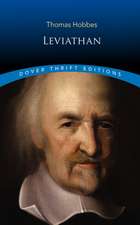
Leviathan
Autor Thomas Hobbesen Limba Engleză Paperback – 27 mar 2007
Capitolul referitor la „starea naturală” a omului rămâne, poate, cea mai influentă secțiune a acestui tratat, definind viziunea lui Thomas Hobbes asupra necesității autorității statale. Scris în contextul sângeros al Războiului Civil Englez, Leviathan nu este doar o pledoarie pentru absolutism, ci o analiză riguroasă a mecanismelor puterii și a psihologiei umane. Reținem argumentul central al autorului: fără o putere comună care să îi țină pe toți în frâu, societatea decade inevitabil într-un conflict perpetuu, unde viața este „singuratică, săracă, urâtă, brutală și scurtă”.
Din punct de vedere vizual și simbolic, ediția publicată de WORDSWORTH EDITIONS LTD păstrează celebra iconografie a frontispiciului original, unde figura gigantică a statului este compusă din cetățenii săi, reflectând fuziunea dintre puterea seculară și cea spirituală. Această structură extinde cadrul propus de The Prince de Niccolò Machiavelli, trecând de la pragmatismul politic al principelui la o fundamentare teoretică și juridică a contractului social. În contextul operei sale, Leviathan reprezintă maturizarea conceptelor explorate în The Elements of Law Natural and Politic, unde Hobbes începuse deja să schițeze ideea că frica de moarte violentă este motorul principal al organizării politice.
Această ediție în limba engleză oferă studenților și cercetătorilor acces la un text dens, dar logic, structurat pentru a demonstra cum rațiunea dictează căutarea păcii. Spre deosebire de analizele contemporane precum An Analysis of Thomas Hobbes's Leviathan de Jeremy Kleidosty, care oferă o perspectivă critică modernă, textul original ne permite să urmărim direct stilul geometric și deductiv prin care Hobbes a redefinit fundamentele guvernării.
Preț: 138.57 lei
Carte tipărită la comandă
Livrare economică 27 noiembrie-11 decembrie
Specificații
ISBN-10: 1934451622
Pagini: 420
Dimensiuni: 152 x 229 x 23 mm
Greutate: 0.61 kg
Editura: Wilder Publications
V-ar putea interesa
-
 The Blank SlateSteven Pinker-28%Preț: 78.74 lei109.00 lei
 -
 The PrinceNiccolo Machiavelli-20%Preț: 45.17 lei56.59 lei
 -
 The OutsiderAlbert Camus-28%Preț: 51.06 lei70.72 lei
 -
 The New LeviathansJohn Gray-32%Preț: 62.38 lei91.99 lei
 -
 -21%Preț: 256.40 lei325.20 lei
 -
 Oxygen: The molecule that made the worldNick Lane-18%Preț: 76.39 lei93.70 lei
 -
 Francis Bacon: The Major WorksFrancis Bacon-15%Preț: 88.50 lei104.60 lei
 -
 Hobbes, T: LeviathanThomas HobbesPreț: 84.79 lei
 -
 Irrational ExuberanceRobert J. ShillerPreț: 128.67 lei
 -
 The Snowball: Warren Buffett and the Business of LifeAlice Schroeder-23%Preț: 97.24 lei126.43 lei
 -
 On the Origin of SpeciesCharles DarwinPreț: 93.08 lei
 -
 A Brief History of TimeStephen Hawking-19%Preț: 64.40 lei79.13 lei
 -
 Locke: Political WritingsJohn Locke-17%Preț: 141.78 lei171.31 lei
 -
 Edda Prologue & Gylfaginni: 2nd EditionSnorri Sturluson-15%Preț: 85.40 lei100.73 lei
 -
 Who's in Charge?: Free Will and the Science of the BrainMichael Gazzaniga-27%Preț: 68.42 lei93.17 lei
 -
 Leviathan, Parts I and II - Revised EditionThomas Hobbes-13%Preț: 138.03 lei157.92 lei
 -
 The Complete Book of Tarot ReversalsMary K GreerPreț: 110.77 lei
 -
 GoddessesJoseph Campbell-24%Preț: 146.96 lei192.27 lei
 -
 Preț: 90.00 lei
 -
 Social ContractJean-Jaques RousseauPreț: 42.87 lei
 -
 The Art of LovingErich FrommPreț: 71.06 lei
 -
 The Books of EnochJoseph B. LumpkinPreț: 161.38 lei
 -
 The PrinceNiccolò MachiavelliPreț: 33.48 lei
 -
 UtopiaThomas MorePreț: 33.19 lei
De ce să citești această carte
Recomandăm această ediție a Leviathan tuturor celor pasionați de istoria ideilor politice și filozofie morală. Este textul care a pus bazele conceptului de contract social, oferind o perspectivă fascinantă asupra modului în care autoritatea legitimă se naște din nevoia de securitate. Cititorul va câștiga o înțelegere profundă a rădăcinilor statului modern și a dilemelor dintre libertatea individuală și ordinea colectivă.
Despre autor
Thomas Hobbes (1588–1679) a fost un filozof englez de prim rang, considerat unul dintre pionierii filozofiei politice moderne. Format la Oxford, Hobbes a fost martorul tensiunilor politice majore din secolul al XVII-lea, experiență care i-a modelat viziunea sceptică asupra naturii umane. Deși este recunoscut în principal pentru Leviathan și teoria contractului social, interesele sale au fost vaste, incluzând istoria (a tradus The Peloponnesian War de Tucidide), geometria, teologia și etica. Opera sa a provocat controverse majore în epocă, fiind criticată atât de biserică, cât și de susținătorii parlamentarismului, dar rămâne un pilon indispensabil al gândirii occidentale.
Descriere
'He that is to govern a whole Nation, must read inhimself, not this, or that particular man; but Man-kind.'Thomas Hobbes's Leviathanis not just one of the greatest philosophicaltexts in the English language; it is one of the most important works in thehistory of Western political thought. Almost every major tradition in thecenturies after Hobbes - from radical democracy to authoritarianism - hasbeen influenced by its arguments. Written in exile in a period of dramaticdevelopments - civil war and regicide - Leviathanis in some ways theproduct of its own special circumstances. And yet, at the same time,it deals with fundamental issues that matter to all of us today: the natureand purpose of the state, the relation between human nature and politics,the idea of natural rights, the justification of authority, the concept ofrepresentation, the nature of sovereignty, the limits of obedience, andthe relationship between religious obligations and human ones.This new edition offers a definitive text drawn from more than twentyyears of research by Noel Malcolm, including, in English translation, allthe most significant revisions made in Hobbes's later Latin translation of Leviathan, as well as extensive explanatory notes that elucidate Hobbes'slanguage and identify the many Biblical, classical, and other allusionsthat are scattered through his text.
Notă biografică
Cuprins
- General Introduction
- Textual Introduction
- Selected Further Reading
- How to Use This Edition
- Abbreviations
- Leviathan
- Translation of Ch. 9 of the Latin Leviathan
- Translation of Ch. 46 of the Latin Leviathan
- Translation of Ch. 47 of the Latin Leviathan
- Translation of the Appendix to the Latin Leviathan: Ch. 1
- Translation of the Appendix to the Latin Leviathan: Ch. 2
- Translation of the Appendix to the Latin Leviathan: Ch. 3
- Explanatory Notes
- Bibliography
- Index