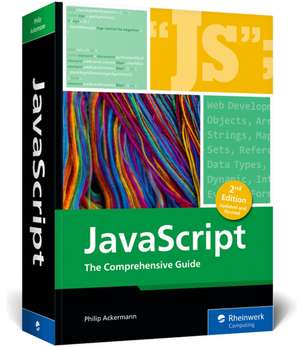
JavaScript: Rheinwerk Computing
Autor Philip Ackermannen Limba Engleză Paperback – 8 dec 2026
Suntem de părere că această lucrare reprezintă una dintre cele mai detaliate resurse tehnice disponibile pentru ecosistemul JavaScript modern. Volumul semnat de Philip Ackermann în cadrul seriei Rheinwerk Computing nu se limitează la simple fragmente de cod, ci propune o incursiune tehnică în standardele actuale ale limbajului, acoperind totul de la manipularea tipurilor de date până la arhitecturi complexe pentru server și dispozitive mobile. Notăm cu interes rigoarea cu care sunt tratate versiunile curente și specificațiile limbajului, oferind un fundament solid pentru dezvoltarea de software enterprise. Ca și Laurence Lars Svekis în JavaScript from Beginner to Professional, autorul distilează experiență reală în principii acționabile, însă se diferențiază prin volumul impresionant de informații despre programarea orientată pe obiecte și cea funcțională, extinzând discuția dincolo de browser. Philip Ackermann își consolidează aici expertiza începută în Full Stack Web Development, oferind o bază solidă pentru oricine dorește să înțeleagă mecanismele profunde ale motorului JavaScript. Organizarea volumului este strict ierarhică și practică. Primele capitole pun bazele prin controlul fluxului și gestionarea variabilelor, în timp ce secțiunile avansate explorează Web API-uri și dezvoltarea de aplicații de desktop. Credem că mențiunile specifice din capitolele 3.6 și 3.8 privind gestionarea erorilor și procesul de debugging sunt esențiale, deoarece transformă cartea dintr-un simplu manual de sintaxă într-un ghid de bune practici pentru producție. Această progresie, susținută de aproape o mie de pagini de documentație, face din acest titlu un instrument de referință indispensabil pentru inginerii software care vizează performanța și scalabilitatea.
Din seria Rheinwerk Computing
-
 Preț: 438.93 lei
- 20%
 Preț: 185.48 lei
- 20%
 Preț: 393.56 lei
- 20%
 Preț: 402.51 lei
- 20%
 Preț: 255.88 lei
- 20%
 Preț: 376.30 lei
-
 Preț: 239.43 lei
- 20%
 Preț: 273.25 lei
- 20%
 Preț: 286.20 lei
- 20%
 Preț: 296.37 lei
-
 Preț: 534.05 lei
- 20%
 Preț: 452.01 lei
- 20%
 Preț: 214.65 lei
- 20%
 Preț: 434.27 lei
-
 Preț: 465.29 lei
- 20%
 Preț: 362.85 lei
- 20%
 Preț: 200.71 lei
- 20%
 Preț: 402.38 lei
- 20%
 Preț: 161.94 lei
- 20%
 Preț: 291.90 lei
- 20%
 Preț: 286.66 lei
- 11%
 Preț: 598.81 lei
- 20%
 Preț: 372.63 lei
- 20%
 Preț: 373.13 lei
-
 Preț: 316.48 lei
- 20%
 Preț: 201.68 lei
- 20%
 Preț: 171.08 lei
- 20%
 Preț: 208.72 lei
-
 Preț: 576.66 lei
-
 Preț: 197.49 lei
-
 Preț: 242.70 lei
-
 Preț: 171.54 lei
-
 Preț: 247.17 lei
-
 Preț: 231.86 lei
- 20%
 Preț: 186.58 lei
- 20%
 Preț: 357.39 lei
- 20%
 Preț: 190.49 lei
- 20%
 Preț: 648.82 lei
- 20%
 Preț: 387.29 lei
- 20%
 Preț: 189.19 lei
- 20%
 Preț: 488.36 lei
-
 Preț: 332.54 lei
-
 Preț: 321.11 lei
-
 Preț: 163.85 lei
- 20%
 Preț: 221.64 lei
- 20%
 Preț: 314.80 lei
- 20%
 Preț: 475.30 lei
- 20%
 Preț: 497.84 lei
- 20%
 Preț: 376.80 lei
- 20%
 Preț: 197.27 lei
Preț: 388.02 lei
Preț vechi: 485.03 lei
-20% Nou
Carte disponibilă
Livrare economică 12-26 noiembrie
Specificații
ISBN-10: 1493227971
Pagini: 973
Dimensiuni: 178 x 254 mm
Greutate: 1.67 kg
Ediția:Nouă
Editura: Rheinwerk Verlag GmbH
Seria Rheinwerk Computing
V-ar putea interesa
-
 Clean ArchitectureRobert C. Martin-20%Preț: 236.92 lei296.15 lei
-
 Node.js, MongoDB and Angular Web DevelopmentBrad Dayley-20%Preț: 271.84 lei339.79 lei
-
 JavaScript Absolute Beginner's GuideKirupa Chinnathambi-20%Preț: 206.13 lei257.65 lei
-
 -20%Preț: 211.52 lei264.40 lei
-
 JavaScript All-in-One For DummiesChris Minnick-20%Preț: 193.30 lei241.61 lei
-
 JavaScript Essentials For DummiesPaul McFedries-20%Preț: 79.76 lei99.71 lei
-
 -20%Preț: 264.40 lei330.50 lei
-
 Creating Apps with React NativeM. Holmes He-20%Preț: 312.82 lei391.03 lei
-
 Just React!Hari Narayn-20%Preț: 258.03 lei322.54 lei
-
 Effective TypeScriptDan Vanderkam-28%Preț: 237.07 lei330.77 lei
-
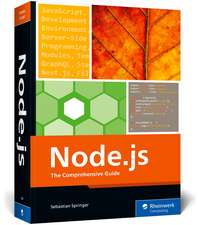 Node.jsSebastian Springer-20%Preț: 281.52 lei351.90 lei
-
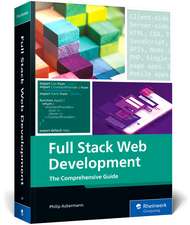 Full Stack Web DevelopmentPhilip Ackermann-20%Preț: 338.00 lei422.49 lei
-
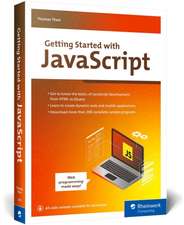 Getting Started with JavaScriptThomas Theis-20%Preț: 211.09 lei263.86 lei
-
 Building Mobile Apps at ScaleGergely Orosz-20%Preț: 104.98 lei131.22 lei
-
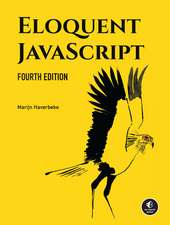 -35%Preț: 257.48 lei395.68 lei
-
 Professional React NativeAlexander Benedikt Kuttig-20%Preț: 249.52 lei311.90 lei
-
 Full Stack FastAPI, React, and MongoDBMarko Aleksendric-20%Preț: 235.34 lei294.17 lei
-
 Full Stack Development with MongoDBManu SharmaPreț: 272.41 lei
De ce să citești această carte
Recomandăm acest ghid dezvoltatorilor care doresc o stăpânire completă a ecosistemului JavaScript. De la manipularea DOM-ului la integrarea Web API-urilor și dezvoltarea server-side, cartea oferă un parcurs tehnic riguros. Este ideală pentru profesioniștii care vor să treacă de la scrierea de scripturi simple la arhitecturarea unor aplicații enterprise complexe, beneficiind de explicații clare despre OOP, programare funcțională și debugging.
Cuprins
... Preface ... 23
... Target Audience ... 23
... Structure of the Book ... 24
... How Should I Read This Book? ... 24
... Acknowledgments ... 24
1 ... Basics and Introduction ... 27
1.1 ... Programming Basics ... 27
1.2 ... Introduction to JavaScript ... 41
1.3 ... Summary ... 49
2 ... Getting Started ... 51
2.1 ... Introduction to JavaScript and Web Development ... 51
2.2 ... Integrating JavaScript into a Web Page ... 58
2.3 ... Creating Output ... 71
2.4 ... Summary ... 77
3 ... Language Core ... 79
3.1 ... Storing Values in Variables ... 79
3.2 ... Using the Different Data Types ... 88
3.3 ... Deploying the Different Operators ... 106
3.4 ... Controlling the Flow of a Program ... 125
3.5 ... Creating Reusable Code Blocks ... 161
3.6 ... Responding to Errors and Handling Them Correctly ... 190
3.7 ... Commenting the Source Code ... 209
3.8 ... Debugging the Code ... 209
3.9 ... Summary ... 219
4 ... Working with Reference Types ... 221
4.1 ... Differences Between Primitive Data Types and Reference Types ... 221
4.2 ... Encapsulating State and Behavior in Objects ... 228
4.3 ... Working with Arrays ... 261
4.4 ... Extracting Values from Arrays and Objects ... 286
4.5 ... Working with Strings ... 298
4.6 ... Using Maps ... 305
4.7 ... Using Sets ... 312
4.8 ... Other Global Objects ... 316
4.9 ... Working with Regular Expressions ... 320
4.10 ... Functions as Reference Types ... 339
4.11 ... Summary ... 347
5 ... Dynamically Changing Web Pages ... 349
5.1 ... Structure of a Web Page ... 349
5.2 ... Selecting Elements ... 355
5.3 ... Working with Text Nodes ... 382
5.4 ... Working with Elements ... 386
5.5 ... Working with Attributes ... 395
5.6 ... Summary ... 399
6 ... Processing and Triggering Events ... 401
6.1 ... The Concept of Event-Driven Programming ... 401
6.2 ... Responding to Events ... 402
6.3 ... The Different Types of Events ... 418
6.4 ... Understanding and Influencing the Flow of Events ... 430
6.5 ... Programmatically Triggering Events ... 444
6.6 ... Summary ... 447
7 ... Working with Forms ... 449
7.1 ... Accessing Forms and Form Fields ... 449
7.2 ... Programmatically Submitting and Resetting Forms ... 462
7.3 ... Validating Form Inputs ... 464
7.4 ... Summary ... 474
8 ... Controlling Browsers and Reading Browser Information ... 475
8.1 ... The Browser Object Model ... 475
8.2 ... Accessing Window Information ... 477
8.3 ... Accessing Navigation Information of a Currently Open Web Page ... 487
8.4 ... Viewing and Modifying the Browsing History ... 490
8.5 ... Recognizing Browsers and Determining Browser Features ... 496
8.6 ... Accessing Screen Information ... 499
8.7 ... Summary ... 500
9 ... Dynamically Reloading Contents of a Web Page ... 501
9.1 ... The Principle of Ajax ... 501
9.2 ... The XML Format ... 507
9.3 ... The JSON Format ... 512
9.4 ... Making Requests via Ajax ... 517
9.5 ... Summary ... 542
10 ... Simplifying Tasks with jQuery ... 543
10.1 ... Introduction ... 543
10.2 ... Working with the DOM ... 548
10.3 ... Responding to Events ... 565
10.4 ... Creating Ajax Requests ... 572
10.5 ... Summary ... 579
11 ... Dynamically Creating Images and Graphics ... 585
11.1 ... Drawing Images ... 585
11.2 ... Integrating Vector Graphics ... 606
11.3 ... Summary ... 613
12 ... Using Modern Web APIs ... 615
12.1 ... Communicating via JavaScript ... 616
12.2 ... Recognizing Users ... 625
12.3 ... Using the Browser Storage ... 633
12.4 ... Using the Browser Database ... 640
12.5 ... Accessing the File System ... 651
12.6 ... Moving Components of a Web Page with Drag and Drop ... 659
12.7 ... Parallelizing Tasks ... 664
12.8 ... Determining the Location of Users ... 668
12.9 ... Reading the Battery Level of an End Device ... 671
12.10 ... Outputting Speech and Recognizing Speech ... 674
12.11 ... Creating Animations ... 678
12.12 ... Working with the Command Line ... 682
12.13 ... Developing Multilingual Applications ... 691
12.14 ... Overview of Various Web APIs ... 703
12.15 ... Summary ... 707
13 ... Object-Oriented Programming ... 709
13.1 ... The Principles of Object-Oriented Programming ... 709
13.2 ... Prototypical Object Orientation ... 715
13.3 ... Pseudoclassical Object Orientation ... 722
13.4 ... Object Orientation with Class Syntax ... 728
13.5 ... Summary ... 747
14 ... Functional Programming ... 749
14.1 ... Principles of Functional Programming ... 749
14.2 ... Imperative Programming and Functional Programming ... 751
14.3 ... Summary ... 760
15 ... Correctly Structuring the Source Code ... 763
15.1 ... Avoiding Name Conflicts ... 763
15.2 ... Defining and Using Modules ... 767
15.3 ... Summary ... 781
16 ... Using Asynchronous Programming and Other Advanced Features ... 783
16.1 ... Understanding and Using Asynchronous Programming ... 783
16.2 ... Encapsulating Iteration over Data Structures ... 800
16.3 ... Pausing and Resuming Functions ... 804
16.4 ... Intercepting Access to Objects ... 807
16.5 ... Summary ... 812
17 ... Creating Server-Based Applications with Node.js ... 815
17.1 ... Introduction to Node.js ... 815
17.2 ... Managing Node.js Packages ... 818
17.3 ... Processing and Triggering Events ... 825
17.4 ... Accessing the File System ... 829
17.5 ... Creating a Web Server ... 833
17.6 ... Accessing Databases ... 842
17.7 ... Working with Streams ... 849
17.8 ... Summary ... 857
18 ... Creating Mobile Applications with JavaScript ... 859
18.1 ... The Different Types of Mobile Applications ... 859
18.2 ... Creating Mobile Applications with React Native ... 865
18.3 ... Summary ... 878
19 ... AI Applications with JavaScript ... 879
19.1 ... Basics and Concepts ... 880
19.2 ... Working with LLMs on the Server ... 884
19.3 ... Practical Application of LLMs ... 895
19.4 ... LangChain Architecture Framework for AI Applications ... 908
19.5 ... Summary ... 915
20 ... Setting up a Professional Development Process ... 917
20.1 ... Automating the Workflow ... 917
20.2 ... Version Control of the Source Code ... 939
20.3 ... Summary ... 955
... The Author ... 957
... Index ... 959
Descriere
Begin your JavaScript journey with this comprehensive, hands-on guide. You'll learn everything there is to know about professional JavaScript programming, from core language concepts to essential client-side tasks. Build dynamic web applications with step-by-step instructions and expand your knowledge by exploring server-side development and mobile development. Work with advanced language features, write clean and efficient code, and much more!
Highlights include:
Reference types
Objects
Events
Forms
Web APIs
Object-oriented programming
Functional programming
Client-side applications
Server-side applications
Mobile and desktop applications
Highlights:
- Reference types
- Objects
- Events
- Forms
- Web APIs
- Object-oriented programming
- Functional programming
- Client-side applications
- Server-side applications
- Mobile and desktop applications