
Interrogating Illiberal Peace in Eurasia: Critical Perspectives on Peace and Conflict: Global Dialogues: Non Eurocentric Visions of the Global
Editat de Catherine Owen, Shairbek Juraev, David Lewis, Nick Megoran, John Heathershawen Limba Engleză Paperback – 9 ian 2018
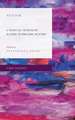
This book sets out a challenge to these assumptions and framings. It not only questions but resolutely dismisses the notion that the peacebuilding methods favoured by Western states remain the most salient in Eurasia. Instead, it develops a framework that seeks to conceptualise the ways in which non-liberal actors contest or transform globally promoted norms of conflict management and promote alternative ones in their place. Authoritarian Conflict Management (ACM) consists of an ensemble of norms and practices in which non-liberal actors attempt to exert sustained hegemonic control over the local discursive, economic and spatial realms in a given territory.
With case studies ranging from Afghanistan to Uzbekistan, Xinjiang to the Caucasus, the chapters shed light on the ways in which local and regional actors enact practice of ACM in order to impose stability in conflict-prone localities, thereby challenging the Western-led consensus known as the 'liberal peace'.





Preț: 288.37 lei
Preț vechi: 391.61 lei
-26%
Puncte Express: 433
Carte tipărită la comandă
Livrare economică 30 noiembrie-14 decembrie
Livrare prin curier în România Termenul estimat este afișat lângă disponibilitate.
Transport gratuit de la 400.00 lei Plată online sau ramburs, în funcție de opțiunile comenzii.
Retur gratuit în 14 zile Comandă securizată și suport în română.
Specificații
ISBN-13: 9781786603623
ISBN-10: 1786603624
Pagini: 240
Ilustrații: 15 BW Illustrations, 13 Tables
Dimensiuni: 148 x 226 x 20 mm
Greutate: 0.5 kg
Editura: Bloomsbury Publishing
Colecția Rowman & Littlefield
Seria Global Dialogues: Non Eurocentric Visions of the Global
Locul publicării:New York, United States
ISBN-10: 1786603624
Pagini: 240
Ilustrații: 15 BW Illustrations, 13 Tables
Dimensiuni: 148 x 226 x 20 mm
Greutate: 0.5 kg
Editura: Bloomsbury Publishing
Colecția Rowman & Littlefield
Seria Global Dialogues: Non Eurocentric Visions of the Global
Locul publicării:New York, United States
Cuprins
Introduction, Catherine Owen et al / 1. History, Memory and the Quest for Conflict Resolution in Ferghana Valley, Jeff Sahadeo / 2. China's Approach to Countering Religious Extremism among Uyghurs in Xingjang, Adam Jones / 3. Women and Literature in Azerbaijan: Creative Literacy as an Asset Model of Peace-Building, Alison Mandaville / 4. A Negative Post-Liberal Peace? Probing the Implications of Peacebuilding Discourses and Practices in Central Asia, Philipp Lottholz / 5. "Everyday Peace" in Jabbor Rasulov, Tajikistan: Local Social Order and Possibilities for a Local Turn in Peace Building, Khushbakht Hojiev and Anna Kreikemeyer / 6. Nation-Building in Central Asia: Towards a New Ethnic Policy, Valeriy Khan /7. Clashes of Universalisms: Xinjiang, tianxia and Changing World Order in 19th Century, Zhiguang Yin / 8. Spatial Security during Ethnic Riots in Osh, Joldon Kutmanaliev / 9. Bottom-up Peacekeeping in Southern Kyrgyzstan, Alisher Khamidov & Nick Megoran / 10. Conflict Management, Extractive Industries, and the 2014 International Military Exit Strategy in Afghanistan, Timor Sharan and Srinjoy Bose/ 11. Positive Incentives to Stop Insurgency? Russian Conciliatory Tactics in the North Caucasus, Elena Zhirukhina / Bibliography / Index
Recenzii
Grounded in rich empirical investigations, this collection analyses the new forms of authoritarian conflict management emerging in contemporary Eurasia. It is a welcome contribution to the growing and important scholarship that no longer takes the 'liberal peace' as its sole point of reference, but seeks to understand non-liberal forms of peace and conflict management, as well as challenges to these, in their own terms.