Cantitate/Preț
Produs

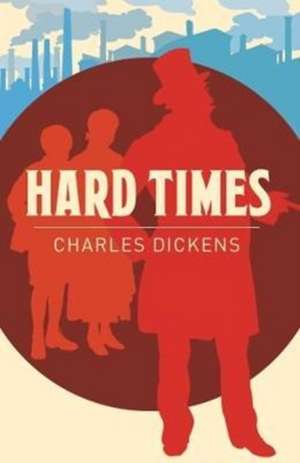
Hard Times

Autor Charles Dickens
en Limba Engleză Paperback – 4 iul 2017
Hard Times - For These Times (commonly known as Hard Times) is the tenth novel by Charles Dickens, first published in 1854. The book appraises English society and is aimed at highlighting the social and economic pressures of the times.
Literary significance & criticism
Critics have had a diverse range of opinions on the novel. The critic John Ruskin declared Hard Times to be his favourite Dickens work due to its exploration of important social questions. However, Thomas Macaulay branded it "sullen socialism," on the grounds that Dickens did not fully comprehend the politics of the time. This point was also made by George Bernard Shaw, who decreed Hard Times to be a novel of "passionate revolt against the whole industrial order of the modern world." Shaw criticised the novel for its failure to provide an accurate account of trade unionism of the time, deeming Dickens's character of Slackbridge, the poisonous orator, "a mere figment of middle-class imagination." However, believing it to be very different from Dickens's other novels, he also said: "Many readers find the change disappointing. Others find Dickens worth reading almost for the first time."
F. R. Leavis, in The Great Tradition, described the book as essentially a moral fable, and said that 'of all Dickens' works (it is) the one that has all the strengths of his genius - that of a completely serious work of art'. This, however, was a view which he later revised in Dickens the Novelist, which recognised that Dickens's strengths and artistry appeared fully in other works.
Walter Allen, in an introduction to an alternative edition, characterised Hard Times as being an unsurpassed "critique of industrial society," which was later superseded by works of D. H. Lawrence. Other writers have described the novel as being, as G. K. Chesterton commented in his work Appreciations and Criticisms, "the harshest of his stories"; whereas George Orwell praised the novel (and Dickens himself) for "generous anger."
Citește tot Restrânge

Toate formatele și edițiile

Toate formatele și edițiile Preț Express
Paperback (65) 2460 lei  2 zile
  HarperCollins Publishers – 2 mai 2012 2460 lei  2 zile
  Penguin Random House Group – 31 dec 2000 3445 lei  3-5 săpt.
  Vintage Books USA – 4 feb 2009 3984 lei  22-33 zile +1928 lei  7-13 zile
  Oxford University Press – 8 mai 2008 4029 lei  22-27 zile +2008 lei  7-13 zile
  Penguin Books – 26 iul 2012 4557 lei  22-33 zile +2202 lei  7-13 zile
  Arcturus Publishing – 4 iul 2017 4862 lei  3-5 săpt. +873 lei  7-13 zile
  CREATESPACE – 4895 lei  3-5 săpt.
  CREATESPACE – 5058 lei  3-5 săpt.
  Alma Books COMMIS – 14 aug 2015 5134 lei  3-5 săpt. +1694 lei  7-13 zile
  Penguin Books – 26 feb 2003 5289 lei  3-5 săpt. +1539 lei  7-13 zile
  Vintage Publishing – 31 dec 2011 5846 lei  3-5 săpt.
  6530 lei  3-5 săpt.
  CREATESPACE – 6964 lei  3-5 săpt.
  7042 lei  3-5 săpt.
  West Margin Press – 16 dec 2020 7247 lei  3-5 săpt. +1575 lei  7-13 zile
  7962 lei  3-5 săpt.
  8023 lei  3-5 săpt.
  CREATESPACE – 8063 lei  3-5 săpt.
  8979 lei  3-5 săpt.
  CREATESPACE – 9155 lei  3-5 săpt.
  9206 lei  3-5 săpt.
  CreateSpace Independent Publishing Platform – 9383 lei  3-5 săpt.
  KUPERARD (BRAVO LTD) – 7 feb 2001 9492 lei  3-5 săpt.
  CREATESPACE – 10085 lei  3-5 săpt.
  CREATESPACE – 10773 lei  3-5 săpt.
  10818 lei  3-5 săpt.
  CREATESPACE – 10961 lei  3-5 săpt.
  CREATESPACE – 12939 lei  3-5 săpt.
  Broadview Press – 29 feb 1996 14464 lei  3-5 săpt.
  CreateSpace Independent Publishing Platform – 6663 lei  6-8 săpt.
  CreateSpace Independent Publishing Platform – 6703 lei  6-8 săpt.
  8362 lei  6-8 săpt.
  8541 lei  6-8 săpt.
  8702 lei  6-8 săpt.
  Lulu.Com – 9 mar 2017 8947 lei  6-8 săpt.
  CreateSpace Independent Publishing Platform – 3 dec 2015 9065 lei  6-8 săpt.
  CreateSpace Independent Publishing Platform – 3 dec 2015 9065 lei  6-8 săpt.
  Public Park Publishing – 9 ian 2020 9338 lei  6-8 săpt.
  Toronto Public Domain Publishing – 24 iun 2020 9448 lei  6-8 săpt.
  USA Public Domain Books – 25 iun 2020 9448 lei  6-8 săpt.
  Susan Publishing Ltd – 25 iun 2020 9448 lei  6-8 săpt.
  Yorkshire Public Books – 25 iun 2020 9448 lei  6-8 săpt.
  Camel Publishing House – 25 iun 2020 9448 lei  6-8 săpt.
  Mary Publishing Company – 25 iun 2020 9448 lei  6-8 săpt.
  Public Public Books – 24 iun 2020 9448 lei  6-8 săpt.
  Texas Public Domain – 25 iun 2020 9448 lei  6-8 săpt.
  Public Publishing – 25 iun 2020 9448 lei  6-8 săpt.
  Barclays Public Books – 25 iun 2020 9448 lei  6-8 săpt.
  Serenity Publishers, LLC – 23 iul 2009 9462 lei  6-8 săpt.
  CREATESPACE – 10266 lei  6-8 săpt.
  CreateSpace Independent Publishing Platform – 29 noi 2015 10820 lei  6-8 săpt.
  CreateSpace Independent Publishing Platform – 29 noi 2015 10820 lei  6-8 săpt.
  Bibliotech Press – 7 ian 2020 11527 lei  6-8 săpt.
  Bottom of the Hill Publishing – 31 aug 2013 11683 lei  6-8 săpt.
  SC Active Business Development SRL – 24 apr 2017 11826 lei  39-44 zile
  Blurb – 6 feb 2019 11903 lei  39-44 zile
  Kessinger Publishing, LLC – 16 iun 2004 12371 lei  42-48 zile
  Throne Classics – 9 iul 2019 14308 lei  39-44 zile
  Prince Classics – 10 iun 2019 14308 lei  39-44 zile
  Lulu.Com – 29 mar 2020 14350 lei  6-8 săpt.
  Sovereign – 8 oct 2012 15366 lei  39-44 zile
  Maven Books – iul 2023 16843 lei  6-8 săpt.
  Echo Library – 30 iun 2003 19871 lei  39-44 zile
  TREDITION CLASSICS – 31 dec 2012 21566 lei  6-8 săpt.
  Echo Library – 31 mar 2006 26990 lei  39-44 zile
Hardback (10) 5961 lei  3-5 săpt. +1813 lei  7-13 zile
  Flame Tree Publishing – 15 feb 2020 5961 lei  3-5 săpt. +1813 lei  7-13 zile
  Penguin Books – 5 oct 2011 9543 lei  22-33 zile +4420 lei  7-13 zile
  Mint Editions – dec 2020 12338 lei  3-5 săpt.
  chiltern publishing – 2 ian 2024 13932 lei  3-5 săpt. +2594 lei  7-13 zile
  Public Park Publishing – 16 ian 2020 12696 lei  6-8 săpt.
  Lulu.Com – 9 mar 2017 19352 lei  6-8 săpt.
  Bibliotech Press – 7 ian 2020 20241 lei  6-8 săpt.
  Throne Classics – 9 iul 2019 21709 lei  39-44 zile
  Prince Classics – 10 iun 2019 21952 lei  39-44 zile
  TREDITION CLASSICS – 31 dec 2012 32555 lei  6-8 săpt.

Preț: 4862 lei

Nou

Puncte Express: 73

Preț estimativ în valută:
860 1003$ 755£

Carte disponibilă

Livrare economică 25 decembrie 25 - 08 ianuarie 26
Livrare express 11-17 decembrie pentru 1872 lei

Preluare comenzi: 021 569.72.76

Specificații

ISBN-13: 9781788280495
ISBN-10: 1788280490
Dimensiuni: 198 x 131 x 18 mm
Greutate: 0.2 kg
Editura: Arcturus Publishing

Notă biografică

Charles John Huffam Dickens (7 February 1812 - 9 June 1870) was an English writer and social critic. He created some of the world's best-known fictional characters and is regarded as the greatest novelist of the Victorian era. His works enjoyed unprecedented popularity during his lifetime, and by the twentieth century critics and scholars had recognised him as a literary genius. His novels and short stories enjoy lasting popularity. Born in Portsmouth, Dickens left school to work in a factory when his father was incarcerated in a debtors' prison. Despite his lack of formal education, he edited a weekly journal for 20 years, wrote 15 novels, five novellas, hundreds of short stories and non-fiction articles, lectured and performed extensively, was an indefatigable letter writer, and campaigned vigorously for children's rights, education, and other social reforms. Dickens was regarded as the literary colossus of his age. His 1843 novella, A Christmas Carol, remains popular and continues to inspire adaptations in every artistic genre. Oliver Twist and Great Expectations are also frequently adapted, and, like many of his novels, evoke images of early Victorian London. His 1859 novel, A Tale of Two Cities, set in London and Paris, is his best-known work of historical fiction.

Recenzii

“A masterpiece . . . a completely serious work of art.”
– F.R. Leavis
"A masterpiece...a completely serious work of art" -- F.R.Leavis "The greatest of Dickens' work...should be studied with close and earnest care" -- John Ruskin "Big and earnest, though circus folk and bank robbery add colour to its canvas of industrialists and loveless marriages" Sunday Times

Descriere

Descriere de la o altă ediție sau format:

Set in an industrial city in Northern England during the Victorian era, Thomas Gradgrind, a wealthy and retired man, devotes his life to the rationalist philosophy, and raises his children, Louisa and Tom, to never engage in any imaginative activity. The two grow up feeling confused, like something is missing in their lives, yet are unable figure out what exactly that is and affected differently by their upbringing. Louisa struggles to feel joy, and Tom struggles to find ethical standards. When Josiah Bounderby, a crass, rich man, asks for Louisa's hand in marriage, she cannot find a rational reason not to marry him. He would elevate her social status, was a friend of her father, and employed her brother at his bank. She decides to marry Bounderby, despite feeling no love for him. Meanwhile, Stephen, a poor laborer in one of the city's factories, who is struggling under the oppression of the upper classes, meets Tom and Louisa, inspiring them in different ways. When the city is shocked by a scandalous and devastating bank robbery, Stephen, Tom, and Louisa's lives are forever changed, and Gradgrind must question the strict beliefs on which he relies. Hard Times by Charles Dickens is revered not only for its skillfully constructed prose, but also its critique of capitalist and utilitarian philosophy. Dickens' empathetic portrayal of the effects of such beliefs raises concern and advocates for the conservation of human creativity and joy in a way that is still applicable today. With an eye-catching cover design and a modern font, Hard Times by Charles Dickens is a thought-provoking novel written by the greatest and most influential writers of the Victorian era.


Extras

CHAPTER I
The One Thing Needful

“Now, what I want is, Facts. Teach these boys and girls nothing but Facts. Facts alone are wanted in life. Plant nothing else, and root out everything else. You can only form the minds of reasoning animals upon Facts: nothing else will ever be of any service to them. This is the principle on which I bring up my own children, and this is the principle on which I bring up these children. Stick to Facts, Sir!”

The scene was a plain, bare, monotonous vault of a schoolroom, and the speaker’s square forefinger emphasized his observations by underscoring every sentence with a line on the schoolmaster’s sleeve. The emphasis was helped by the speaker’s square wall of a forehead, which had his eyebrows for its base, while his eyes found commodious cellerage in two dark caves, overshadowed by the wall. The emphasis was helped by the speaker’s mouth, which was wide, thin, and hard set. The emphasis was helped by the speaker’s voice, which was inflexible, dry, and dictatorial. The emphasis was helped by the speaker’s hair, which bristled on the skirts of his bald head, a plantation of firs to keep the wind from its shining surface, all covered with knobs, like the crust of a plum pie, as if the head had scarcely warehouse-room for the hard facts stored inside. The speaker’s obstinate carriage, square coat, square legs, square shoulders,—nay, his very neckcloth, trained to take him by the throat with an unaccommodating grasp, like a stubborn fact, as it was,—all helped the emphasis.

“In this life, we want nothing but Facts, Sir; nothing but Facts!”

The speaker, and the schoolmaster, and the third grown person present, all backed a little, and swept with their eyes the inclined plane of little vessels then and there arranged in order, ready to have imperial gallons of facts poured into them until they were full to the brim.

CHAPTER II
Murdering the Innocents

Thomas Gradgrind, Sir. A man of realities. A man of facts and calculations. A man who proceeds upon the principle that two and two are four, and nothing over, and who is not to be talked into allowing for anything over. Thomas Gradgrind, Sir—peremptorily Thomas—Thomas Gradgrind. With a rule and a pair of scales, and the multiplication table always in his pocket, Sir, ready to weigh and measure any parcel of human nature, and tell you exactly what it comes to. It is a mere question of figures, a case of simple arithmetic. You might hope to get some other nonsensical belief into the head of George Gradgrind, or Augustus Gradgrind, or John Gradgrind, or Joseph Gradgrind (all supposititious, non-existent persons), but into the head of Thomas Gradgrind—no, Sir!

In such terms Mr. Gradgrind always mentally introduced himself, whether to his private circle of acquaintance, or to the public in general. In such terms, no doubt, substituting the words “boys and girls,” for “Sir,” Thomas Gradgrind now presented Thomas Gradgrind to the little pitchers before him, who were to be filled so full of facts.

Indeed, as he eagerly sparkled at them from the cellarage before mentioned, he seemed a kind of cannon loaded to the muzzle with facts, and prepared to blow them clean out of the regions of childhood at one discharge. He seemed a galvanizing apparatus, too, charged with a grim mechanical substitute for the tender young imaginations that were to be stormed away.

“Girl number twenty,” said Mr. Gradgrind, squarely pointing with his square forefinger, “I don’t know that girl. Who is that girl?”

“Sissy Jupe, sir,” explained number twenty, blushing, standing up, and curtseying.

“Sissy is not a name,” said Mr. Gradgrind. “Don’t call yourself Sissy. Call yourself Cecilia.”

“It’s father as calls me Sissy, sir,” returned the young girl in a trembling voice, and with another curtsey.

“Then he has no business to do it,” said Mr. Gradgrind. “Tell him he mustn’t. Cecilia Jupe. Let me see. What is your father?”

“He belongs to the horse-riding, if you please, sir.”

Mr. Gradgrind frowned, and waved off the objectionable calling with his hand.

“We don’t want to know anything about that, here. You mustn’t tell us about that, here. Your father breaks horses, don’t he?”

“If you please, sir, when they can get any to break, they do break horses in the ring, sir.”

“You mustn’t tell us about the ring, here. Very well, then. Describe your father as a horsebreaker. He doctors sick horses, I dare say?”

“Oh yes, sir.”

“Very well, then. He is a veterinary surgeon, a farrier and horsebreaker. Give me your definition of a horse.”

(Sissy Jupe thrown into the greatest alarm by this demand.)

“Girl number twenty unable to define a horse!” said Mr. Gradgrind, for the general behoof of all the little pitchers. “Girl number twenty possessed of no facts, in reference to one of the commonest of animals! Some boy’s definition of a horse. Bitzer, yours.”

The square finger, moving here and there, lighted suddenly on Bitzer, perhaps because he chanced to sit in the same ray of sunlight which, darting in at one of the bare windows of the intensely whitewashed room, irradiated Sissy. For, the boys and girls sat on the face of the inclined plane in two compact bodies, divided up the centre by a narrow interval; and Sissy, being at the corner of a row on the sunny side, came in for the beginning of a sunbeam, of which Bitzer, being at the corner of a row on the other side, a few rows in advance, caught the end. But, whereas the girl was so dark-eyed and dark-haired, that she seemed to receive a deeper and more lustrous colour from the sun, when it shone upon her, the boy was so light-eyed and light-haired that the self-same rays appeared to draw out of him what little colour he ever possessed. His cold eyes would hardly have been eyes, but for the short ends of lashes which, by bringing them into immediate contrast with something paler than themselves, expressed their form. His short-cropped hair might have been a mere continuation of the sandy freckles on his forehead and face. His skin was so unwholesomely deficient in the natural tinge, that he looked as though, if he were cut, he would bleed white.

“Bitzer,” said Thomas Gradgrind. “Your definition of a horse.”

“Quadruped. Graminivorous. Forty teeth, namely twenty-four grinders, four eye-teeth, and twelve incisive. Sheds coat in the spring; in marshy countries, sheds hoofs, too. Hoofs hard, but requiring to be shod with iron. Age known by marks in mouth.” Thus (and much more) Bitzer.

“Now girl number twenty,” said Mr. Gradgrind. “You know what a horse is.”

She curtseyed again, and would have blushed deeper, if she could have blushed deeper than she had blushed all this time. Bitzer, after rapidly blinking at Thomas Gradgrind with both eyes at once, and so catching the light upon his quivering ends of lashes that they looked like the antennæ of busy insects, put his knuckles to his freckled forehead, and sat down again.

The third gentleman now stepped forth. A mighty man at cutting and drying, he was; a government officer; in his way (and in most other people’s too), a professed pugilist; always in training, always with a system to force down the general throat like a bolus, always to be heard of at the bar of his little Public-office, ready to fight all England. To continue in fistic phraseology, he had a genius for coming up to the scratch,2 wherever and whatever it was, and proving himself an ugly customer. He would go in and damage any subject whatever with his right, follow up with his left, stop, exchange, counter, bore his opponent (he always fought All England)3 to the ropes, and fall upon him neatly. He was certain to knock the wind out of common sense, and render that unlucky adversary deaf to the call of time. And he had it in charge from high authority to bring about the great public- office Millennium, when Commissioners should reign upon earth.

“Very well,” said this gentleman, briskly smiling, and folding his arms. “That’s a horse. Now, let me ask you girls and boys, Would you paper a room with representations of horses?”

After a pause, one half of the children cried in chorus, “Yes, Sir!” Upon which the other half, seeing in the gentleman’s face that Yes was wrong, cried out in chorus, “No, Sir!”—as the custom is, in these examinations.

“Of course, No. Why wouldn’t you?”

A pause. One corpulent slow boy, with a wheezy manner of breathing, ventured the answer, Because he wouldn’t paper a room at all, but would paint it.

“You must paper it,” said the gentleman, rather warmly.

“You must paper it,” said Thomas Gradgrind, “whether you like it or not. Don’t tell us you wouldn’t paper it. What do you mean, boy?”

Textul de pe ultima copertă

Despite the title, Dickens’s portrayal of early industrial society here is less relentlessly grim than that in novels by contemporaries such as Elizabeth Gaskell or Charles Kingsley. Hard Times weaves the tale of Thomas Gradgrind, a hard-headed politician who raises his children Louisa and Tom without love, of Sissy the circus girl with love to spare who is deserted and adopted into their family, and of the honest mill worker Stephen Blackpool and the bombastic mill owner Josiah Bounderby. The key contrasts created are finally less those between wealth and poverty, or capitalists and workers, than those between the head and the heart, between “Fact”—the cold, rationalistic approach to life that Dickens associates with utilitarianism—and “Fancy”—a warmth of the imagination and of the feelings, which values individuals above ideas.

Concentrated and compressed in its narrative form, Hard Times is at once a fable, a novel of ideas, and a social novel that seeks to engage directly and analytically with political issues. The central conflicts raised in the text, between government’s duty not to intervene to guarantee the liberty of the subject, and between quantitative and qualitative assessments of progress, remain unresolved today in the late or post industrial stages of liberal democracies.