
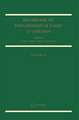
Handbook of Philosophical Logic: Volume 17: Handbook of Philosophical Logic, cartea 17
Editat de Dov M. Gabbay, Franz Guenthneren Limba Engleză Paperback – 20 aug 2015
Preț: 615.05 lei
Preț vechi: 723.59 lei
-15% Nou
Puncte Express: 923
Preț estimativ în valută:
108.86€ • 127.40$ • 95.24£
108.86€ • 127.40$ • 95.24£
Carte tipărită la comandă
Livrare economică 24 ianuarie-07 februarie 26
Preluare comenzi: 021 569.72.76
Specificații
ISBN-13: 9789401780964
ISBN-10: 940178096X
Pagini: 284
Ilustrații: XIII, 269 p.
Dimensiuni: 155 x 235 x 15 mm
Greutate: 0.4 kg
Ediția:Softcover reprint of the original 1st ed. 2014
Editura: SPRINGER NETHERLANDS
Colecția Springer
Seria Handbook of Philosophical Logic
Locul publicării:Dordrecht, Netherlands
ISBN-10: 940178096X
Pagini: 284
Ilustrații: XIII, 269 p.
Dimensiuni: 155 x 235 x 15 mm
Greutate: 0.4 kg
Ediția:Softcover reprint of the original 1st ed. 2014
Editura: SPRINGER NETHERLANDS
Colecția Springer
Seria Handbook of Philosophical Logic
Locul publicării:Dordrecht, Netherlands
V-ar putea interesa
-
 Collected PapersGareth Evans-9%Preț: 353.11 lei388.81 lei
 -
 -11%Preț: 328.57 lei369.17 lei
 -
 Metaphor: Its Cognitive Force and Linguistic StructureEva Feder Kittay-31%Preț: 367.43 lei533.13 lei
 -
 -11%Preț: 513.85 lei577.37 lei
 -
 Intermediate LogicDavid Bostock-11%Preț: 371.17 lei417.05 lei
 -
 The Law of Non-Contradiction: New Philosophical EssaysGraham Priest-31%Preț: 423.42 lei610.24 lei
 -
 Vagueness and ContradictionRoy Sorensen-15%Preț: 361.08 lei425.03 lei
 -
 Absolute GeneralityAgustín Rayo-19%Preț: 377.58 lei468.38 lei
 -
 Moore's Paradox: New Essays on Belief, Rationality, and the First PersonMitchell S. Green-34%Preț: 691.75 lei1053.13 lei
 -
 -23%Preț: 253.70 lei328.62 lei
 -
 Understanding Wittgenstein's on CertaintyD. Moyal-Sharrock-15%Preț: 612.55 lei720.65 lei
 -
 A New Introduction to Modal LogicM.J. CresswellPreț: 378.52 lei
 -
 LogicPaul TomassiPreț: 324.26 lei
 -
 Relating Narratives: Storytelling and SelfhoodAdriana CavareroPreț: 375.82 lei
 -
 Power: A New Social AnalysisBertrand RussellPreț: 134.87 lei
 -
 Inductive LogicDov M. Gabbay-27%Preț: 1186.61 lei1619.89 lei
 -
 Preț: 227.54 lei
 -
 The Pragmatic TurnR BernsteinPreț: 182.52 lei
 -
 Logic: Key Concepts in PhilosophyLaurence Goldstein-18%Preț: 169.33 lei206.93 lei
Cuprins
Editorial Preface; Dov M. Gabbay.- Hybrid Logic; Torben Braüner.- Nominal Terms and Nominal Logics: From Foundations to Meta-mathematics; Murdoch J. Gabbay.- Introduction to Labelled Deductive Systems; Dov M. Gabbay.- Index.
Recenzii
“This is a very advanced textbook and reference concerning theoretical logic. … This book reads like an encyclopedia and dictionary. … Advanced researchers could benefit from the discussion and learned commentary provided here. If one is writing a thesis on logic work, this is the book for you. Thanks. It was a pleasure studying this book.” (Joseph J. Grenier, Amazon.com, April, 2016)
Textul de pe ultima copertă
This second edition of the Handbook of Philosophical Logic reflects great changes in the landscape of philosophical logic since the first edition. It gives readers an idea of that landscape and its relation to computer science and formal language and artificial intelligence. It shows how the increased demand for philosophical logic from computer science and artificial intelligence and computational linguistics accelerated the development of the subject directly and indirectly. This development in turn, directly pushed research forward, stimulated by the needs of applications. New logic areas becameestablished and old areas were enriched and expanded. At the same time, it socially provided employment for generations of logicians residing in computer science, linguistics and electrical engineering departments which of course helped keep the logic community to thrive. The many contributors to this Handbook are active in these application areas and are among the most famous leading figuresof applied philosophical logic of our times.
Caracteristici
Includes current views about logic in computer science, computational linguistics and artificial intelligence Now includes chapters on non-monotonic logic and combinatory logic and ?-calculus A most extraordinary collection written by famous people Updates the first edition described as ‘the best starting point for exploring any of the topics in logic’ ? Includes supplementary material: sn.pub/extras
Notă biografică
DOV M. GABBAY FRSC FAvH FRSA FBCS, Augustus De Morgan Professor of Logic (Emeritus), King's College London and Visiting Professor, University of Luxembourg. Dov Gabbay is one of the world’s most active and influential researchers in logic. He has been active in the logic landscape for over 50 years. He authored / co-authored over five hundred and fifty research papers and over thirty research monographs.He has initiated several new and active research areas. He is editor of several international Journals, and over 50 Handbooks of Logic. Gabbay is Chairman and founder of several international conferences, Executive of the European Foundation of Logic Language and Information and President of the International IGPL Logic Group .Founder, Executive and Vice President of the International Federation of Computational Logic, (UK Charity, Number 1112512 ). He is one of the four founders and council member for many years of FoLLI, the Association of Logic, Language and Information. Now retired and a Life Member.
Franz Guenthner is a professor of Computational Linguistics at the Centre for Information and Language Processing (CIS) at the Ludwig-Maximilians-Universitaet (LMU) in Munich, Germany. His background is in philosophy and linguistics.Guenthner's research interests include computational linguistics, and has collaborated to the development of a number of online search platforms since 1996: AltaVista, Fast Search and Transfer (now purchased by Microsoft), RealNames, JobaNova, Exorbyte, and All The Web. He was a professor of General and Computational Linguistics at the University of Tübingen (1977–1989) before joining the LMU in 1990. His research interests include all areas of text processingand in particular the transformation of textual corpora in lexical and grammatical representations (i.e. computationally deployable electronic dictionaries and local grammars). He was also instrumental in the design and realization of a number of search engines, in particular of the first large-scale scientific search engine on the web www.scirus.com. His present work concerns the use of linguistic techniques in page and link analysis on the web, especially for the construction of vertical search engines.
Franz Guenthner is a professor of Computational Linguistics at the Centre for Information and Language Processing (CIS) at the Ludwig-Maximilians-Universitaet (LMU) in Munich, Germany. His background is in philosophy and linguistics.Guenthner's research interests include computational linguistics, and has collaborated to the development of a number of online search platforms since 1996: AltaVista, Fast Search and Transfer (now purchased by Microsoft), RealNames, JobaNova, Exorbyte, and All The Web. He was a professor of General and Computational Linguistics at the University of Tübingen (1977–1989) before joining the LMU in 1990. His research interests include all areas of text processingand in particular the transformation of textual corpora in lexical and grammatical representations (i.e. computationally deployable electronic dictionaries and local grammars). He was also instrumental in the design and realization of a number of search engines, in particular of the first large-scale scientific search engine on the web www.scirus.com. His present work concerns the use of linguistic techniques in page and link analysis on the web, especially for the construction of vertical search engines.
Descriere
Descriere de la o altă ediție sau format:
Contains major contributions on the Logic of Questions, Sequent Systems for Modal Logics, Deontic Logic as well as Deontic Logic and Contrary-to-duties. This book is aimed at students and researchers whose work or interests involve philosophical logic and its applications.
Contains major contributions on the Logic of Questions, Sequent Systems for Modal Logics, Deontic Logic as well as Deontic Logic and Contrary-to-duties. This book is aimed at students and researchers whose work or interests involve philosophical logic and its applications.