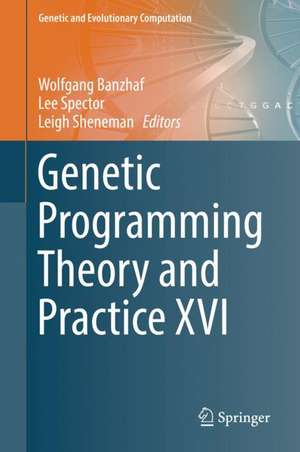
Genetic Programming Theory and Practice XVI: Genetic and Evolutionary Computation
Editat de Wolfgang Banzhaf, Lee Spector, Leigh Shenemanen Limba Engleză Hardback – 4 feb 2019
Sub îndrumarea lui Wolfgang Banzhaf, un nume de referință în ecosistemul inteligenței computaționale și șeful departamentului de informatică de la Memorial University, acest volum consolidează puntea dintre rigoarea academică și implementările industriale. Observăm cum Genetic Programming Theory and Practice XVI continuă tradiția începută în edițiile anterioare, precum Genetic Programming Theory and Practice XVIII sau Genetic Programming Theory and Practice XIX, menținând un focus constant pe rezolvarea problemelor din lumea reală prin evoluție artificială. Ne-a atras atenția modul în care editorii au structurat cele 11 capitole pentru a acoperi un spectru larg de tehnici emergente. Remarcăm prezența unor tutoriale aplicate, cum este cel dedicat descoperirii politicilor pentru Reinforcement Learning vizual prin grafuri de programe întrepătrunse (Tangled Program Graphs), dar și analize profunde asupra SignalGP și a variantelor de selecție lexicase. Pe linia practică și riguroasă a volumului Genetic Programming editat de Eric Medvet, dar cu un focus specific pe intersecția dintre programarea automată și pipeline-urile de învățare automată, această ediție oferă perspective tehnice asupra transferului de cunoștințe (transfer learning) și a regresiei simbolice. Progresia conținutului este logică, pornind de la explorarea sistemelor GP cu MAP-Elites și avansând spre aplicații complexe în clasificarea datelor și optimizarea swarm. Subliniem valoarea capitolului dedicat „elefantului din cameră” — aplicarea GP în programarea automată propriu-zisă — care oferă lecții învățate din experiențe practice, nu doar proiecții teoretice. Este o resursă tehnică ce documentează stadiul actual al artei într-un format dens, fără a sacrifica detaliile necesare implementării.
Din seria Genetic and Evolutionary Computation
- 20%
 Preț: 610.80 lei
 - 20%
 Preț: 1025.86 lei
 - 20%
 Preț: 674.94 lei
 - 20%
 Preț: 619.77 lei
 - 20%
 Preț: 674.29 lei
 - 20%
 Preț: 334.59 lei
 - 20%
 Preț: 645.34 lei
 - 20%
 Preț: 993.16 lei
 - 20%
 Preț: 994.43 lei
 - 20%
 Preț: 646.19 lei
 - 20%
 Preț: 333.31 lei
 - 20%
 Preț: 347.32 lei
 - 20%
 Preț: 344.69 lei
 - 20%
 Preț: 674.25 lei
 - 20%
 Preț: 347.32 lei
 - 20%
 Preț: 1087.37 lei
 - 20%
 Preț: 1465.53 lei
 - 20%
 Preț: 1025.40 lei
 - 20%
 Preț: 945.70 lei
 - 20%
 Preț: 1086.21 lei
 - 24%
 Preț: 1443.13 lei
 - 20%
 Preț: 1032.26 lei
 - 20%
 Preț: 1348.78 lei
 - 20%
 Preț: 1334.35 lei
 - 18%
 Preț: 1039.80 lei
 - 56%
 Preț: 527.12 lei
 - nou
 Preț: 1138.42 lei
 - nou
 Preț: 735.60 lei
Preț: 969.64 lei
Preț vechi: 1212.05 lei
-20%
Carte disponibilă
Livrare economică 09-23 noiembrie
Specificații
ISBN-10: 3030047342
Pagini: 256
Ilustrații: XXI, 234 p. 65 illus., 47 illus. in color.
Dimensiuni: 160 x 241 x 19 mm
Greutate: 0.55 kg
Ediția:1st ed. 2019
Editura: Springer
Colecția Genetic and Evolutionary Computation
Seria Genetic and Evolutionary Computation
Locul publicării:Cham, Switzerland
V-ar putea interesa
-
 Deep Learning IllustratedAglae Bassens-20%Preț: 333.73 lei417.17 lei
 -
 Gaussian Processes for Machine LearningCarl Edward Rasmussen-26%Preț: 350.95 lei477.34 lei
 -
 -39%Preț: 394.79 lei646.62 lei
 -
 -31%Preț: 607.05 lei885.58 lei
 -
 Evolutionary Computing in Advanced ManufacturingManoj Tiwari-5%Preț: 939.67 lei989.13 lei
 -
 Generative AI with PythonBert Gollnick-20%Preț: 294.84 lei368.55 lei
 -
 Programming Neural Networks with PythonJoachim Steinwendner-20%Preț: 301.14 lei376.42 lei
 -
 Grokking Artificial Intelligence AlgorithmsRishal Hurbans-20%Preț: 369.70 lei462.13 lei
 -
 Evolutionary Deep LearningMicheal Lanham-20%Preț: 333.10 lei416.37 lei
 -
 -20%Preț: 346.79 lei433.49 lei
 -
 Optimization AlgorithmsAlaa Khamis-20%Preț: 405.89 lei507.37 lei
 -
 The Shape of Data: Geometry-Based Machine Learning and Data Analysis in RColleen M. Farrelly-21%Preț: 231.27 lei293.72 lei
 -
 The Art of Randomness: Randomized Algorithms in the Real WorldRonald T. Kneusel-35%Preț: 255.23 lei394.15 lei
 -
 The Nature of Code: Simulating Natural Systems with JavaScriptDaniel Shiffman-34%Preț: 215.88 lei325.94 lei
 -
 Deep Learning Crash CourseGiovanni Volpe-35%Preț: 290.92 lei445.81 lei
 -
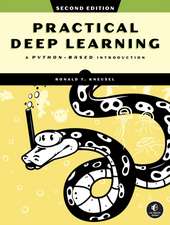 Practical Deep Learning, 2nd Edition: A Python-Based IntroductionRonald T. Kneusel-35%Preț: 333.73 lei515.68 lei
 -
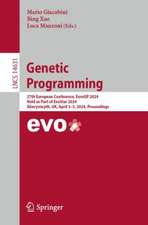 Genetic ProgrammingMario Giacobini-20%Preț: 422.29 lei527.86 lei
 -
 -20%Preț: 402.28 lei502.84 lei
 -
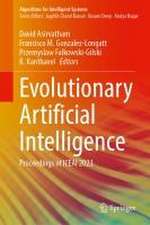 Evolutionary Artificial IntelligenceDavid Asirvatham-20%Preț: 1816.52 lei2270.64 lei
 -
 -18%Preț: 1271.28 lei1550.35 lei
De ce să citești această carte
Recomandăm această lucrare profesioniștilor în AI și cercetătorilor care doresc să treacă dincolo de algoritmii standard. Cititorul câștigă acces la metodologii avansate de programare automată și regresie simbolică, beneficiind de studii de caz care validează teoria în scenarii reale. Este un instrument esențial pentru a înțelege cum pot fi utilizate tehnicile evolutive în eficientizarea proceselor de machine learning și în rezolvarea problemelor de inginerie complexă.
Despre autor
Wolfgang Banzhaf este un distins profesor de cercetare universitară și ocupă funcția de director al Departamentului de Informatică la Memorial University of Newfoundland. Cu o carieră dedicată sistemelor complexe și calculului evolutiv, el este un pilon central în comunitatea de programare genetică. Expertiza sa este reflectată în numeroasele volume editate, printre care și Handbook of Evolutionary Machine Learning, lucrări ce au devenit referințe standard pentru modul în care principiile biologice pot fi transpuse în algoritmi de calcul performanți.