
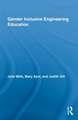
Gender Inclusive Engineering Education: Routledge Research in Education
Autor Julie Mills, Mary Elizabeth Ayre, Judith Gillen Limba Engleză Paperback – 21 mar 2013
This innovative and much-needed work also addresses how faculty can incorporate inclusive curriculum within their courses and programs, and provides a range of exemplars of good practice in gender inclusive engineering education that will be immediately useful to faculty who teach engineering students.
Din seria Routledge Research in Education
-
 Preț: 365.41 lei
 - 18%
 Preț: 1252.71 lei
 - 18%
 Preț: 1253.42 lei
 - 18%
 Preț: 1252.71 lei
 - 18%
 Preț: 1307.06 lei
 - 18%
 Preț: 1244.34 lei
 - 18%
 Preț: 1310.81 lei
 - 15%
 Preț: 462.57 lei
 -
 Preț: 415.81 lei
 - 18%
 Preț: 1309.41 lei
 -
 Preț: 431.00 lei
 - 18%
 Preț: 1361.94 lei
 - 18%
 Preț: 1319.89 lei
 - 18%
 Preț: 1252.37 lei
 - 18%
 Preț: 1250.55 lei
 - 18%
 Preț: 1257.26 lei
 - 18%
 Preț: 1307.32 lei
 - 18%
 Preț: 1256.55 lei
 - 18%
 Preț: 1607.24 lei
 -
 Preț: 518.30 lei
 - 18%
 Preț: 1255.87 lei
 - 18%
 Preț: 1252.93 lei
 - 18%
 Preț: 1523.65 lei
 - 18%
 Preț: 1250.55 lei
 - 18%
 Preț: 1315.35 lei
 - 15%
 Preț: 456.05 lei
 -
 Preț: 432.71 lei
 - 18%
 Preț: 1252.37 lei
 - 18%
 Preț: 1302.78 lei
 - 18%
 Preț: 1252.01 lei
 - 18%
 Preț: 1256.91 lei
 - 18%
 Preț: 1252.01 lei
 - 18%
 Preț: 1318.85 lei
 - 18%
 Preț: 1254.81 lei
 - 18%
 Preț: 1357.75 lei
 - 18%
 Preț: 1254.47 lei
 - 18%
 Preț: 1254.81 lei
 - 18%
 Preț: 1259.00 lei
 - 18%
 Preț: 1255.17 lei
 - 18%
 Preț: 1250.28 lei
 - 18%
 Preț: 1257.60 lei
 - 18%
 Preț: 1366.81 lei
 - 18%
 Preț: 1261.45 lei
 - 18%
 Preț: 1258.30 lei
 - 18%
 Preț: 1262.84 lei
 - 18%
 Preț: 1471.36 lei
 - 18%
 Preț: 1261.22 lei
 - 18%
 Preț: 1264.03 lei
Preț: 455.70 lei
Preț vechi: 536.12 lei
-15%
Puncte Express: 684
Carte tipărită la comandă
Livrare economică 23 noiembrie-07 decembrie
Livrare prin curier în România Termenul estimat este afișat lângă disponibilitate.
Transport gratuit pentru acest produs Plată online sau ramburs, în funcție de opțiunile comenzii.
Retur gratuit în 14 zile Comandă securizată și suport în română.
Specificații
ISBN-13: 9780415847926
ISBN-10: 0415847923
Pagini: 228
Ilustrații: 15 black & white tables
Dimensiuni: 152 x 229 x 15 mm
Greutate: 0.42 kg
Ediția:1
Editura: Taylor & Francis
Colecția Routledge
Seria Routledge Research in Education
Locul publicării:Oxford, United Kingdom
ISBN-10: 0415847923
Pagini: 228
Ilustrații: 15 black & white tables
Dimensiuni: 152 x 229 x 15 mm
Greutate: 0.42 kg
Ediția:1
Editura: Taylor & Francis
Colecția Routledge
Seria Routledge Research in Education
Locul publicării:Oxford, United Kingdom
V-ar putea interesa
-
 Women in Science NowLisa M P MunozPreț: 114.50 lei
 -
 -31%Preț: 513.80 lei746.67 lei
 -
 Women in STEM: Breaking Down the BarriersPeter MainPreț: 379.65 lei
 -
 Learning to Teach in the Primary SchoolTeresa CreminPreț: 398.68 lei
 -
 Preț: 379.65 leiRecomandat
 -
 Women In, and Beyond, Business SchoolsEric CornuelPreț: 299.48 lei
 -
 Designing Gender: A Feminist ToolkitDr Sarah Elsie Baker-23%Preț: 188.97 lei246.69 lei
 -
 Reflective Teaching in Higher EducationCamille Kandiko Howson-14%Preț: 273.08 lei317.28 lei
 -
 -22%Preț: 181.52 lei233.38 lei
 -
 Diversity, Equity, Inclusion and TeachingKulwinder MaudePreț: 214.88 lei
 -
 Teaching Fairly in an Unfair WorldKathleen Gould LundyPreț: 224.15 lei
 -
 -32%Preț: 552.40 lei817.08 lei
 -
 -19%Preț: 64.51 lei79.39 leiRecomandat
 -
 Atlantic FuriesMidge GilliesPreț: 194.19 lei
 -
 Latin* Students in Engineering: An Intentional Focus on a Growing PopulationLara Perez-FelknerPreț: 542.19 lei
 -
 Reading the RoomNatalie Kouri-TowePreț: 246.91 lei
 -
 The International Society For Engineering PedagogyTatiana Polyakova-15%Preț: 563.52 lei662.97 lei
 -
 Technologies of Inclusion: Gender in the Information SocietyKnut Holtan Sørensen-26%Preț: 589.07 lei798.18 lei
 -
 Gender-Inclusive SchoolsDave EdwardsPreț: 227.58 lei
Cuprins
Foreword by Emeritus Professor Robin King
Acknowledgments
1. Introduction: Why We Need Gender Inclusive Engineering Education
2. Women in Engineering: The Current Position
3. Attracting Women to Enter and Succeed in Engineering Study
4. Learning, Curriculum and Gender: Theoretical Contexts
5. Design and Implementation Strategies for Gender Inclusive Engineering Curriculum
6. Gender Inclusive Engineering Courses
7. Implementing and Embedding Gender Inclusive Engineering Education
8. In Conclusion: A Look to the Future
Appendix A: Accreditation Criteria and Attributes of Engineering Graduates
Appendix B: Glossary of Terms
Notes
Bibliography
Index
Acknowledgments
1. Introduction: Why We Need Gender Inclusive Engineering Education
2. Women in Engineering: The Current Position
3. Attracting Women to Enter and Succeed in Engineering Study
4. Learning, Curriculum and Gender: Theoretical Contexts
5. Design and Implementation Strategies for Gender Inclusive Engineering Curriculum
6. Gender Inclusive Engineering Courses
7. Implementing and Embedding Gender Inclusive Engineering Education
8. In Conclusion: A Look to the Future
Appendix A: Accreditation Criteria and Attributes of Engineering Graduates
Appendix B: Glossary of Terms
Notes
Bibliography
Index
Descriere
Women continue to comprise a small minority of students in engineering education and subsequent employment. This book demonstrates the ways in which traditional engineering education has not attracted, supported or retained female students and identifies the issues needing to be addressed in changing engineering education to become more gender inclusive.