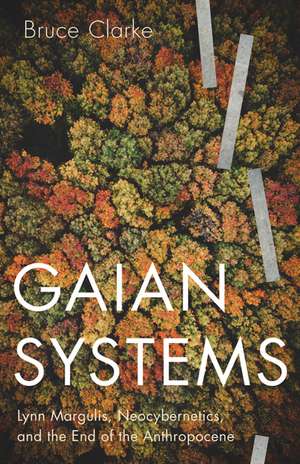
Gaian Systems: Lynn Margulis, Neocybernetics, and the End of the Anthropocene: Posthumanities, cartea 60
Autor Bruce Clarkeen Limba Engleză Paperback – 29 sep 2020
În peisajul academic actual, teoria Gaia a fost adesea tratată ca o curiozitate istorică sau o metaforă spirituală, lăsând o lacună semnificativă în înțelegerea ei ca sistem științific riguros. Gaian Systems vine să umple acest gol, propunând o reevaluare profundă a modului în care ipoteza formulată de James Lovelock și Lynn Margulis se intersectează cu teoria neocibernetică a sistemelor. Ne-a atras atenția în mod deosebit modul în care Bruce Clarke reușește să ancoreze această teorie în discursul contemporan despre Antropocen, oferind o perspectivă tehnică asupra evoluției biosferei.
Reținem că autorul nu se limitează la o simplă istorie a ideilor, ci utilizează documente de arhivă și corespondență nepublicată pentru a evidenția rolul crucial al lui Margulis în definirea sistemelor autoreferențiale. Cartea acoperă o arie tematică similară cu Earth, Life, and System, lucrare anterioară a aceluiași autor, dar cu o abordare mult mai teoretică și interdisciplinară, focalizată pe sinteza dintre biologie și cibernetică sub conceptul de „Gaia metabolică”. De asemenea, volumul se distinge de Facing Gaia de Bruno Latour prin faptul că Bruce Clarke contestă descrierea sistemelor făcută de Latour, preferând o integrare mai strânsă cu autopoieza și teoriile imunitare.
Structura volumului este riguros organizată în trei părți, de la tranziția epistemologică și discursul despre Gaia, până la analize complexe despre imunitatea planetară și astrobiologie. Această progresie indică o acoperire vastă, de la bazele paradigmatice până la aplicațiile în știința contemporană, făcând din acest titlu o piesă centrală în seria Posthumanities.
Din seria Posthumanities
-
 Preț: 201.07 lei
 -
 Preț: 138.44 lei
 -
 Preț: 210.37 lei
 -
 Preț: 137.60 lei
 -
 Preț: 183.89 lei
 -
 Preț: 174.31 lei
 -
 Preț: 169.28 lei
 -
 Preț: 208.95 lei
 -
 Preț: 181.33 lei
 -
 Preț: 200.89 lei
 -
 Preț: 179.61 lei
 -
 Preț: 183.57 lei
 -
 Preț: 112.90 lei
 -
 Preț: 171.62 lei
 -
 Preț: 150.67 lei
 -
 Preț: 167.40 lei
 -
 Preț: 115.96 lei
 -
 Preț: 199.78 lei
 -
 Preț: 189.90 lei
 -
 Preț: 197.40 lei
 -
 Preț: 183.97 lei
 -
 Preț: 340.24 lei
 -
 Preț: 121.92 lei
 -
 Preț: 210.06 lei
 -
 Preț: 151.57 lei
 -
 Preț: 184.39 lei
 - 20%
 Preț: 132.93 lei
 -
 Preț: 263.16 lei
 -
 Preț: 139.38 lei
 -
 Preț: 185.09 lei
 -
 Preț: 211.27 lei
 -
 Preț: 210.97 lei
 -
 Preț: 216.54 lei
 -
 Preț: 182.13 lei
 -
 Preț: 214.29 lei
 -
 Preț: 195.23 lei
 -
 Preț: 211.30 lei
 -
 Preț: 207.58 lei
 -
 Preț: 222.80 lei
 -
 Preț: 204.04 lei
 -
 Preț: 178.70 lei
 -
 Preț: 146.40 lei
 -
 Preț: 210.78 lei
 -
 Preț: 197.05 lei
 -
 Preț: 175.12 lei
 -
 Preț: 224.15 lei
Preț: 184.25 lei
Carte disponibilă
Livrare economică 26 octombrie-09 noiembrie
Livrare express 09-15 octombrie pentru 32.20 lei
Specificații
ISBN-10: 1517909120
Pagini: 336
Ilustrații: 13 B-W Illustrations
Dimensiuni: 140 x 216 x 25 mm
Greutate: 0.48 kg
Editura: University of Minnesota Press
Colecția Univ Of Minnesota Press
Seria Posthumanities
V-ar putea interesa
-
 The Revenge of GaiaJames Lovelock-21%Preț: 61.73 lei77.71 lei
 -
 The Vanishing Face of GaiaJames Lovelock-32%Preț: 61.56 lei90.63 lei
 -
 NovaceneJames Lovelock-33%Preț: 61.79 lei91.64 lei
 -
 Gaia: A New Look at Life on EarthJames Lovelock-21%Preț: 66.37 lei83.83 lei
 -
 Fundamental Processes in Ecology: An Earth Systems ApproachDavid M. Wilkinson-21%Preț: 293.37 lei370.30 lei
 -
 We Belong to GaiaJames Lovelock-50%Preț: 27.81 lei55.32 lei
 -
 -13%Preț: 131.16 lei151.45 lei
 -
 A Rough Ride to the FutureJames LovelockPreț: 77.15 lei
 -
 Darwinizing GaiaW. Ford DoolittlePreț: 361.62 lei
 -
 The Web of LifeFritjof CapraPreț: 93.95 lei
 -
 Facing GaiaBruno LatourPreț: 167.08 lei
 -
 ClimateDennis KlocekPreț: 227.39 lei
 -
 The Nature of NatureVandana ShivaPreț: 105.71 lei
 -
 Gaia and PhilosophyDorion SaganPreț: 55.58 lei
 -
 Homage to Gaia: The Life of an Independent ScientistJames Lovelock-20%Preț: 85.05 lei106.49 lei
 -
 The EndJoel WainwrightPreț: 151.94 lei
 -
 Human NatureKate MarvelPreț: 136.91 lei
 -
 Planetary GardenerGilles ClémentPreț: 246.04 lei
De ce să citești această carte
Această monografie este esențială pentru cercetătorii din domeniul științelor naturii, filozofiei științei și studiilor postumane. Cititorul va câștiga o înțelegere riguroasă a teoriei sistemelor aplicată la scară planetară, depășind interpretările simpliste ale ipotezei Gaia. Este un instrument teoretic prețios pentru oricine dorește să descifreze complexitatea crizei de mediu actuale prin prisma colaborării dintre microbiologie și cibernetică.
Despre autor
Bruce Clarke este profesor de engleză și director al Centrului pentru Interacțiunea Artelor și Științelor la Texas Tech University. Expert recunoscut în relația dintre literatură și știință, el a publicat lucrări de referință precum Energy Forms și a coordonat volume fundamentale ca The Cambridge Companion to Literature and the Posthuman. Activitatea sa academică se concentrează pe teoria sistemelor, cibernetică și biopolitică, elemente pe care le integrează magistral în analiza sa asupra operei lui Lynn Margulis și a impactului acesteia asupra gândirii ecologice moderne.
Descriere scurtă
Often seen as an outlier in science, Gaia has run a long and varied course since its formulation in the 1970s by atmospheric chemist James Lovelock and microbiologist Lynn Margulis. Gaian Systems is a pioneering exploration of the dynamic and complex evolution of Gaia’s many variants, with special attention to Margulis’s foundational role in these developments.
Bruce Clarke assesses the different dialects of systems theory brought to bear on Gaia discourse. Focusing in particular on Margulis’s work—including multiple pieces of her unpublished Gaia correspondence—he shows how her research and that of Lovelock was concurrent and conceptually parallel with the new discourse of self-referential systems that emerged within neocybernetic systems theory. The recent Gaia writings of Donna Haraway, Isabelle Stengers, and Bruno Latour contest its cybernetic status. Clarke engages Latour on the issue of Gaia’s systems description and extends his own systems-theoretical synthesis under what he terms “metabiotic Gaia.” This study illuminates current issues in neighboring theoretical conversations—from biopolitics and the immunitary paradigm to NASA astrobiology and the Anthropocene. Along the way, he points to science fiction as a vehicle of Gaian thought.
Delving into many issues not previously treated in accounts of Gaia, Gaian Systems describes the history of a theory that has the potential to help us survive an environmental crisis of our own making.
Notă biografică
Cuprins
Introduction: An Epistemological Transition
Part I. Gaia Discourse
1. A Paradigm Shift
2. Thinkers of Gaia
3. Neocybernetics of Gaia
Part II. The Systems Counterculture
4. The Whole Earth Network
5. The Lindisfarne Connection
6. Margulis and Autopoiesis
Part III. Gaian Enquiries
7. The Planetary Imaginary
8. Planetary Immunity
9. Astrobiology and the Anthropocene
Acknowledgments
Notes
Bibliography
Index
Recenzii
"Gaian Systems is a brilliant labor of love. Intellectual love for a major system of thought and for those who have built it, especially the towering figure of Lynn Margulis. But also profound love for our living planet as a whole, for the complexity and subtlety of the complex assemblages that compose it. Combining rigor with generosity, Bruce Clarke explores the genealogy, the key concepts, and the major implications of a symbiogenetic vision of our planetary system. Humble and yet visionary, this remarkable study instructs, illuminates, and gives us hope."—Rosi Braidotti, Utrecht University