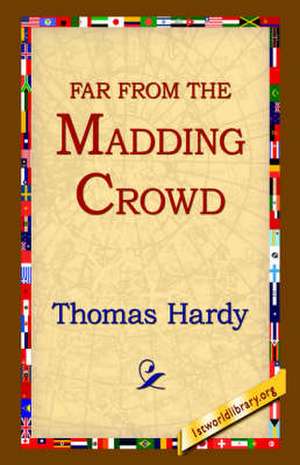
Far from the Madding Crowd
Autor Thomas Hardy Editat de 1st World Library, 1stworld Libraryen Limba Engleză Paperback
Descoperim în Far From the Madding Crowd o voce narativă care nu doar descrie un peisaj, ci fundamentează o întreagă geografie literară: celebrul Wessex. În paginile acestui roman, Thomas Hardy reușește să transforme un arhaism istoric într-un spațiu viu, populat de personaje prinse între tradiția rurală și forțele modernizării victoriene. Structura narativă gravitează în jurul Bathshebei Everdene, o figură feminină de o independență surprinzătoare pentru epoca sa, a cărei prezență „vitală și pasionată” dictează ritmul întregii comunități din Weatherbury.
La intersecția dintre The Return of the Native și Tess of the D'Urbervilles, această operă combină analiza psihologică a dorinței cu o evocare aproape senzorială a naturii. Dacă în The Return of the Native peisajul pare să exercite un control fatalist asupra destinelor, aici, în Far From the Madding Crowd, natura este un partener de dialog pentru ambițiile și erorile umane. Considerăm că forța acestui roman rezidă în echilibrul dintre momentele de idilă pastorală și tensiunea dramatică generată de cei trei bărbați care o curtează pe Bathsheba: statornicul Gabriel Oak, impetuosul sergent Troy și obsesivul Boldwood.
Față de lucrările ulterioare, precum Jude the Obscure sau The Mayor of Casterbridge, unde tragismul devine adesea copleșitor, acest prim succes major al lui Hardy păstrează o doză de romantism robust. Tonul este unul contemplativ, zăbovind asupra detaliilor muncii agricole — de la tunsul oilor la seceriș — oferind cititorului o experiență imersivă într-o lume în care „departe de mulțimea dezlănțuită” nu înseamnă liniște, ci o confruntare directă cu propriile pasiuni.
Preț: 151.24 lei
Carte disponibilă
Livrare economică 06-20 noiembrie
Specificații
ISBN-10: 1595405208
Pagini: 508
Dimensiuni: 140 x 216 x 29 mm
Greutate: 0.64 kg
Editura: 1st World Library
V-ar putea interesa
-
 Tess of the D'UrbervillesThomas HardyPreț: 28.01 lei
 -
 Lady Chatterley's LoverD. H. LawrencePreț: 28.01 lei
 -
 Oh, The Places You'll Go!Dr. SeussPreț: 49.59 lei
 -
 The ColourRose Tremain-18%Preț: 65.61 lei79.89 lei
 -
 The Road HomeRose Tremain-17%Preț: 66.91 lei80.65 lei
 -
 Sapiens: A Brief History of Human KindYuval Noah Harari-17%Preț: 80.04 lei95.89 lei
 -
 Sir Gawain and The Green KnightKeith Harrison-20%Preț: 51.23 lei63.87 lei
 -
 The SilmarillionJ. R. R. TolkienPreț: 65.60 lei
 -
 The Lord of the RingsJ. R. R. TolkienPreț: 325.69 lei
 -
 -46%Preț: 66.03 lei121.76 lei
 -
 Eat Pray Love: One Woman's Search for EverythingElizabeth Gilbert-32%Preț: 54.53 lei79.72 lei
 -
 Dynamic AnatomyB. HogarthPreț: 195.45 lei
 -
 The Satanic VersesSalman Rushdie-16%Preț: 68.00 lei81.29 lei
 -
 -25%Preț: 59.57 lei79.80 lei
 -
 Beautiful BastardChristina Lauren-18%Preț: 59.83 lei72.69 lei
 -
 The Woman in WhiteWilkie CollinsPreț: 33.00 lei
 -
 The Forsyte SagaJohn GalsworthyPreț: 39.80 lei
 -
 Collected Ghost StoriesM. R. JamesPreț: 31.75 lei
 -
 Paris to the Moon: A Family in FranceAdam Gopnik-26%Preț: 68.84 lei93.43 lei
 -
 Three Men in a Boat & Three Men on the BummelJerome K. JeromePreț: 36.87 lei
 -
 Bleak HouseCharles DickensPreț: 41.29 lei
 -
 IvanhoeWalter ScottPreț: 38.49 lei
 -
 Jude the ObscureThomas HardyPreț: 28.01 lei
 -
 L'amour dure trois ansFrédéric BeigbederPreț: 88.39 lei
De ce să citești această carte
Recomandăm acest volum celor care apreciază proza clasică de o mare profunzime psihologică și descrierile de natură care devin ele însele personaje. Cititorul va descoperi o eroină fascinantă, Bathsheba Everdene, a cărei luptă pentru autonomie rămâne relevantă și astăzi. Este o lectură esențială pentru a înțelege cum Thomas Hardy a revoluționat romanul victorian, oferind o perspectivă onestă asupra condiției umane în mediul rural englezesc.
Despre autor
Thomas Hardy (1840–1928) a fost un romancier și poet englez de seamă, reprezentant al realismului victorian cu puternice nuanțe romantice. Născut în Dorset, el a imortalizat peisajul natal sub numele ficțional de Wessex, criticând adesea declinul statutului populației rurale în fața industrializării. Deși s-a considerat în primul rând poet, a atins celebritatea prin romane precum Far From the Madding Crowd, Tess of the d'Urbervilles și Jude the Obscure. Opera sa a influențat generații de scriitori, fiind admirată de mari poeți precum Ezra Pound și W.H. Auden pentru profunzimea sa tragică și stilul evocativ.
Descriere scurtă
Notă biografică
Descriere
Far from the Madding Crowd is the first of Thomas Hardy's great novels, and the first to sound the tragic note for which his fiction is best remembered."-Margaret Drabble
Far from the Madding Crowd , the fourth novel written by Thomas Hardy, is a pensive yet pastoral novel that initially appeared in serial form in the late 1800's. It has since become one of the most popular books of English literature, with its rich rhythms of rural life, beautiful and independent heroine, and romantic intrigue.
In Wessex, the novel's apocryphal region of rural southwest England, the independent and spirited Bathsheba Everdene has a chance encounter with a virtuous young shepherd named Gabriel Oak; He is taken by her beauty, and proposes marriage, and she refuses. Soon after, Bathsheba moves away to the town of Weatherbury, and Gabriel falls on hard times. Penniless, and roving from town to town seeking employment, he happens to come upon a fire ravaging a farm. Gabriel aids in getting the fire under control, and is stunned to discover that the farm is owned by Bathsheba. Once again, they are reunited, yet now Gabriel is employed as a farmhand. When a second suitor, a local landowner, seeks her affection the inextricable struggles of love and betrayal spins Bathsheba's life into a maze of uncontrollable frenzy and passion.
With an eye-catching new cover, and professionally typeset manuscript, this edition of Far from the Madding Crowd is both modern and readable.
Recenzii
--Independent
"Hardy's Far from the Madding Crowd is the most romantic book I have ever read. I love the line where he says: 'Whenever you look up, there I shall be -- and whenever I look up there will be you.' It is very simple and understated, but also incredibly romantic."
--Liz Jensen, Independent
"Vital, passionate, spirited - from the moment Bathsheba appears she is beguiling. You can denounce her faults - she's selfish and capricious - but it's hard not to admire her determined independence" -- Di Speirs (Executive Producer Of Readings At The Bbc) Independent "Hardy's warmest and most enchanting novel" Daily Express "Hardy's Far from the Madding Crowd is the most romantic book I have ever read. I love the line where he says: "Whenever you look up, there I shall be - and whenever I look up there will be you." It is very simple and understated, but also incredibly romantic" -- Liz Jensen Independent "Hardy expounds on his favourite themes: misunderstandings, missed opportunities, unrequited love and fatal omissions" Sunday Times "The age-old dilemma - mind-blowing passion versus a man who knows how to put up shelves" Independent