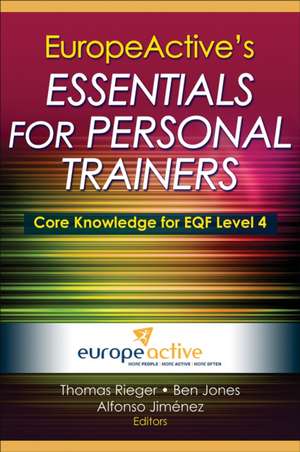
EuropeActive's Essentials for Personal Trainers
Editat de Europeactiveen Limba Engleză Hardback – 2 feb 2016
Găsim în EuropeActive's Essentials for Personal Trainers un instrument de standardizare clinică și profesională, situat pe linia tehnică a NSCA's Essentials of Personal Training, dar cu un accent distinct pe cadrul de reglementare european și standardele EQF nivel 4. În timp ce alte manuale se concentrează strict pe fiziologia efortului, lucrarea editată de Europeactive propune o abordare integrată, care îmbină competențele de business cu rigoarea științifică necesară unui specialist în sănătate și fitness.
Considerăm că structura logică a volumului reflectă parcursul ideal al formării profesionale. Primele capitole, semnate de experți precum Jan Middelkamp, stabilesc bazele eticii, marketingului și managementului sesiunilor, oferind o perspectivă pragmatică asupra profesiei. Ulterior, progresia editorială trece către fundamentul anatomic și fiziologic. Analiza articulațiilor scheletice, a sistemelor de pârghii și a răspunsurilor hormonale la exercițiu este prezentată într-un stil clinic, susținut de ilustrații alb-negru care facilitează înțelegerea biomecanicii fără a distrage atenția de la detaliile tehnice.
Spre deosebire de Personal Training de James Crossley, care pune un accent major pe psihologia schimbării comportamentale, volumul de față prioritizează siguranța clinică prin capitole dedicate prevenirii accidentărilor, tratând specific afecțiuni precum osteoporoza. Credem că această rigoare transformă manualul dintr-un simplu ghid de exerciții într-o resursă de referință pentru prescripția de efort în condiții de siguranță. Finalul cărții sintetizează toate aceste date în metodologii de programare și adaptare a antrenamentului, oferind soluții concrete pentru diverse profiluri de clienți.
Preț: 218.14 lei
Preț vechi: 229.61 lei
-5%
Carte disponibilă
Livrare economică 16-30 mai
Livrare express 05-09 mai pentru 42.27 lei
Specificații
ISBN-10: 1450423787
Pagini: 320
Ilustrații: black & white illustrations, black & white halftones
Dimensiuni: 261 x 186 x 25 mm
Greutate: 0.82 kg
Ediția:New
Editura: HUMAN KINETICS
V-ar putea interesa
-
 Strength and Conditioning for Sports PerformanceIan Jeffreys-8%Preț: 599.21 lei651.31 lei
 -
 -30%Preț: 333.93 lei474.00 lei
 -
 NSCA`s Essentials of Training Special PopulationsPatrick L. Jacobs-8%Preț: 595.38 lei647.15 lei
 -
 Physical Activity and HealthClaude Bouchard-9%Preț: 659.16 lei724.35 lei
 -
 The Complete Guide to Personal Training: 3rd editionMorc Coulson-38%Preț: 170.52 lei277.11 lei
 -
 Preț: 163.59 lei
 -
 Personal Training: Theory and PracticeJames Crossley-8%Preț: 454.74 lei494.28 lei
 -
 The Strength Training Anatomy WorkoutFrederic Delavier-5%Preț: 162.25 lei170.78 lei
 -
 -8%Preț: 439.69 lei477.93 lei
 -
 NSCA's Essentials of Tactical Strength and ConditioningBrent A. Alvar-5%Preț: 641.25 lei675.00 lei
 -
 The Complete Guide to Personal Training: 2nd EditionMorc Coulson-43%Preț: 140.69 lei247.37 lei
 -
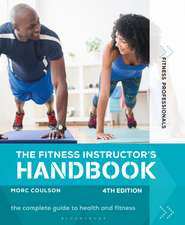 The Fitness Instructor's Handbook 4th editionMorc Coulson-42%Preț: 143.77 lei249.36 lei
 -
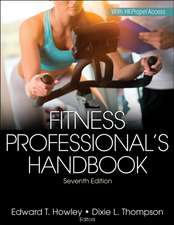 Fitness Professional's HandbookDixie L. Thompson-8%Preț: 618.68 lei672.48 lei
 -
 Your Workout PERFECTEDNick TumminelloPreț: 155.96 lei
 -
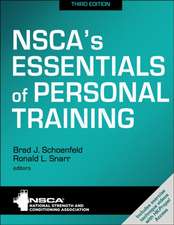 NSCA's Essentials of Personal TrainingBrad J. Schoenfeld-18%Preț: 658.80 lei803.41 lei
 -
 Functional Training AnatomyKevin CarrPreț: 166.70 lei
 -
 The Muscle Ladder: Get Jacked Using ScienceJeff NippardPreț: 373.42 lei
 -
 ACSM's Resources for the Personal TrainerTrent Hargens-24%Preț: 487.99 lei638.47 lei
 -
 -22%Preț: 778.90 lei1001.18 lei
De ce să citești această carte
Această lucrare se adresează instructorilor care doresc recunoaștere la nivel european, oferind baza teoretică pentru certificarea EQF nivel 4. Cititorul câștigă o înțelegere clinică a anatomiei și fiziologiei, dublată de strategii de marketing și planificare profesională. Este o resursă esențială pentru a trece de la simpla supraveghere a exercițiilor la managementul complex al sănătății clienților, conform standardelor Europeactive.
Descriere scurtă
Descriere
EuropeActive’s Essentials for Personal Trainers provides personal trainers with the most thorough information and best practices to help their clients achieve their health and fitness goals. Endorsed by EuropeActive, the fitness and health industry’s standard-setting authority in Europe, this manual is essential for all aspiring and qualified personal trainers and aims towards EuropeActive’s objective: “More people, more active, more often.”
The information contained in EuropeActive’s Essentials for Personal Trainers provides aspiring personal trainers with the basic competencies, skills and knowledge necessary for achieving level 4 status in the European Qualifications Framework (EQF), the baseline standards for registered personal trainers in Europe. The content builds on foundational concepts to provide practical knowledge and on-the-job examples to personal trainers so that they can deliver enjoyable and effective services to their clients.
Authored by fitness experts throughout Europe, EuropeActive’s Essentials for Personal Trainers provides a standard reference to inform this growing field. The first three chapters describe the role of the personal trainer, with topics covering professionalism and presentation, planning a personal training session and delivering a personal training session. Readers will then learn functional anatomy with chapters on skeletal articulations and joint movement, injury prevention and the muscular system. To understand the science behind exercise prescription, readers will learn about energy systems, the cardiorespiratory system, the nervous system and hormonal responses to exercise. Chapters focusing on lifestyle assessment, including health and fitness assessment, psychological aspects of personal training and nutrition, allow personal trainers to understand the unique needs of the various clients they serve. The book concludes with chapters on training adaptations as well as exercise planning and programming.
With more and more people turning to professionals for assistance in their quest for better health and fitness, the demand for qualified personal trainers in Europe has never been greater. EuropeActive’s Essentials for Personal Trainers is an ideal resource for those aspiring to become personal trainers in Europe and equips current professionals in the fitness industry with the tools they need in effectively serving their clients. Personal trainers who achieve EQF level 4 status demonstrate to both clients and employers that they have all of the pertinent knowledge and skills to be successful anywhere in Europe.
Cuprins
Preface
Chapter 1. Professionalism and Presentation
Jan Middelkamp
Personal Training
Examining the Sector of Personal Training
Professionalism of Personal Trainers in Business
Presentation and Qualifications in Personal Training
Marketing and Sales
Conclusion
Chapter 2. Planning a Personal Training Session
Davide Filingeri and Thomas Rieger
Principles and Characteristics of Personal Training
Planning Activities
Conclusion
Chapter 3. Delivering a Personal Training Session
Nuno Pimenta
Monitoring and Adjusting Exercise
Maintaining Good Communication and Motivation
Different Personal Training Environments
Extending Frequent and Good Communication to Clients
Conclusion
Chapter 4. Skeletal Articulations and Joint Movement
Daniel Robbins and Mark Goss-Sampson
Connective Tissue
Joint Structure
Lever Systems
Effects of Resistance Training on Joints
Conclusion
Chapter 5. Injury Prevention
Pauline Jacobs and John van Heel
Osteoporosis
Spinal Injury Prevention
Shoulder Stabilisation
Ligamentous Damage
Conclusion
Chapter 6. Muscular System
Anders Nedergaard
Contraction Types and Their Characteristics
Acute Muscle Adaptations to Different Training Types
Chronic Muscle Adaptation to Training
Muscle Functions of the Hip and Thoracolumbar Fascia
Conclusion
Chapter 7. Energy Systems
Francesco Bertiato and Simonetta Senni
Three Energy Systems
Acute Variables and Energy Systems
Effects of EPOC and Interval Training on Metabolism
Fat Burning
METs and Calories
Methods for Monitoring Exercise
Use of Energy from Nutrients
Conclusion
Chapter 8. Cardiorespiratory System
Christoffer Andersen
Cardiovascular System
Respiratory System
Conclusion
Chapter 9. Nervous System
Alexis Batrakoulis
Organisation of the Nervous System
Function of the Nervous System
Nervous System and Exercise
Conclusion
Chapter 10. Hormonal Responses to Exercise
Sabrena Merrill and Cedric X. Bryant
Structural Overview of the Endocrine System
Classification of Hormones
Hormone Interactions with Target Cells
Hormonal Responses to Acute Exercise
Hormonal Adaptations to Chronic Exercise Training
Conclusion
Chapter 11. Health and Fitness Assessment
Nuno Pimenta, Samantha Jones and Ben Jones
Defining Health and Fitness
Preliminary Health Assessment
Fitness Assessments
Conclusion
Chapter 12. Psychological Aspects of Personal Training
Chris Beedie
Role of Psychology in Personal Training
Goals and Goal Setting
Beliefs and Expectations
Emotions, Stress and Coping
Conclusion
Chapter 13. Nutrition
Fernando Naclerio and Robert Cooper
Energy Requirement
Estimating Energy Expenditure
Calculating Energy Needs
Recommended Dietary Intakes
Healthy Eating Patterns
How Dietary Intake Influences Health
Micronutrient Deficiency and Health
Fads and Popular Diets
Food Pyramid and MyPlate Dietary Plan
Developing a Healthy, Balanced Way of Eating
Tobacco, Alcohol and Caffeine
Fat and Lipoprotein
Safe and Effective Weight Loss and Gain
Conclusion
Chapter 14. Training Adaptations
Rafael Oliveira, João Brito and Ben Jones
Adaptations to Training Principles
Adaptations to Resistance Training
Adaptations to Aerobic Training
Adaptations to Range of Motion Training
Conclusion
Chapter 15. Exercise Planning and Programming
Christoffer Andersen, Thomas Rieger and Lars L. Andersen
Planning for Resistance Training
Planning for Aerobic Endurance Training
Applied Training Programming
Examples of Exercise Programming
Conclusion
Appendix. European Qualifications Framework (EQF) Level 4 Personal Trainer
References
About the Editors
About EuropeActive
Contributors