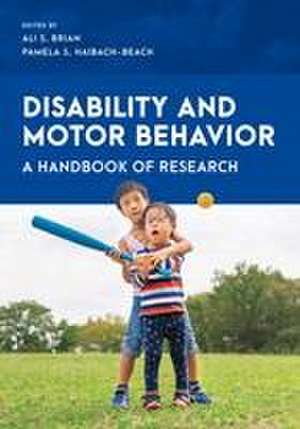
Disability and Motor Behavior: A Handbook of Research: Special Education Law, Policy, and Practice
Editat de Ali S. Brian, Pamela S. Beachen Limba Engleză Paperback – 27 oct 2023
Din seria Special Education Law, Policy, and Practice
- 17%
 Preț: 172.35 lei
 - 16%
 Preț: 162.12 lei
 - 17%
 Preț: 144.82 lei
 - 25%
 Preț: 221.35 lei
 - 17%
 Preț: 158.86 lei
 - 25%
 Preț: 142.42 lei
 - 20%
 Preț: 145.19 lei
 - 15%
 Preț: 218.78 lei
 - 24%
 Preț: 222.72 lei
 - 22%
 Preț: 266.63 lei
 - 23%
 Preț: 257.41 lei
 - 25%
 Preț: 141.28 lei
 -
 Preț: 178.45 lei
 - 25%
 Preț: 177.86 lei
 - 24%
 Preț: 145.97 lei
 - 24%
 Preț: 143.97 lei
 - 24%
 Preț: 181.61 lei
 - 21%
 Preț: 115.94 lei
 - 26%
 Preț: 172.44 lei
 - 25%
 Preț: 180.74 lei
 - 24%
 Preț: 226.51 lei
 - 26%
 Preț: 144.82 lei
 - nou
 Preț: 157.50 lei
Preț: 222.24 lei
Preț vechi: 293.97 lei
-24%
Puncte Express: 333
Carte tipărită la comandă
Livrare economică 18 noiembrie-02 decembrie
Livrare prin curier în România Termenul estimat este afișat lângă disponibilitate.
Transport gratuit de la 400.00 lei Plată online sau ramburs, în funcție de opțiunile comenzii.
Retur gratuit în 14 zile Comandă securizată și suport în română.
Specificații
ISBN-13: 9781538168967
ISBN-10: 1538168960
Pagini: 230
Ilustrații: 7 b/w illustrations; 10 tables; 1 textbox
Dimensiuni: 178 x 254 x 14 mm
Greutate: 0.4 kg
Editura: Bloomsbury Publishing
Colecția Rowman & Littlefield
Seria Special Education Law, Policy, and Practice
Locul publicării:New York, United States
ISBN-10: 1538168960
Pagini: 230
Ilustrații: 7 b/w illustrations; 10 tables; 1 textbox
Dimensiuni: 178 x 254 x 14 mm
Greutate: 0.4 kg
Editura: Bloomsbury Publishing
Colecția Rowman & Littlefield
Seria Special Education Law, Policy, and Practice
Locul publicării:New York, United States
Cuprins
Chapter 1: Motor Behavior and Visual Impairment - Adam Pennell and Alexandra Stribing
Background
Guiding Frameworks and Assumptions
Gross Motor in Juvenescence
Fine Motor in Juvenescence
Gross Motor in Adulthood
Fine Motor in Adulthood
Honorable Mention: Postural Control and Balance
Systems Perspective: A Spotlight on Psychological Variables
Future Research
Practical Implications
Conclusion
Chapter 2: Motor Behavior and Children who are Hard of Hearing, Deaf, or Deafblind - Pamela Beach, Melanie Perreault, and Lauren Lieberman
Motor Milestones
Balance
Motor Competence
Practical Implications
Conclusions
Chapter 3: Motor Behavior and Sensory Processing Disorders - Candice Howard-Smith
Introduction
Sensory Processing Disorders
Types of SPD
SPD and Motor Behavior
SPD, Disabilities, and Motor Behavior
Autism Spectrum Disorder
Down Syndrome
Attention Deficit Hyperactivity Disorder
Future Research
Practical Implications
Conclusions
Chapter 4: Motor Behavior and Autism Spectrum Disorder - Megan MacDonald and Ming-Chih Sung
Introduction
Young Children (Infants and Preschoolers) with ASD
School-Age Children with ASD
Beyond School: Lifespan Motor Skills of Individuals with ASD
Summary of Evidence
Future Direction
Implications
References
Chapter 5: ASD FMS Interventions - Meghann Lloyd
Importance of Motor Skill Development
Fundamental Motor Skill Interventions
Future Research
Practical Implications
References
Chapter 6: Motor Behavior and Emotional and Behavioral Disorders - Iva Obrusnikova and Albert R. Cavalier
Definitions of EBD
Prevalence of EBD
Internalizing: Anxiety Disorders Defined
Prevalence of Anxiety Disorders
Conceptual Models of Anxiety disorders
Motor Impairments and Anxiety Disorders
Externalizing: Attention-Deficient/Hyperactivity Disorder Defined
Prevalence of Attention-Deficit/Hyperactivity Disorder
Conceptual Models of Attention-Deficit/Hyperactivity Disorder
Motor Impairments and Attention-Deficit/Hyperactivity Disorder
Altered Cerebral Structures and Neurotransmitter Imbalance
Attention-Deficit/Hyperactivity Disorder Comorbidities
Implications for Research and Practice
References
Chapter 7: Motor Behavior and Specific Language Impairment - Matthias O. Wagner
Content Overview
Research Overview
Motor Control Related Issues in Specific Language Impairment
Motor Learning Related Issues in Specific Language Impairment
Motor Development Related Issues in Specific Language Impairment
Future Research
Practical Implications
Conclusion
References
Chapter 8: Motor Behavior and Cerebral Palsy - Melissa Pangelinan and Claire Bridges
Definitions, Etiology, and Diagnosis
Overview
Risk Factor or Possible Causes of CP
Symptoms
Types
Diagnosis and Classification
Empirical Research: Cerebral Palsy and Motor Behavior
CP and Motor Behavior
Early Intervention
Interventions in Childhood and Beyond
Future Research Directions
Translating Research to Practice
Conclusion
References
Chapter 9: Motor Behavior and Neurodegenerative Disorders Associated with Aging - Nadja Schott
Introduction
Under the Magnifying Glass: Gait as an Important Predictor for Motor-Cognitive Performance in Alzheimer's and Parkinson's Disease
Motor Learning in Alzheimer's and Parkinson's Disease
Alzheimer's Disease
Parkinson's Disease
Future Research
Practical Implications
Conclusion
References
Chapter 10: Motor Behavior and Intellectual Disabilities - Alyssa LaForme Fiss and Julia Looper
Introduction
Examples of Genetic Causes
Research on Motor and Cognitive Development
Motor-Control and Motor-Learning in Individuals with ID
Future Research Directions
Research to Practice
Conclusion
References
Chapter 11: Developmental Delay, Developmental Coordination Disorder, and Motor Behavior - Daphne Golden and Nancy Getchell
Developmental Delay: An Early Sign of Developmental Coordination Disorder
Developmental Coordination Disorder
Identification and Diagnosis of DCD
The Developmental Conundrum in DCD Identification and Diagnosis
Motor Behavior Research Related to DCD
Future Research
Practical Implications
Conclusion
References
Chapter 12: Motor Behavior and Traumatic Brain Injury - James Wilkes, Alexa Walter, and Semyon Slobounov
Introduction
Clinical Translation of Pathophysiology to Dysfunction
Motor Control Dysfunction after TBI
Balance and Gait
Reaction Time
Oculomotor Function
Kinesiophobia
Future Research
Practical Applications
Conclusion
Conflict of Interest
Acknowledgements
References
Chapter 13: Motor Behavior and Rehabilitation after Spinal Cord Injury - Collin D. Bowersock and Jessica Lynn McDonnell
Content Overview
Research Overview
Future Research
Practical Implications
Conclusion
References
Chapter 14: Motor Behavior and Profound Intellectual and Multiple Disabilities - Bethany Sloane, Heather A. Feldner, Lisa Kenyon, and Samuel W. Logan
Overview, Language, and Terminology Related to Profound Intellectual and Multiple Disabilities
Motor Behavior and PIMD Population Empirical Research Summary
International Classification of Functioning, Disability and Health Model for (ICF)
Body Functions and Structures
Motor Development
Challenging Behaviors
Alertness Level
Summary
Activity and Participation
Motor Activity
Physical Activity
Environmental and Personal Factors
Assistive Technology
Supports and Relationships
Attitudes
Summary
Future Research
Practical Implications
Conclusion
References
Chapter 15: Motor Behavior and Health Impairments in Children - Emily Gilbert
Overview
Pediatric Cancer
Obesity
Diabetes
Motor Competence Research in Youth with Health Impairments
Pediatric Cancer
Obesity
Diabetes
Practical Implications
Future Research
Conclusion
References
Index
About the Editors
About the Contributors
Background
Guiding Frameworks and Assumptions
Gross Motor in Juvenescence
Fine Motor in Juvenescence
Gross Motor in Adulthood
Fine Motor in Adulthood
Honorable Mention: Postural Control and Balance
Systems Perspective: A Spotlight on Psychological Variables
Future Research
Practical Implications
Conclusion
Chapter 2: Motor Behavior and Children who are Hard of Hearing, Deaf, or Deafblind - Pamela Beach, Melanie Perreault, and Lauren Lieberman
Motor Milestones
Balance
Motor Competence
Practical Implications
Conclusions
Chapter 3: Motor Behavior and Sensory Processing Disorders - Candice Howard-Smith
Introduction
Sensory Processing Disorders
Types of SPD
SPD and Motor Behavior
SPD, Disabilities, and Motor Behavior
Autism Spectrum Disorder
Down Syndrome
Attention Deficit Hyperactivity Disorder
Future Research
Practical Implications
Conclusions
Chapter 4: Motor Behavior and Autism Spectrum Disorder - Megan MacDonald and Ming-Chih Sung
Introduction
Young Children (Infants and Preschoolers) with ASD
School-Age Children with ASD
Beyond School: Lifespan Motor Skills of Individuals with ASD
Summary of Evidence
Future Direction
Implications
References
Chapter 5: ASD FMS Interventions - Meghann Lloyd
Importance of Motor Skill Development
Fundamental Motor Skill Interventions
Future Research
Practical Implications
References
Chapter 6: Motor Behavior and Emotional and Behavioral Disorders - Iva Obrusnikova and Albert R. Cavalier
Definitions of EBD
Prevalence of EBD
Internalizing: Anxiety Disorders Defined
Prevalence of Anxiety Disorders
Conceptual Models of Anxiety disorders
Motor Impairments and Anxiety Disorders
Externalizing: Attention-Deficient/Hyperactivity Disorder Defined
Prevalence of Attention-Deficit/Hyperactivity Disorder
Conceptual Models of Attention-Deficit/Hyperactivity Disorder
Motor Impairments and Attention-Deficit/Hyperactivity Disorder
Altered Cerebral Structures and Neurotransmitter Imbalance
Attention-Deficit/Hyperactivity Disorder Comorbidities
Implications for Research and Practice
References
Chapter 7: Motor Behavior and Specific Language Impairment - Matthias O. Wagner
Content Overview
Research Overview
Motor Control Related Issues in Specific Language Impairment
Motor Learning Related Issues in Specific Language Impairment
Motor Development Related Issues in Specific Language Impairment
Future Research
Practical Implications
Conclusion
References
Chapter 8: Motor Behavior and Cerebral Palsy - Melissa Pangelinan and Claire Bridges
Definitions, Etiology, and Diagnosis
Overview
Risk Factor or Possible Causes of CP
Symptoms
Types
Diagnosis and Classification
Empirical Research: Cerebral Palsy and Motor Behavior
CP and Motor Behavior
Early Intervention
Interventions in Childhood and Beyond
Future Research Directions
Translating Research to Practice
Conclusion
References
Chapter 9: Motor Behavior and Neurodegenerative Disorders Associated with Aging - Nadja Schott
Introduction
Under the Magnifying Glass: Gait as an Important Predictor for Motor-Cognitive Performance in Alzheimer's and Parkinson's Disease
Motor Learning in Alzheimer's and Parkinson's Disease
Alzheimer's Disease
Parkinson's Disease
Future Research
Practical Implications
Conclusion
References
Chapter 10: Motor Behavior and Intellectual Disabilities - Alyssa LaForme Fiss and Julia Looper
Introduction
Examples of Genetic Causes
Research on Motor and Cognitive Development
Motor-Control and Motor-Learning in Individuals with ID
Future Research Directions
Research to Practice
Conclusion
References
Chapter 11: Developmental Delay, Developmental Coordination Disorder, and Motor Behavior - Daphne Golden and Nancy Getchell
Developmental Delay: An Early Sign of Developmental Coordination Disorder
Developmental Coordination Disorder
Identification and Diagnosis of DCD
The Developmental Conundrum in DCD Identification and Diagnosis
Motor Behavior Research Related to DCD
Future Research
Practical Implications
Conclusion
References
Chapter 12: Motor Behavior and Traumatic Brain Injury - James Wilkes, Alexa Walter, and Semyon Slobounov
Introduction
Clinical Translation of Pathophysiology to Dysfunction
Motor Control Dysfunction after TBI
Balance and Gait
Reaction Time
Oculomotor Function
Kinesiophobia
Future Research
Practical Applications
Conclusion
Conflict of Interest
Acknowledgements
References
Chapter 13: Motor Behavior and Rehabilitation after Spinal Cord Injury - Collin D. Bowersock and Jessica Lynn McDonnell
Content Overview
Research Overview
Future Research
Practical Implications
Conclusion
References
Chapter 14: Motor Behavior and Profound Intellectual and Multiple Disabilities - Bethany Sloane, Heather A. Feldner, Lisa Kenyon, and Samuel W. Logan
Overview, Language, and Terminology Related to Profound Intellectual and Multiple Disabilities
Motor Behavior and PIMD Population Empirical Research Summary
International Classification of Functioning, Disability and Health Model for (ICF)
Body Functions and Structures
Motor Development
Challenging Behaviors
Alertness Level
Summary
Activity and Participation
Motor Activity
Physical Activity
Environmental and Personal Factors
Assistive Technology
Supports and Relationships
Attitudes
Summary
Future Research
Practical Implications
Conclusion
References
Chapter 15: Motor Behavior and Health Impairments in Children - Emily Gilbert
Overview
Pediatric Cancer
Obesity
Diabetes
Motor Competence Research in Youth with Health Impairments
Pediatric Cancer
Obesity
Diabetes
Practical Implications
Future Research
Conclusion
References
Index
About the Editors
About the Contributors
Recenzii
Disability and Motor Behavior: A Handbook of Research is a fascinating, comprehensive study of individuals with primary and multiple disabilities being educated in our public schools today. This research handbook would be an excellent resource manual for occupational therapists (OT), physical therapists (PT), adapted physical education teachers (APE), general physical education teachers (GPE), and any stakeholder working with individuals with disabilities.
Disability and Motor Behavior: A Handbook of Research compiles current research and expert insights across a myriad of topics that impact understanding, professional development and personnel preparation training. Rarely is a text that offers breadth of content that provides a bridge from research to real-world applications. This fresh perspective will impact faculty/student discussions while providing a beginning framework to engage thoughtful questioning on how individuals with disabilities interact with and navigate the world through movement.
Disability and Motor Behavior: A Handbook of Research, edited by Brian and Beach, provides a unique and novel approach to understanding the motor development of different physical and cognitive abilities. The editors recruited multiple expert researchers in the field related to a variety of disabilities and provide readers with cutting edge, thorough research on motor skill abilities. Professional preparation students, graduate students, professors, researchers, and clinicians can benefit from this current, well-researched collection.
This new handbook comprises a series of position statements, each of which summarizes contemporary research and research-based practices relating to a variety of disabilities in which motor impairment is a major feature.
Disability and Motor Behavior, edited by Drs. Brian and Haibach-Beach, offers a thorough understanding of the myriad impairments, disorders, and disabilities that affect motor behavior across the lifespan. Each chapter provides an empirical overview of the differences in motor learning, control, and development among many categories of disability, as well as analysis of current intervention approaches, future research trends, and practical guidance. There will be great value in this handbook for those working in the kinesiology profession, especially those on the front lines of lifespan development, therapy, or rehabilitation.
Disability and Motor Behavior: A Handbook of Research compiles current research and expert insights across a myriad of topics that impact understanding, professional development and personnel preparation training. Rarely is a text that offers breadth of content that provides a bridge from research to real-world applications. This fresh perspective will impact faculty/student discussions while providing a beginning framework to engage thoughtful questioning on how individuals with disabilities interact with and navigate the world through movement.
Disability and Motor Behavior: A Handbook of Research, edited by Brian and Beach, provides a unique and novel approach to understanding the motor development of different physical and cognitive abilities. The editors recruited multiple expert researchers in the field related to a variety of disabilities and provide readers with cutting edge, thorough research on motor skill abilities. Professional preparation students, graduate students, professors, researchers, and clinicians can benefit from this current, well-researched collection.
This new handbook comprises a series of position statements, each of which summarizes contemporary research and research-based practices relating to a variety of disabilities in which motor impairment is a major feature.
Disability and Motor Behavior, edited by Drs. Brian and Haibach-Beach, offers a thorough understanding of the myriad impairments, disorders, and disabilities that affect motor behavior across the lifespan. Each chapter provides an empirical overview of the differences in motor learning, control, and development among many categories of disability, as well as analysis of current intervention approaches, future research trends, and practical guidance. There will be great value in this handbook for those working in the kinesiology profession, especially those on the front lines of lifespan development, therapy, or rehabilitation.