
Dionysus After Nietzsche
Autor Adam Lecznaren Limba Engleză Paperback – 8 feb 2024
Preț: 192.17 lei
Puncte Express: 288
Carte disponibilă
Livrare economică 12-26 mai
Livrare express 28 aprilie-02 mai pentru 26.48 lei
Specificații
ISBN-13: 9781108710671
ISBN-10: 1108710670
Pagini: 260
Ilustrații: Worked examples or Exercises
Dimensiuni: 151 x 227 x 15 mm
Greutate: 0.4 kg
Editura: Cambridge University Press
ISBN-10: 1108710670
Pagini: 260
Ilustrații: Worked examples or Exercises
Dimensiuni: 151 x 227 x 15 mm
Greutate: 0.4 kg
Editura: Cambridge University Press
V-ar putea interesa
-
 American Arcadia: California and the Classical TraditionPeter J. Holliday-29%Preț: 384.30 lei542.07 lei
 -
 Plato and PythagoreanismPhillip Sidney Horky-7%Preț: 332.16 lei357.55 lei
 -
 The Cosmic Viewpoint: A Study of Seneca's Natural QuestionsGareth D. Williams-14%Preț: 312.45 lei362.40 lei
 -
 Horace's Epodes: Contexts, Intertexts, and ReceptionPhilippa Bather-34%Preț: 769.43 lei1158.74 lei
 -
 Classicisms in the Black AtlanticIan Moyer-14%Preț: 755.91 lei878.96 lei
 -
 Preț: 203.04 lei
 -
 Paul the Apostle: His Life and Legacy in their Roman ContextJ. Albert HarrillPreț: 193.74 lei
 -
 Menander in Antiquity: The Contexts of ReceptionSebastiana Nervegna-14%Preț: 692.33 lei805.03 lei
 -
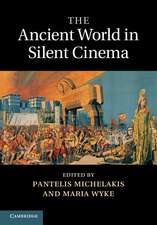 The Ancient World in Silent CinemaPantelis Michelakis-14%Preț: 800.72 lei931.07 lei
 -
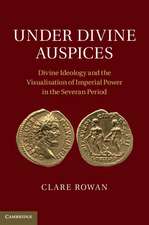 -14%Preț: 690.75 lei803.20 lei
 -
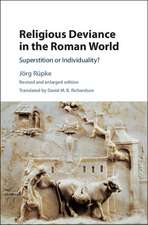 Religious Deviance in the Roman WorldJörg Rüpke-34%Preț: 513.66 lei776.79 lei
 -
 Roman Artisans and the Urban EconomyCameron Hawkins-14%Preț: 749.59 lei871.62 lei
 -
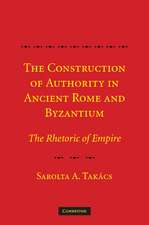 Preț: 318.66 lei
 -
 Women and the Comic Plot in MenanderAriana TraillPreț: 323.83 lei
 -
 Pliny's Women: Constructing Virtue and Creating Identity in the Roman WorldJacqueline M. CarlonPreț: 329.87 lei
 -
 Preț: 406.83 lei
 -
 Character, Narrator, and Simile in the IliadJonathan L. ReadyPreț: 344.89 lei
 -
 Thucydides, Pericles, and Periclean ImperialismEdith FosterPreț: 328.39 lei
 -
 Aristophanes and Women (Routledge Revivals)Lauren Taaffe-15%Preț: 437.08 lei514.22 lei
 -
 -15%Preț: 439.14 lei516.63 lei
 -
 The Greek CityGustave GlotzPreț: 450.59 lei
 -
 -17%Preț: 262.74 lei314.85 lei
 -
 Women's Life in Greece and RomeMary R. Lefkowitz-19%Preț: 235.15 lei290.52 lei
 -
 Deep Classics: Rethinking Classical ReceptionProfessor Shane Butler-20%Preț: 188.81 lei235.44 lei
 -
 Preț: 111.10 lei
Cuprins
Introduction. Dionysus after Nietzsche; 1. Corybants, satyrs and bulls: Jane Harrison; 2. A great kick at misery: D. H. Lawrence; 3. In search of an absent god: Martin Heidegger; 4. What Oedipus knew: Richard Schechner; 5. Dionysus in Yorubaland: Wole Soyinka; Conclusion. Dionysus today.
Recenzii
'L.'s volume is a rare book because of the excellence of his ideas and the quality of research and writing. It masterfully shows how our life is shaped by modernity's appropriation of an ancient Greek heritage … The scholarship is stellar throughout … The book enters as a sharp-sighted contribution into the field of literature on modernity and its relationship to the ancient Greeks.' Marina Marren, The Classical Review
'The scholarly rigour of Dionysus after Nietzsche, and the painstaking research evidenced throughout, mark it out as a vital addition to existing work on the interactions between ancient and modern literature. This book will be of keen interest to all students and researchers of classical reception, especially tragedy, as well as those of modern literature, philosophy, and social theory, in addition to the interested general reader.' Samuel Agbamu, Rhea Classical Reviews
'The scholarly rigour of Dionysus after Nietzsche, and the painstaking research evidenced throughout, mark it out as a vital addition to existing work on the interactions between ancient and modern literature. This book will be of keen interest to all students and researchers of classical reception, especially tragedy, as well as those of modern literature, philosophy, and social theory, in addition to the interested general reader.' Samuel Agbamu, Rhea Classical Reviews