
Dead Souls
Autor Nikolai Vasil'evich Gogolen Limba Engleză Paperback – 31 ian 2009
Preț: 117.56 lei
Puncte Express: 176
Carte disponibilă
Livrare economică 27 octombrie-10 noiembrie
Livrare prin curier în România Termenul estimat este afișat lângă disponibilitate.
Transport gratuit de la 400.00 lei Plată online sau ramburs, în funcție de opțiunile comenzii.
Retur gratuit în 14 zile Comandă securizată și suport în română.
Specificații
ISBN-13: 9781441488183
ISBN-10: 1441488189
Pagini: 416
Dimensiuni: 140 x 216 x 22 mm
Greutate: 0.48 kg
Editura: CREATESPACE
ISBN-10: 1441488189
Pagini: 416
Dimensiuni: 140 x 216 x 22 mm
Greutate: 0.48 kg
Editura: CREATESPACE
V-ar putea interesa
-
 Miss MarjoribanksMargaret Oliphant-29%Preț: 66.88 lei93.80 lei
 -
 Hope LeslieCatharine Maria SedgwickPreț: 136.72 lei
 -
 -36%Preț: 58.71 lei92.40 lei
 -
 NoseNikolay Gogol-39%Preț: 17.34 lei28.43 lei
 -
 Plays and Petersburg Tales: Petersburg Tales, Marriage, The Government InspectorNikolai Vasilyevich Gogol-18%Preț: 53.40 lei65.00 lei
 -
 The Collected Tales of Nikolai GogolNikolai GogolPreț: 113.73 lei
 -
 The Overcoat and Other Short StoriesNikolai Gogol-19%Preț: 28.90 lei35.82 lei
 -
 Bloodline: Five StoriesErnest J. GainesPreț: 95.63 lei
 -
 Tirso de Molina: Tamar`s RevengeJohn E. LyonPreț: 331.50 lei
 -
 The Night Before ChristmasNikolai GogolPreț: 56.14 lei
 -
 OblomovIvan GoncharovPreț: 37.37 lei
 -
 Spirit and RealityNikolai BerdyaevPreț: 118.71 lei
 -
 Solitude and SocietyNicolas BerdyaevPreț: 115.13 lei
 -
 All God's CreaturesAnthony GardnerPreț: 106.38 lei
 -
 -27%Preț: 68.02 lei93.11 lei
 -
 Reminiscences of Tolstoy, Chekhov and AndreevMaxim GorkyPreț: 105.54 lei
 -
 And the Earth Will Sit on the MoonNikolai GogolPreț: 78.81 lei
 -
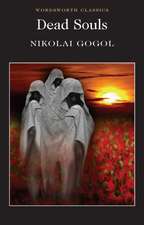 Dead SoulsNikolai GogolPreț: 39.29 lei
 -
 Gogol Collected TalesNikolai GogolPreț: 123.83 lei
 -
 Nikolai GogolVladimir Nabokov-27%Preț: 56.69 lei77.24 lei
 -
 Collected Tales Of Nikolai GogolNikolai Vasilievich GogolPreț: 92.64 lei
 -
 Petersburg Tales: New TranslationNikolai GogolPreț: 49.85 lei
 -
 House of the Dead: New TranslationFyodor DostoevskyPreț: 65.50 lei
 -
 -8%Preț: 58.24 lei63.38 lei
 -
 The Village of Stepanchikovo and Its InhabitantsFyodor DostoevskyPreț: 64.72 lei
 -
 Eugenie GrandetHonore De BalzacPreț: 40.88 lei
Notă biografică
Nikolai Vasilievich Gogol (1809 - 1852) was a Ukrainian-born Russian dramatist, novelist and short story writer whose work was strongly influenced by Ukrainian culture. Although Gogol was considered by his contemporaries one of the preeminent figures of the natural school of Russian literary realism, later critics have found in his work a fundamentally romantic sensibility, with strains of surrealism and the grotesque ("The Nose", "Viy", "The Overcoat," "Nevsky Prospekt"). His early works, such as Evenings on a Farm Near Dikanka, were influenced by his Ukrainian upbringing, culture and folklore. His later writing satirized political corruption in the Russian Empire (The Government Inspector, Dead Souls). The novel Taras Bulba (1835) and the play Marriage (1842), along with the short stories "Diary of a Madman", "The Tale of How Ivan Ivanovich Quarreled with Ivan Nikiforovich", "The Portrait" and "The Carriage", round out the tally of his best-known works.
Descriere
Descriere de la o altă ediție sau format:
Part I of Dead Souls was published in 1842. Part II of Dead Souls exists only in fragments. The novel belongs to the great unfinished works of world literature (such as The Aeneid) whose incompletion bothers us very little.
Part I of Dead Souls was published in 1842. Part II of Dead Souls exists only in fragments. The novel belongs to the great unfinished works of world literature (such as The Aeneid) whose incompletion bothers us very little.
Recenzii
Praise for previous translations by Richard Pevear and Larissa Volokhonsky, winners of the PEN/Book-of-the-Month Club Prize
The Brothers Karamazov
“One finally gets the musical whole of Dostoevsky’s original.” –New York Times Book Review
“It may well be that Dostoevsky’s [world], with all its resourceful energies of life and language, is only now–and through the medium of [this] new translation–beginning to come home to the English-speaking reader.” –New York Review of Books
Crime and Punishment
“The best [translation] currently available…An especially faithful re-creation…with a coiled-spring kinetic energy… Don’t miss it.” –Washington Post Book World
“Reaches as close to Dostoevsky’s Russian as is possible in English…The original’s force and frightening immediacy is captured…The Pevear and Volokhonsky translation will become the standard version.” –Chicago Tribune
Demons
“The merit in this edition of Demons resides in the technical virtuosity of the translators…They capture the feverishly intense, personal explosions of activity and emotion that manifest themselves in Russian life.” –New York Times Book Review
“[Pevear and Volokhonsky] have managed to capture and differentiate the characters’ many voices…They come into their own when faced with Dostoevsky’s wonderfully quirky use of varied speech patterns…A capital job of restoration.” –Los Angeles Times
With an Introduction by Richard Pevear
The Brothers Karamazov
“One finally gets the musical whole of Dostoevsky’s original.” –New York Times Book Review
“It may well be that Dostoevsky’s [world], with all its resourceful energies of life and language, is only now–and through the medium of [this] new translation–beginning to come home to the English-speaking reader.” –New York Review of Books
Crime and Punishment
“The best [translation] currently available…An especially faithful re-creation…with a coiled-spring kinetic energy… Don’t miss it.” –Washington Post Book World
“Reaches as close to Dostoevsky’s Russian as is possible in English…The original’s force and frightening immediacy is captured…The Pevear and Volokhonsky translation will become the standard version.” –Chicago Tribune
Demons
“The merit in this edition of Demons resides in the technical virtuosity of the translators…They capture the feverishly intense, personal explosions of activity and emotion that manifest themselves in Russian life.” –New York Times Book Review
“[Pevear and Volokhonsky] have managed to capture and differentiate the characters’ many voices…They come into their own when faced with Dostoevsky’s wonderfully quirky use of varied speech patterns…A capital job of restoration.” –Los Angeles Times
With an Introduction by Richard Pevear