Cantitate/Preț
Produs

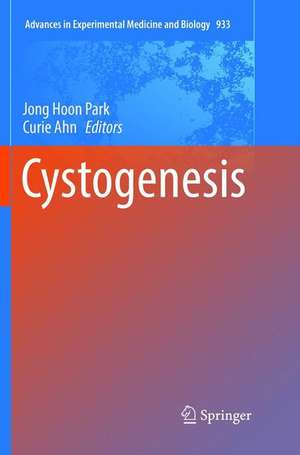
Cystogenesis: Advances in Experimental Medicine and Biology, cartea 933

Editat de Jong Hoon Park, Curie Ahn
en Limba Engleză Paperback – 29 iun 2018

Bazându-ne pe cele mai noi progrese în nefrologia moleculară și pe datele extrase din studii clinice recente, volumul Cystogenesis, editat de Jong Hoon Park și Curie Ahn, oferă o perspectivă clinică riguroasă asupra bolii polichistice renale autozomal dominante (ADPKD). Notăm cu interes rigoarea cu care este tratată patogeneza bolii, pornind de la mutațiile genelor PKD1 și PKD2 care perturbă homeostazia calciului și duc la formarea chisturilor renale. Subliniem faptul că, deși ADPKD este o afecțiune ereditară cu prevalență ridicată, lipsa unor tratamente curative specifice face ca această trecere în revistă a mecanismelor moleculare să fie esențială pentru cercetarea medicală actuală.

Structura volumului este una progresivă, facilitând înțelegerea fenomenelor complexe. Prima parte stabilește contextul genetic, urmată de o analiză detaliată a cistogenezei, unde sunt explorate proliferarea celulară, apoptoza și fibroza. Ultima secțiune se concentrează pe validarea țintelor terapeutice pe modele animale și pe evaluarea biomarkerilor, elemente vitale pentru managementul bolii în stadii terminale. Acolo unde Polycystic Kidney Disease de Jinghua Hu se concentrează pe metodele de investigație și instrumentele de biologie moleculară (electro-fiziologie, biochimie), volumul de față aprofundează mecanismele fiziopatologice specifice și potențialul de translatare a acestora în studii clinice umane. Remarcăm, de asemenea, integrarea aspectelor de reglare epigenetică, un domeniu de frontieră care diferențiază această lucrare de tratatele clasice de nefrologie. Este o resursă clinică indispensabilă, publicată în prestigioasa serie Advances in Experimental Medicine and Biology, care sintetizează tranziția de la cercetarea fundamentală la aplicații terapeutice concrete.

Citește tot Restrânge

Din seria Advances in Experimental Medicine and Biology

Preț: 70174 lei

Preț vechi: 73867 lei
-5%

Puncte Express: 1053

Carte tipărită la comandă

Livrare economică 07-13 iulie

Livrare prin curier în România Termenul estimat este afișat lângă disponibilitate.
Transport gratuit pentru acest produs Plată online sau ramburs, în funcție de opțiunile comenzii.
Retur gratuit în 14 zile Comandă securizată și suport în română.

Specificații

ISBN-13: 9789811095115
ISBN-10: 9811095116
Pagini: 126
Ilustrații: IX, 126 p.
Dimensiuni: 155 x 235 mm
Ediția:Softcover reprint of the original 1st ed. 2016
Editura: Springer Nature Singapore
Colecția Springer
Seria Advances in Experimental Medicine and Biology

Locul publicării:Singapore, Singapore

De ce să citești această carte

Această lucrare se adresează medicilor nefrologi, geneticienilor și cercetătorilor care doresc să înțeleagă biologia moleculară din spatele ADPKD. Cititorul câștigă o viziune clară asupra modului în care mutațiile genetice se traduc în manifestări clinice, precum fibroza și inflamația. Este o resursă esențială pentru a rămâne la curent cu noii biomarkeri de diagnostic și cu stadiul actual al studiilor clinice pentru noi medicamente.


Descriere scurtă

Autosomal Dominant Polycystic Kidney Disease (ADPKD) is a highly prevalent hereditary renal disorder in which fluid-filled cysts are appeared in both kidneys. Main causative genes of ADPKD are PKD1 and PKD2, encoding for polycystin-1 (PC1) and polycystin-2 (PC2) respectively. Those proteins are localized on primary cilia and function as mechanosensor in response to the fluid flow, translating mechanistic stimuli into calcium signaling. With mutations either of PKD1 or PKD2, hyper-activated renal tubular epithelial cell proliferation is observed, followed by disrupted calcium homeostasis and aberrant intracellular cyclic AMP (cAMP) accumulation. Increased cell proliferation with fluid secretion leads to the development of thousands of epithelial-lined, fluid-filled cysts in kidneys. It is also accompanied by interstitial inflammation, fibrosis, and finally reaching end-stage renal disease (ESRD). In human ADPKD, the age at which renal failure typically occurs is later in life, however no specific targeted medications are available to cure ADPKD. Recently, potential therapeutic targets or surrogate diagnostic biomarkers for ADPKD are proposed with the advances in the understanding of ADPKD pathogenesis, and some of them were attempted for clinical trials. Herein, we will summarize genetic and epi-genetic molecular mechanisms in ADPKD progression, and overview the currently available biomarkers or potential therapeutic reagents suggested.

Cuprins

Part I ADPKD Overview.- Chapter 1 Recent Trends in ADPKD Research.- Chapter 2 Genetic Mechanisms of ADPKD.- Part II Cystogenesis Mechanisms.- Chapter 3 Cell Proliferation and Apoptosis in ADPKD.- Chapter 4 Inflammation and Fibrosis in ADPKD.- Chapter 5 Functional Study of the Primary Cilia in ADPKD.- Chapter 6 Epigenetic Regulation in Cystogenesis.- Part III Therapeutic Approaches and Diagnostic Markers for ADPKD.- Chapter 7 Validation of Effective Therapeutic Targets for ADPKD using Animal Models.- Chapter 8 Diagnostic Evaluation as a Biomarker in Patients with ADPKD.- Chapter 9 Clinical Trials and a View toward the Future of ADPKD.

Textul de pe ultima copertă

This book covers the mechanisms of renal cyst development as well as the aberrant signaling pathways which are involved in Autosomal Dominant Polycystic Kidney Disease (ADPKD). ADPKD is a genetic disease in which cysts appear in the epithelial lining of both kidneys. End stage ADPKD patients experience renal failure and require dialysis or a renal transplantation. There are no specific targeted therapies for ADPKD currently available, making it important to understand the basic cellular mechanisms underlying the onset and progression of ADPKD, in order to identify potential therapeutic targets for the disease.


Several therapeutic approaches that have been attempted to date are reviewed. This work provides a broad overview of ADPKD and highlights the key challenges currently faced by researchers in this field. Furthermore, it provides insight into ADPKD to facilitate the development of novel biomarkers for ADPKD and to direct future research into this challenging pathology.


This book is suitable for clinicians who have encountered patients with ADPKD, for clinicians / researchers working in the field of ADPKD and more generally on the kidney and kidney related disorders and for students of medicine with an interest in internal medicine.

Caracteristici

Presents key challenges in the study of Autosomal dominant polycystic kidney disease (ADPKD) Covers basic cellular mechanisms and clinical trials in ADPKD research Opens the door for the development of biomarkers and therapeutic targets for ADPKD