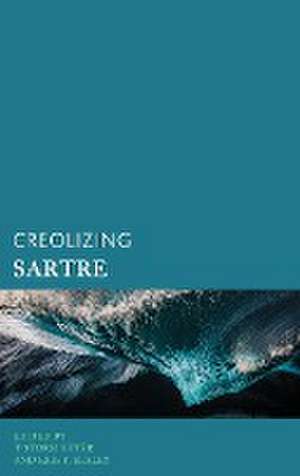
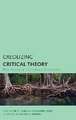
Creolizing Sartre: Creolizing the Canon
Editat de T Storm Heter, Kris F. Sealeyen Limba Engleză Hardback – 8 dec 2023
As a situational, committed thinker, Sartre worked to illuminate the urgent questions of his time at the concrete and the abstract level. The creolization of Sartrean thinking is consistent with the existential projects of engagement, authenticity, political commitment, and liberation from oppression. This volume asks how his European model of phenomenology was (and can be) transformed when it is taken up by thinkers who have lived experience with colonialism. They book also engages Sartre in his relation to key interlocutors (especially Beauvoir and Fanon) who were influenced by him and who influenced him in turn. The book demonstrates how Sartrean philosophy is productively related to Africana philosophy, Africana phenomenology, and Africana existentialism.
This volume treats creolization not as a discrete topic, but as an interdisciplinary, global approach to reading and thinking. Each author's contribution embodies an aspect of creolizing thinking, understood as the articulation of cultural and conceptual hybridity under conditions of eurocentrism, epistemic colonialism and the legacies of slavery. Creolizing Sartre re-reads Sartrean texts to recast existential themes through the lens of Caribbean philosophies and the broader philosophies of the Global South.
Contributors: Lawrence Bamikole, Sybil Newton Cooksey, James Haile III, Paget Henry, T Storm Heter, Thomas Meagher, Michael J. Monahan, Anthony Sean Neal, Nathalie Nya, Kris F. Sealey, Hiroaki Seki, Jonathan Webber.
Din seria Creolizing the Canon
- 22%
 Preț: 328.09 lei
 - 22%
 Preț: 328.01 lei
 - 23%
 Preț: 325.49 lei
 - 22%
 Preț: 328.01 lei
 - 22%
 Preț: 315.02 lei
 - 22%
 Preț: 273.45 lei
 - 18%
 Preț: 352.33 lei
 - 24%
 Preț: 166.89 lei
 - 22%
 Preț: 248.50 lei
 - 21%
 Preț: 306.23 lei
 - 15%
 Preț: 210.68 lei
 - 31%
 Preț: 465.96 lei
 - 34%
 Preț: 524.06 lei
 - 25%
 Preț: 209.32 lei
 - 34%
 Preț: 618.27 lei
 - 34%
 Preț: 569.04 lei
 - 34%
 Preț: 566.83 lei
 - 31%
 Preț: 565.28 lei
Preț: 590.29 lei
Preț vechi: 891.97 lei
-34%
Puncte Express: 885
Preț estimativ în valută:
104.47€ • 122.09$ • 90.70£
104.47€ • 122.09$ • 90.70£
Carte tipărită la comandă
Livrare economică 20 februarie-06 martie
Preluare comenzi: 021 569.72.76
Specificații
ISBN-13: 9781538162583
ISBN-10: 153816258X
Pagini: 250
Dimensiuni: 158 x 239 x 21 mm
Greutate: 0.53 kg
Editura: Bloomsbury Publishing
Colecția Rowman & Littlefield Publishers
Seria Creolizing the Canon
Locul publicării:New York, United States
ISBN-10: 153816258X
Pagini: 250
Dimensiuni: 158 x 239 x 21 mm
Greutate: 0.53 kg
Editura: Bloomsbury Publishing
Colecția Rowman & Littlefield Publishers
Seria Creolizing the Canon
Locul publicării:New York, United States
Cuprins
Preface
T Storm Heter and Kris Sealey
Chapter 1: Sartre's Existentialism and the Communal Thesis in Afro-Caribbean Philosophy
Lawrence Bamikole
Chapter 2: Mile's Smiles: Mid-Century Portraits of Fugitive Improvisation
Sybil Newton Cooksey
Chapter 3: The Being of Becoming, the Becoming of Being: Sartre and Jazz Improvisation: Some Preliminary Thoughts
James Haile III
Chapter 4: Wilson Harris and the Creolizing of Sartre
Paget Henry
Chapter 5: The Global South and Sartre: Echoes of Existential Thought
T Storm Heter and Kris Sealey
Chapter 6: Creolized Reflection
Thomas Meagher
Chapter 7: Racial Praxis: Black Liberation and the Movement From Series to Group
Michael J. Monahan
Chapter 8: Race and Functional Ultimacy: Choosing Freedom
Anthony Sean Neal
Chapter 9: Reversing the Gaze, Sartre's Preface to Fanon's The Wretched of the Earth
Nathalie Nya
Chapter 10: Oe Kenzaburo and Pursuit of Authenticity through the Imagination: Creolizing Sartre in Japan?
Hiroaki Seki
Chapter 11: Transcendental Phenomenology Meets Negritude Poetry
Jonathan Webber
Index
About the Contributors
T Storm Heter and Kris Sealey
Chapter 1: Sartre's Existentialism and the Communal Thesis in Afro-Caribbean Philosophy
Lawrence Bamikole
Chapter 2: Mile's Smiles: Mid-Century Portraits of Fugitive Improvisation
Sybil Newton Cooksey
Chapter 3: The Being of Becoming, the Becoming of Being: Sartre and Jazz Improvisation: Some Preliminary Thoughts
James Haile III
Chapter 4: Wilson Harris and the Creolizing of Sartre
Paget Henry
Chapter 5: The Global South and Sartre: Echoes of Existential Thought
T Storm Heter and Kris Sealey
Chapter 6: Creolized Reflection
Thomas Meagher
Chapter 7: Racial Praxis: Black Liberation and the Movement From Series to Group
Michael J. Monahan
Chapter 8: Race and Functional Ultimacy: Choosing Freedom
Anthony Sean Neal
Chapter 9: Reversing the Gaze, Sartre's Preface to Fanon's The Wretched of the Earth
Nathalie Nya
Chapter 10: Oe Kenzaburo and Pursuit of Authenticity through the Imagination: Creolizing Sartre in Japan?
Hiroaki Seki
Chapter 11: Transcendental Phenomenology Meets Negritude Poetry
Jonathan Webber
Index
About the Contributors
Recenzii
Sartrean existentialism is its valuing of engaging others and listeningto them in order to realize truer realities. Listening to the consciousnesses of others, learning of the varieties of reflective voices andattitudes we may choose in relation to one another and the world,is perhaps how we most genuinely grow closer to understanding our own experiences of being. Creolizing Sartre is a wonderful, must-read, book that accomplishes exactly that.
Deploying creolizing as an interdisciplinary, critical method for taking up Sartre's work, the chapters in this volume engage such notions as ontology, freedom, and humanism from the lived, material conditions of colonialism, settler colonialism, and the afterlives of enslavement. The book is a must-read for scholars seeking to expand their strategic, philosophical toolkits and further develop liberatory practices that speak to the pressing ethical-political issues of our day.
Deploying creolizing as an interdisciplinary, critical method for taking up Sartre's work, the chapters in this volume engage such notions as ontology, freedom, and humanism from the lived, material conditions of colonialism, settler colonialism, and the afterlives of enslavement. The book is a must-read for scholars seeking to expand their strategic, philosophical toolkits and further develop liberatory practices that speak to the pressing ethical-political issues of our day.