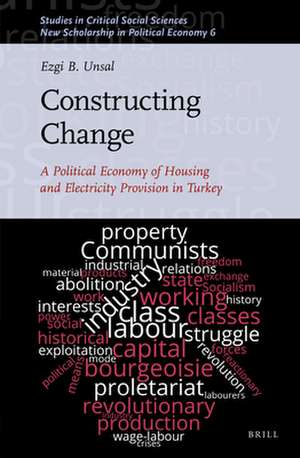
Constructing Change: Brill
Autor Ezgi Ünsalen Limba Engleză Hardback – 24 iun 2021
Din seria Brill
- 23%
 Preț: 1909.88 lei
 - 23%
 Preț: 1688.73 lei
 - 23%
 Preț: 1032.64 lei
 - 23%
 Preț: 904.54 lei
 - 23%
 Preț: 1035.24 lei
 - 23%
 Preț: 1443.23 lei
 - 23%
 Preț: 1343.53 lei
 - 23%
 Preț: 835.20 lei
 - 23%
 Preț: 1075.67 lei
 - 23%
 Preț: 2042.06 lei
 - 23%
 Preț: 825.62 lei
 - 23%
 Preț: 2353.36 lei
 - 23%
 Preț: 1584.97 lei
 - 23%
 Preț: 822.69 lei
 - 23%
 Preț: 1917.59 lei
 - 23%
 Preț: 1211.59 lei
 - 23%
 Preț: 1213.16 lei
 - 23%
 Preț: 1577.07 lei
 - 23%
 Preț: 1816.81 lei
 - 23%
 Preț: 910.21 lei
 - 14%
 Preț: 818.19 lei
 - 23%
 Preț: 1316.22 lei
 - 23%
 Preț: 1025.05 lei
 - 23%
 Preț: 1401.73 lei
 - 23%
 Preț: 966.42 lei
 - 23%
 Preț: 1051.50 lei
 - 23%
 Preț: 1072.60 lei
 - 23%
 Preț: 1012.65 lei
 - 23%
 Preț: 1713.75 lei
 - 23%
 Preț: 1014.15 lei
 - 23%
 Preț: 1022.79 lei
 - 23%
 Preț: 992.70 lei
 - 23%
 Preț: 1048.54 lei
 - 23%
 Preț: 846.81 lei
 - 23%
 Preț: 1555.13 lei
 - 23%
 Preț: 1047.35 lei
 - 23%
 Preț: 967.83 lei
 - 23%
 Preț: 1824.78 lei
 - 23%
 Preț: 1686.01 lei
 - 23%
 Preț: 1599.53 lei
 - 23%
 Preț: 1353.67 lei
 - 23%
 Preț: 1203.22 lei
 - 23%
 Preț: 886.04 lei
 - 23%
 Preț: 1026.29 lei
 - 23%
 Preț: 931.91 lei
 - 23%
 Preț: 1554.04 lei
 - 23%
 Preț: 1577.27 lei
 - 23%
 Preț: 974.71 lei
 - 23%
 Preț: 2026.99 lei
 - 19%
 Preț: 633.04 lei
Preț: 1333.29 lei
Preț vechi: 1731.54 lei
-23%
Puncte Express: 2000
Carte tipărită la comandă
Livrare economică 05-19 octombrie
Livrare prin curier în România Termenul estimat este afișat lângă disponibilitate.
Transport gratuit pentru acest produs Plată online sau ramburs, în funcție de opțiunile comenzii.
Retur gratuit în 14 zile Comandă securizată și suport în română.
Specificații
ISBN-13: 9789004462052
ISBN-10: 9004462058
Pagini: 294
Dimensiuni: 155 x 234 x 18 mm
Greutate: 0.59 kg
Editura: Koninklijke Brill Bv
Colecția Brill
Seria Brill
ISBN-10: 9004462058
Pagini: 294
Dimensiuni: 155 x 234 x 18 mm
Greutate: 0.59 kg
Editura: Koninklijke Brill Bv
Colecția Brill
Seria Brill
Cuprins
Preface
Acknowledgements
List of Illustrations
1 What Is This Book about? General Introduction and Methodology
1 Objectives and Contribution
2 Methodology and the Structure of Analysis
2.1Systematic Dialectics and Hegelian Heritage
2.2Marx’s Materialism and the Incorporation of Empirical Material into Theory
2.3Essence and the Process of Change
2.4Levels of Abstraction: Tendencies and Countertendencies
2.5The Value of Labour Power
2.6The Systems of Provision (sop) Approach to Social Reproduction
3 Conclusion
2 A Literature Survey on Financialisation
1 Introduction
2 Financialisation as an Object of Study: The Rise of Finance and Its Impacts on the Economy
2.1Cambridge Theories of Distribution
2.2How Do the Cambridge Theories of Distribution Relate to Financialisation?
2.3Empirical Analyses on Firm-level: Decreasing Real Investment, Slowing Down of Accumulation
2.4Empirical Analysis on Aggregate Level: The Impacts of Worsening Income Distribution, Determination of Different Accumulation Regimes
2.5Emphasis upon Increasing Levels of Debt and Securitisation
2.6Asset Price Inflation Approach and ‘Forced’ Indebtedness
2.7Conclusion
3 Financialisation as a Reference Point for Periodisation
3.1Annales School and Recurrent Financialisation
3.2Financialisation as Coupon Pool: Social Accountancy and Cultural Economy Approach
3.3Finance-led Accumulation Regime as an Alternative to Fordist Regime: French Regulation School
3.4Varieties of Capitalism (VoC) Approach
3.5Tri-partite Class Regime and the Crisis of Neoliberalism: Duménil and Lévy
3.6Financial Expropriation Approach: Lapavitsas and Dos Santos
3.7The Increasing Presence of Interest-bearing Capital
4 Conclusion
3 Financialisation in Developing and Emerging Economies
1 Introduction
2 Historical Development of Financialisation in Developing Countries
2.1Reserve Accumulation Strategy and the Narrowing Down of the Policy Scope
2.2Crowding-out of Investment and Changes in Firm and Institutional Behaviour
3 Conclusion
4 The Political Economy of Turkey Since 1980
Towards Differentiated Global Integration
1 Introduction
2 1980s and 1990s: Capital Account Liberalisation, Export Boom and Public Indebtedness
3 Political Economy of Transition: The Differentiated Impacts of the 2001 Crisis
4 After 2001: Restructuring of the Banking Sector
5 After 2001: Household Indebtedness
6 After 2001: Capital Restructuring?
7 Conclusion
5 The Political Economy of Electricity Provision in Turkey
1 Introduction
2 Privatisation of Electricity Provision: Rhetoric and Experiences around the World
2.1Scholarship on Privatisation of Electricity Provision: How and What to Regulate?
3 Energy Sector Outlook in Turkey
4 Historical Background and Institutional Framework for Electricity Provision in Turkey
4.1Privatisation Process i: Policy Design and Price Regulation
4.2Privatisation Process ii: Addressing Losses and Theft and Other Problems in Implementation
5 The Case of Hydroelectric Power Plants (HEBB s) in Turkey: How They Are Built and Financed
5.1Ilisu Dam: A HEBB Project
5.2Coruh Development Plan
6 What Role to the Finance?
6.1Firm Financing: An Investigation of Corporate Balance Sheets in the Electricity Industry
7 Conclusion
6 The Political Economy of Housing Provision in Turkey
1 Introduction
2 Production Matters in a Comparative Context: Housing Provision in Britain
3 Production upon Landed Property: Marx’s Agricultural Rent Theory
3.1Rent in Urban Settings
4 The Dynamics of Housing Production in Turkey: A Construction Boom Facilitated through State Institutions
4.1A History of Housing Provision in Turkey within the Context of Urbanisation
4.2The Rise of a State Institution in the Transition towards Market-based Provision: toki (Housing Development Administration)
5 An Empirical Investigation of the Construction Sector Firms’ Financial Statements
6 The Dynamics of Housing Consumption in Turkey
6.1Housing Consumption: Who Consumes How Much?
7 Conclusion
7 Conclusion
1 Introduction
2 Main Findings and Contribution
3 Further Issues and Concluding Remarks
Bibliography
Index
Acknowledgements
List of Illustrations
1 What Is This Book about? General Introduction and Methodology
1 Objectives and Contribution
2 Methodology and the Structure of Analysis
2.1Systematic Dialectics and Hegelian Heritage
2.2Marx’s Materialism and the Incorporation of Empirical Material into Theory
2.3Essence and the Process of Change
2.4Levels of Abstraction: Tendencies and Countertendencies
2.5The Value of Labour Power
2.6The Systems of Provision (sop) Approach to Social Reproduction
3 Conclusion
2 A Literature Survey on Financialisation
1 Introduction
2 Financialisation as an Object of Study: The Rise of Finance and Its Impacts on the Economy
2.1Cambridge Theories of Distribution
2.2How Do the Cambridge Theories of Distribution Relate to Financialisation?
2.3Empirical Analyses on Firm-level: Decreasing Real Investment, Slowing Down of Accumulation
2.4Empirical Analysis on Aggregate Level: The Impacts of Worsening Income Distribution, Determination of Different Accumulation Regimes
2.5Emphasis upon Increasing Levels of Debt and Securitisation
2.6Asset Price Inflation Approach and ‘Forced’ Indebtedness
2.7Conclusion
3 Financialisation as a Reference Point for Periodisation
3.1Annales School and Recurrent Financialisation
3.2Financialisation as Coupon Pool: Social Accountancy and Cultural Economy Approach
3.3Finance-led Accumulation Regime as an Alternative to Fordist Regime: French Regulation School
3.4Varieties of Capitalism (VoC) Approach
3.5Tri-partite Class Regime and the Crisis of Neoliberalism: Duménil and Lévy
3.6Financial Expropriation Approach: Lapavitsas and Dos Santos
3.7The Increasing Presence of Interest-bearing Capital
4 Conclusion
3 Financialisation in Developing and Emerging Economies
1 Introduction
2 Historical Development of Financialisation in Developing Countries
2.1Reserve Accumulation Strategy and the Narrowing Down of the Policy Scope
2.2Crowding-out of Investment and Changes in Firm and Institutional Behaviour
3 Conclusion
4 The Political Economy of Turkey Since 1980
Towards Differentiated Global Integration
1 Introduction
2 1980s and 1990s: Capital Account Liberalisation, Export Boom and Public Indebtedness
3 Political Economy of Transition: The Differentiated Impacts of the 2001 Crisis
4 After 2001: Restructuring of the Banking Sector
5 After 2001: Household Indebtedness
6 After 2001: Capital Restructuring?
7 Conclusion
5 The Political Economy of Electricity Provision in Turkey
1 Introduction
2 Privatisation of Electricity Provision: Rhetoric and Experiences around the World
2.1Scholarship on Privatisation of Electricity Provision: How and What to Regulate?
3 Energy Sector Outlook in Turkey
4 Historical Background and Institutional Framework for Electricity Provision in Turkey
4.1Privatisation Process i: Policy Design and Price Regulation
4.2Privatisation Process ii: Addressing Losses and Theft and Other Problems in Implementation
5 The Case of Hydroelectric Power Plants (HEBB s) in Turkey: How They Are Built and Financed
5.1Ilisu Dam: A HEBB Project
5.2Coruh Development Plan
6 What Role to the Finance?
6.1Firm Financing: An Investigation of Corporate Balance Sheets in the Electricity Industry
7 Conclusion
6 The Political Economy of Housing Provision in Turkey
1 Introduction
2 Production Matters in a Comparative Context: Housing Provision in Britain
3 Production upon Landed Property: Marx’s Agricultural Rent Theory
3.1Rent in Urban Settings
4 The Dynamics of Housing Production in Turkey: A Construction Boom Facilitated through State Institutions
4.1A History of Housing Provision in Turkey within the Context of Urbanisation
4.2The Rise of a State Institution in the Transition towards Market-based Provision: toki (Housing Development Administration)
5 An Empirical Investigation of the Construction Sector Firms’ Financial Statements
6 The Dynamics of Housing Consumption in Turkey
6.1Housing Consumption: Who Consumes How Much?
7 Conclusion
7 Conclusion
1 Introduction
2 Main Findings and Contribution
3 Further Issues and Concluding Remarks
Bibliography
Index
Notă biografică
Ezgi B. Unsal (1987), recently finished her PhD at SOAS, University of London and is currently a lecturer at Kadir Has University.