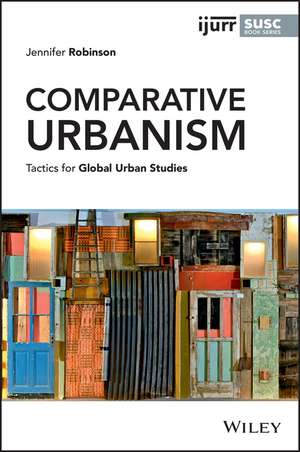
Comparative Urbanism
Autor Jennifer Robinsonen Limba Engleză Hardback – 18 iul 2022
Jennifer Robinson, figură centrală în geografia contemporană, revine cu o lucrare ce extinde fundamentele teoretice stabilite în Ordinary Cities. Observăm în Comparative Urbanism o rafinare a criticii postcoloniale, autoarea propunând instrumente conceptuale și metodologice care să elimine etichetele ce desemnează unele orașe drept paradigmatice, iar pe altele drept simple copii. Cercetarea sa, publicată în seria IJURR Studies in Urban and Social Change Book Series la John Wiley & Sons, Inc., se distinge printr-o rigoare academică ce vizează reformatarea practicii comparative la scară globală. Suntem de părere că această ediție reușește să recalibreze perspectivele teoretice uzuale prin introducerea unor „tactici” specifice pentru secolul XXI. Cartea acoperă o arie tematică similară cu The Routledge Handbook of Comparative Global Urban Studies, dar cu o abordare mai experimentală și mai strâns ancorată în deconstrucția binarității dintre Nordul și Sudul Global. În timp ce manualul editat de Patrick le Galès consolidează domeniul, lucrarea lui Robinson oferă un cadru metodologic flexibil, menit să permită studiul urban oriunde, fără a depinde de modelele occidentale predefinite. Structura volumului reflectă o progresie logică, pornind de la „Reformatting Comparison” și examinând critic modurile de cunoaștere a urbanului global. În capitolele dedicate arhivelor și conexiunilor, Jennifer Robinson demonstrează cum diversitatea realităților urbane poate genera noi teorii, nu doar aplicații ale celor existente. Descoperim aici un efort de a aduce în prim-plan condițiile urbane marginalizate, transformându-le în surse de inovație conceptuală. Tonul este unul academic precis, adresându-se direct studenților avansați și cercetătorilor care caută să depășească limitele analitice ale urbanismului convențional.
Preț: 573.46 lei
Preț vechi: 623.32 lei
-8%
Carte tipărită la comandă
Livrare economică 26 noiembrie-10 decembrie
Specificații
ISBN-10: 1119697514
Pagini: 464
Dimensiuni: 157 x 235 x 30 mm
Greutate: 0.79 kg
Editura: Wiley
Locul publicării:Chichester, United Kingdom
V-ar putea interesa
-
 -20%Preț: 193.83 lei242.49 lei
 -
 Preț: 370.66 lei
 -
 Cities Made DifferentlyDavid GraeberPreț: 108.58 lei
 -
 The Image of the CityKevin LynchPreț: 277.67 lei
 -
 The Routledge Companion to Urban ImaginariesChristoph LindnerPreț: 445.62 lei
 -
 The Spirit of CitiesDaniel A BellPreț: 151.96 lei
 -
 Shaping Cities in an Urban AgeRicky Burdett-14%Preț: 365.27 lei425.42 lei
 -
 Preț: 414.84 lei
 -
 The City ReaderRichard T. LeGates-13%Preț: 416.55 lei480.93 lei
 -
 Athens: Notes on Urban ImmanenceStavros Kousoulas-15%Preț: 432.92 lei509.32 lei
 -
 Preț: 380.83 lei
 -
 -15%Preț: 220.83 lei258.82 lei
 -
 Urban GeographyAndrew E. G. JonasPreț: 260.75 lei
 -
 Welcome to the NeighbourhoodJane FallonPreț: 73.28 lei
 -
 Engaged Urbanism: Cities and MethodologiesProf. Ben Campkin-23%Preț: 234.50 lei304.42 lei
 -
 The Homegrown CityMatias EchanovePreț: 152.61 lei
 -
 The City and the WorldGregor HensPreț: 108.10 lei
 -
 Environments of Planetary UrbanizationNeil BrennerPreț: 311.44 lei
 -
 Flux CitiesGregor H. MewsPreț: 304.76 lei
De ce să citești această carte
Această lucrare este esențială pentru cercetătorii și studenții la geografie sau planificare urbană care doresc să depășească modelele teoretice eurocentrice. Jennifer Robinson oferă un set de tactici metodologice concrete pentru a compara orașe din contexte radical diferite. Cititorul câștigă o perspectivă decolonială asupra urbanizării contemporane, învățând să analizeze „orașele obișnuite” dincolo de etichetele simpliste de „metropolă globală” sau „lumea a treia”.
Despre autor
Jennifer Robinson este o autoritate recunoscută în domeniul studiilor urbane, cercetarea sa actuală fiind construită pe succesul volumului Ordinary Cities. Prin acea lucrare, ea a dezvoltat o critică postcolonială care a redefinit modul în care academicienii privesc diviziunea dintre orașele occidentale și cele în curs de dezvoltare. Robinson pledează împotriva perspectivelor care categorizează orașele în ierarhii precum „Global” sau „Mega”, concentrându-se pe traiectoriile diverse ale așezărilor urbane. Activitatea sa are implicații majore asupra practicilor internaționale de urbanism, invitând la o regândire a fundamentelor comparative.
Descriere
This innovative volume offers new methodological foundations for global urban studies.
- Proposes the reformatting of comparative practice to provoke new conceptualizations and contribute to more inclusive analytical conversations
- Focuses both on revising existing theories and inventing new concepts for global urban studies, drawing on an array of theoretical and empirical resources
- Provides a novel approach to urban studies, open to different urban experiences around the world
- Features a wealth of rich examples of the many dimensions of global urban life
- Presents a range of methodological tactics informed by postcolonial critiques of urban studies and by theoretical and philosophical understandings of the radical revisability and emergent nature of concepts of the urban