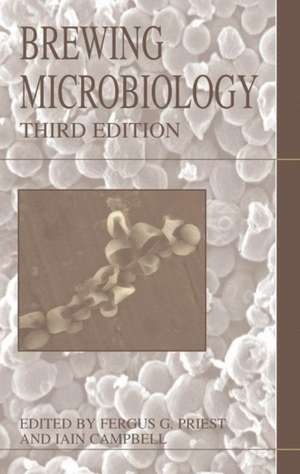
Brewing Microbiology
Editat de F G Priest, Iain Campbellen Limba Engleză Hardback – 30 noi 2002
Considerăm că a treia ediție a lucrării Brewing Microbiology reprezintă un volum de referință pentru specialiștii din cercetare și mediul academic, solicitând cunoștințe avansate de biochimie și biologie moleculară. Această ediție reflectă schimbările majore survenite în industria berii, de la consolidarea marilor concerne multinaționale până la maturizarea sectorului microberăriilor, punând un accent deosebit pe rigoarea științifică a proceselor fermentative. Abordarea editorilor F G Priest și Iain Campbell diferă de cea din The Biotechnology of Malting and Brewing de James S. Hough prin nivelul de specializare tehnică; în timp ce Hough oferă o prezentare concisă a procesului general, acest volum sondează profund mecanismele moleculare, precum secvențierea genomului drojdiei Saccharomyces cerevisiae și tehnicile PCR pentru detectarea microorganismelor. Apreciem modul în care autorii integrează progresele din genetică pentru a explica nu doar cum funcționează drojdia, ci și cum pot fi monitorizate genele în timpul fermentației pentru a controla profilul de aromă. Structura cărții este una progresivă și analitică. Primele capitole stabilesc fundamentele microbiologice ale malțării și fierberii, urmate de o analiză exhaustivă a biochimiei creșterii drojdiilor. Secțiunile dedicate geneticii și microbiotei orzului oferă o perspectivă tehnică asupra contaminanților și a modului în care aceștia influențează calitatea produsului finit. Această lucrare continuă direcția academică riguroasă a lui F G Priest, observată și în Bacterial Diversity and Systematics, unde expertiza sa în taxonomie și identificare microbiană este aplicată acum strict în contextul biotehnologiei alimentare.
Preț: 1446.45 lei
Preț vechi: 1763.97 lei
-18%
Carte tipărită la comandă
Livrare economică 30 noiembrie-14 decembrie
Specificații
ISBN-10: 0306472880
Pagini: 399
Ilustrații: XII, 399 p. 9 illus.
Dimensiuni: 166 x 240 x 30 mm
Greutate: 0.83 kg
Ediția:3rd edition
Editura: Springer Us
Locul publicării:New York, NY, United States
V-ar putea interesa
-
 The Complete Joy of Homebrewing Fourth EditionCharlie PapazianPreț: 96.90 lei
 -
 Homebrewer's Companion Second EditionCharlie PapazianPreț: 129.18 lei
 -
 The Oxford Companion to BeerGarrett Oliver-17%Preț: 356.90 lei428.42 lei
 -
 The Rise of Yeast: How the sugar fungus shaped civilisationNicholas P. Money-20%Preț: 134.49 lei168.26 lei
 -
 Microbiology: A Very Short IntroductionNicholas P. Money-24%Preț: 56.93 lei75.24 lei
 -
 Beer: Tap Into the Art and Science of BrewingCharles W. Bamforth-14%Preț: 169.28 lei196.31 lei
 -
 Adventures in FermentationJohnny DrainPreț: 166.76 lei
 -
 -21%Preț: 157.42 lei198.93 lei
 -
 A Natural History of BeerRob DeSallePreț: 84.46 lei
 -
 -24%Preț: 121.36 lei159.92 lei
 -
 Preț: 158.75 lei
 -
 Preț: 389.89 lei
 -
 FermentTim Spector-5%Preț: 116.95 lei123.10 lei
 -
 The Meaning of BeerJonny GarrettPreț: 79.62 lei
 -
 BrewingIan S HornseyPreț: 272.56 lei
 -
 Preț: 170.13 lei
 -
 Microbiology of Ethanol Fermentation in Sugarcane BiofuelsSandra Regina Ceccato-Antonini-24%Preț: 674.70 lei887.77 lei
 -
 YeastHorst Feldmann-11%Preț: 538.87 lei605.47 lei
 -
 Applied Malting and Brewing ScienceLudwig Narziß-14%Preț: 666.68 lei775.20 lei
 -
 The Beer Brewing GuideChristopher McGregerPreț: 415.12 lei
Public țintă
ResearchDe ce să citești această carte
Recomandăm această carte profesioniștilor din industria berii și cercetătorilor care doresc să stăpânească biotehnologia modernă aplicată fermentației. Cititorul câștigă o înțelegere profundă a geneticii drojdiilor și a metodelor de detectare moleculară a contaminanților, esențiale pentru asigurarea calității într-o berărie modernă. Este un instrument indispensabil pentru optimizarea proceselor tehnologice prin prisma microbiologiei de ultimă oră.
Despre autor
Editorii volumului sunt personalități marcante în domeniul microbiologiei industriale. F G Priest are o experiență vastă în sistematica și diversitatea bacteriană, fiind cunoscut pentru coordonarea unor lucrări fundamentale precum Bacterial Diversity and Systematics. Iain Campbell este un expert recunoscut în sistematica drojdiilor, contribuind esențial la revizuirea clasificărilor moderne în acest domeniu. Împreună, aceștia au sintetizat decenii de cercetare pentru a oferi o resursă academică ce face legătura între biologia moleculară teoretică și aplicațiile practice din industria producătoare de băuturi fermentate.