
Basil
Autor Wilkie Collinsen Limba Engleză Paperback – 6 aug 2019
Basil, son of a father who values the family pedigree and who would not let him marry below his station, falls in love at first sight with a girl he sees on a bus. He follows her and discovers she is Margaret Sherwin, only daughter of a linen draper. He persuades her father to let him marry her secretly. He agrees on the condition, that, as his daughter is only seventeen, they live apart for the first year. At first the secret works, but then the mysterious Mannion, whose emotions cannot be read in his face, returns from abroad. On the last night of the year Basil follows Margaret and Mannion and discovers them in flagrante delicto. Basil attacks Mannion in the street and tries to murder him, but succeeds only in mutilating his face by pushing it into the fresh tarmacadam in the road. Mannion survives, recovers and swears revenge, and it is revealed that Basil's father indirectly caused Mannion's father to be hanged for forgery.
Basil repudiates Margaret, but Sherwin threatens him with exposure unless he holds to his marriage. Basil confesses to his father, who disowns him, but his sister Clara stands by him. Basil's brother Ralph undertakes to buy Sherwin off, but meanwhile Margaret flees to Mannion, thereby acknowledging her guilt. Visiting Mannion in hospital, she catches typhus and dies. Basil, having been put on her track by Ralph, visits her on her deathbed.
Basil flees from Mannion to Cornwall. The d nouement is worthy of Conan Doyle, set among whirlpools and cliffs near Lands End.
Preț: 147.20 lei
Carte tipărită la comandă
Livrare economică 30 noiembrie-05 decembrie
Specificații
ISBN-10: 9353831512
Pagini: 310
Dimensiuni: 140 x 216 x 18 mm
Greutate: 0.4 kg
Editura: Throne Classics
V-ar putea interesa
-
 Sense and SensibilityJane AustenPreț: 28.01 lei
 -
 The VowStefanie LondonPreț: 71.22 lei
 -
 No NameWilkie Collins-22%Preț: 64.06 lei82.16 lei
 -
 ArmadaleWilkie Collins-27%Preț: 70.88 lei96.87 lei
 -
 The Law and the LadyWilkie CollinsPreț: 74.51 lei
 -
 Man and WifeWilkie Collins-15%Preț: 75.40 lei89.14 lei
 -
 The Picture of Dorian GrayOscar WildePreț: 35.93 lei
 -
 Pride and PrejudiceJane AustenPreț: 44.28 lei
 -
 Jezebel's DaughterWilkie CollinsPreț: 51.13 lei
 -
 Blind LoveWilkie CollinsPreț: 56.74 lei
 -
 Poor Miss FinchWilkie CollinsPreț: 61.77 lei
 -
 Preț: 109.19 lei
 -
 The Dream WomanWilkie CollinsPreț: 49.88 lei
 -
 Preț: 160.21 lei
 -
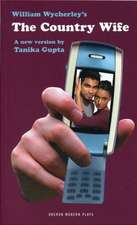 The Country WifeWilliam Wycherley-35%Preț: 62.83 lei96.40 lei
 -
 The Woman in WhiteWilkie CollinsPreț: 33.00 lei
 -
 Oliver TwistCharles DickensPreț: 37.41 lei
 -
 The MoonstoneWilkie CollinsPreț: 32.30 lei
 -
 Preț: 34.20 lei
Descriere
In Basil's secret and unconsummated marriage to the linen-draper's sexually precocious daughter, and the shocking betrayal, insanity, and death that follow, Collins reveals the bustling, commercial London of the nineteenth century wreaking its vengeance on a still powerful aristocratic world. Contemporary reviewers vehemently disapproved of this explicit treatment of adultery; and even today the passionate and lurid atmosphere he creates still has the power to disturb the reader. ABOUT THE SERIES: For over 100 years Oxford World's Classics has made available the widest range of literature from around the globe. Each affordable volume reflects Oxford's commitment to scholarship, providing the most accurate text plus a wealth of other valuable features, including expert introductions by leading authorities, helpful notes to clarify the text, up-to-date bibliographies for further study, and much more.