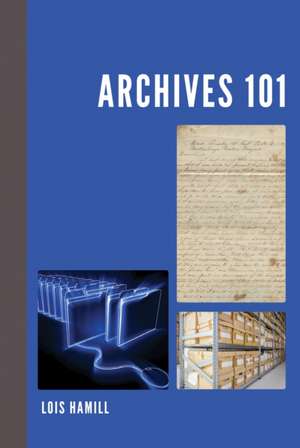
Archives 101: American Association for State and Local History
Autor Lois Hamillen Limba Engleză Paperback – 14 apr 2021
Din seria American Association for State and Local History
- 32%
 Preț: 832.56 lei
 - 21%
 Preț: 214.67 lei
 - 22%
 Preț: 325.02 lei
 - 19%
 Preț: 316.09 lei
 - 11%
 Preț: 398.39 lei
 - 30%
 Preț: 355.61 lei
 - 19%
 Preț: 331.43 lei
 - 23%
 Preț: 286.27 lei
 - 24%
 Preț: 255.41 lei
 - 27%
 Preț: 501.00 lei
 - 25%
 Preț: 216.46 lei
 - 24%
 Preț: 254.02 lei
 - 19%
 Preț: 320.78 lei
 - 34%
 Preț: 951.06 lei
 - 19%
 Preț: 322.24 lei
 - 24%
 Preț: 391.91 lei
 - 31%
 Preț: 569.03 lei
 - 18%
 Preț: 334.84 lei
 - 24%
 Preț: 222.59 lei
 - 24%
 Preț: 283.12 lei
 -
 Preț: 421.53 lei
 - 21%
 Preț: 312.33 lei
 - 20%
 Preț: 373.68 lei
 - 30%
 Preț: 576.05 lei
 - 19%
 Preț: 323.58 lei
 - 25%
 Preț: 286.61 lei
 - 21%
 Preț: 365.17 lei
 - 23%
 Preț: 276.66 lei
 - 35%
 Preț: 633.94 lei
 - 31%
 Preț: 534.98 lei
 - 24%
 Preț: 255.02 lei
 - 31%
 Preț: 569.81 lei
 - 29%
 Preț: 522.70 lei
 - 19%
 Preț: 322.03 lei
 - 19%
 Preț: 322.16 lei
Preț: 326.60 lei
Preț vechi: 400.83 lei
-19%
Carte tipărită la comandă
Livrare economică 02-16 decembrie
Specificații
ISBN-10: 1538133016
Pagini: 288
Ilustrații: 40 b/w photos; 9 tables; 2 textboxes
Dimensiuni: 174 x 250 x 20 mm
Greutate: 0.53 kg
Editura: Bloomsbury Publishing
Colecția Rowman & Littlefield
Seria American Association for State and Local History
Locul publicării:New York, United States
V-ar putea interesa
-
 A History of Archival PracticePaul DelsallePreț: 450.93 lei
 -
 The Art of the ScribePatricia Lovett-7%Preț: 264.40 lei283.31 lei
 -
 Illustrated Practical Encyclopedia of ArchaeologyChris CatlingPreț: 141.06 lei
 -
 -9%Preț: 890.74 lei978.84 lei
 -
 Organizing Archival Records: A Guide for Both Physical and Digital CollectionsDavid W. Carmicheal-21%Preț: 214.67 lei272.65 lei
 -
 Digital Asset Management for MuseumsMargaret C. McKee-27%Preț: 440.23 lei601.02 lei
 -
 Digital Preservation for Libraries, Archives, and MuseumsEdward M. Corrado-18%Preț: 248.84 lei303.27 lei
 -
 -21%Preț: 271.34 lei344.23 lei
 -
 A Legal Primer on Managing Museum Collections - Fourth EditionIldiko Pogany DeAngelisPreț: 357.08 lei
 -
 Personal Digital Archiving: Guidance & PerspectivesBeverly Winston-27%Preț: 532.59 lei725.85 lei
 -
 The Special Collections HandbookAlison Cullingford-19%Preț: 545.14 lei673.02 lei
 -
 Preț: 306.75 lei
 -
 Looking After Your BooksFrancesca GalliganPreț: 132.28 lei
 -
 -19%Preț: 606.02 lei748.17 lei
 -
 Collection Management BasicsG. Edward Evans-16%Preț: 393.13 lei469.05 lei
 -
 -17%Preț: 389.04 lei469.99 lei
 -
 An Archivist's Guide to Copyright: Navigating Risk ManagementWilliam J. Maher-17%Preț: 346.23 lei416.16 lei
Descriere
Archives 101 is a manual for people who care for historical records, photographs, and collections and a textbook for those who want to learn. Lois Hamill provides practical, step-by-step guidance for managing all facets of archival collections, from acquisition, arrangement, and description to storage and security. The book also offers advice on how to integrate description in PastPerfect software with archival finding aids to optimize the strengths of each. Archives 101 is written for those who manage cultural collections regardless of their professional education or institution type. This comprehensive, practical, ready reference is authoritative yet accessible to all readers. It addresses all phases in the process of managing cultural collections including use by researchers, for exhibits, work with other specialists such as conservators or appraisers and more. The chapter on description incorporates the professional descriptive standard Describing Archives: a Content Standard (DACS) into finding aids. Guidance on the management of digitization projects for text documents and photographs includes equipment, technical specifications, file naming and management, workflow, delivery methods, and copyright with examples and forms. The Additional Reading/Resources features many new resources that are reliable and free, all URLs have been verified. A convenient Glossary, examples, forms and ready-reference appendices round out this handy volume.
Cuprins
Preface
Introduction
1. Basic Definitions and Concepts
2. Acquiring New Materials
3. Arranging the Collection
4. Describing the Collection
5. Photographs: Part 1-Handling, Arranging, Identifying, Rehousing, and Describing
6. Photographs: Part 2-Management and Use
7. Managing Digitization Projects
8. Reference and Researchers
9. Security
10. Exhibits
11. The Collection Storage Environment
12. Other Types of Materials
13. Outside Specialists
14. Additional Personnel
15. Disaster Preparedness
Appendixes
Appendix A: Guidelines and Policies
Appendix B: Sample Forms and Workflows
Appendix C: Representative Examples
Appendix D: Vendors
Notes
Glossary
Bibliography
Index
About the Author
Recenzii
Hamill's book provides an easy-to-understand and engaging tour of the topics that most often confuse the avocational or novice archivist, and one that even experienced archivists will return to time and again for helpful assistance. The text covers a broad spectrum of archival practices with particularly timely advice on digitization projects, caring for digital records, and issues related to online access.
Lois Hamill's Archives 101 is a treasure. This easy-to-read, up-to-date guide is suitable for many audiences--from those starting out as a volunteer, to archivists who desire a little refresher, to instructors teaching introductory archives. My students loved it!
Lois Hamill's Archives 101 is a wonderful introduction to the archival challenge-to preserve, protect, and provide access to cultural heritage materials. Designed for archivists-in-training who manage archival collections in small cultural organizations, Archives 101 is a well-written, straightforward, and much needed 'A-Z' archives guidebook.
Hamill's book Archives 101 is clearly the book for museums, historical societies and others who collect historical artifacts. The book is arranged for those of us who are not professionals but are beginners who are looking at basic concepts and definitions, and how to arrange and describe collections. Items are given their own chapters if you are looking for how to handle and manage photographs. There is even a section on disaster preparedness which we all hope to avoid, but should be ready for. Overall I have found this book to be a good one for societies and museums as a reference book in their collections. It will not be a book to collect dust on the shelf but will be a valuable resource for them.
Archives 101 gives example forms and information layouts with formatting ,along with concrete examples fromArchives, Libraries, Museums and RecordManagement practices. The text is a welcoming and helpful guide for complete beginners who have never worked in libraries, museums, or academic institutions. The work is also suitable for a beginning professional to ensure a strong understanding and base knowledge, or new cultural organizations to grow as a collection and an archive while keeping in mind patron needs. The book is an effective plan, which, to quote Hamill, "is comprehensive, simple, and flexible" (p.203).
[This] is an eminently readable introduction to archival practices and a useful guide to help people begin hands-on archival work quickly and with confidence. Hamill's prose is clear, concise, and jargon-free. It could easily be handed to a new archives employee or volunteer to give them an overview of core archival concepts. Even for employees or volunteers at larger institutions who might be focused on one aspect of archival work and isolated from other departments, Archives 101 provides a thorough look at the work of a cultural institution when it comes to processing, making available, and storing documents, photographs, and other objects.