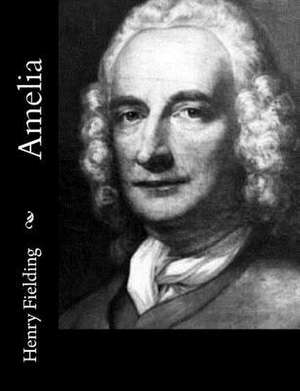
Amelia
Autor Henry Fieldingen Limba Engleză Paperback
Preț: 144.89 lei
Puncte Express: 217
Carte disponibilă
Livrare economică 17 noiembrie-01 decembrie
Livrare prin curier în România Termenul estimat este afișat lângă disponibilitate.
Transport gratuit de la 400.00 lei Plată online sau ramburs, în funcție de opțiunile comenzii.
Retur gratuit în 14 zile Comandă securizată și suport în română.
Specificații
ISBN-13: 9781502977601
ISBN-10: 1502977605
Pagini: 474
Dimensiuni: 189 x 246 x 24 mm
Greutate: 0.84 kg
Editura: CREATESPACE
ISBN-10: 1502977605
Pagini: 474
Dimensiuni: 189 x 246 x 24 mm
Greutate: 0.84 kg
Editura: CREATESPACE
V-ar putea interesa
-
 Sense and SensibilityJane AustenPreț: 28.01 lei
 -
 The Quiet WifeFelicity YorkPreț: 71.48 lei
 -
 Amelia, If OnlyBecky AlbertalliPreț: 65.03 lei
 -
 PamelaSamuel Richardsøn-23%Preț: 62.28 lei81.09 lei
 -
 Joseph Andrews/ShamelaHenry Fielding-31%Preț: 55.77 lei80.46 lei
 -
 The History of Tom Jones, a FoundlingHenry Fielding-13%Preț: 86.20 lei99.00 lei
 -
 EmmaJane Austen-24%Preț: 50.51 lei66.77 lei
 -
 Joseph Andrews and ShamelaHenry Fielding-15%Preț: 56.24 lei66.50 lei
 -
 Cecilia: or Memoirs of an HeiressFanny Burney-15%Preț: 108.52 lei127.00 lei
 -
 Great Big Beautiful Life. Special EditionEmily HenryPreț: 147.26 lei
 -
 Pride and PrejudiceJane AustenPreț: 44.28 lei
 -
 -24%Preț: 60.77 lei80.16 lei
 -
 The Pilgrim's ProgressJohn BunyanPreț: 46.43 lei
 -
 Anti-Pamela and ShamelaEliza Haywood-17%Preț: 156.59 lei188.24 lei
 -
 Elemental Masters - Miss Amelia's ListMercedes Lackey-19%Preț: 57.26 lei71.06 lei
 -
 Evelyn and Amelia WebsterJane AustenPreț: 37.94 lei
 -
 The Country WifeWilliam Wycherley-35%Preț: 62.83 lei96.40 lei
 -
 Oliver TwistCharles DickensPreț: 38.00 lei
 -
 Mansfield ParkJane AustenPreț: 38.45 lei
Recenzii
With its combination of satire and sentiment, its focus on the seedy side of London life, and its unexpected shifts in tone, Amelia has intrigued and disturbed readers since its first publication. Eagerly awaited by Henry Fielding’s eighteenth-century readers of Tom Jones, the novel perplexed many of them. Amelia counters the traditional courtship plot of eighteenth-century novels with its convincing portrayal of a marriage between an errant husband and his wife, and is ahead of its time in its depiction of the alienation of modern city life.
Appendices include contemporary criticism and related works by Alexander Pope and Sarah Fielding.
“Henry Fielding called Amelia his ‘favourite Child’ but the readers who loved Tom Jones, on the lookout for more jokes from this author, found the child unfunny and refused to take her in. Linda Bree’s new edition of the novel creates an important opening for fresh appraisal of this innovative and challenging work. It is generously and lucidly annotated, with a discriminating introduction taking balanced account both of the historical context and most recent critical discourse. A superb addition to our resources for the study of the early modern novel as well as of Fielding.” — Thomas Lockwood, University of Washington
“Amelia, Fielding’s last and in some ways greatest novel, gives us marriage as epic adventure, fraught with perils and blessed with pleasures, and Linda Bree thankfully gives us a new and authoritative edition. The text is well edited and annotated, Bree’s introduction superb, and the maps, glossary, and appendices all very useful.” — Adam Potkay, William R. Kenan Professor of Humanities, The College of William & Mary
Appendices include contemporary criticism and related works by Alexander Pope and Sarah Fielding.
“Henry Fielding called Amelia his ‘favourite Child’ but the readers who loved Tom Jones, on the lookout for more jokes from this author, found the child unfunny and refused to take her in. Linda Bree’s new edition of the novel creates an important opening for fresh appraisal of this innovative and challenging work. It is generously and lucidly annotated, with a discriminating introduction taking balanced account both of the historical context and most recent critical discourse. A superb addition to our resources for the study of the early modern novel as well as of Fielding.” — Thomas Lockwood, University of Washington
“Amelia, Fielding’s last and in some ways greatest novel, gives us marriage as epic adventure, fraught with perils and blessed with pleasures, and Linda Bree thankfully gives us a new and authoritative edition. The text is well edited and annotated, Bree’s introduction superb, and the maps, glossary, and appendices all very useful.” — Adam Potkay, William R. Kenan Professor of Humanities, The College of William & Mary
Descriere
Descriere de la o altă ediție sau format:
With its combination of satire and sentiment, its focus on the seedy side of London life, and its unexpected shifts in tone, Amelia has intrigued and disturbed readers since its first publication. Eagerly awaited by Henry Fielding’s eighteenth-century readers of Tom Jones, the novel perplexed many of them. Amelia counters the traditional courtship plot of eighteenth-century novels with its convincing portrayal of a marriage between an errant husband and his wife, and is ahead of its time in its depiction of the alienation of modern city life.
Appendices include contemporary criticism and related works by Alexander Pope and Sarah Fielding.
With its combination of satire and sentiment, its focus on the seedy side of London life, and its unexpected shifts in tone, Amelia has intrigued and disturbed readers since its first publication. Eagerly awaited by Henry Fielding’s eighteenth-century readers of Tom Jones, the novel perplexed many of them. Amelia counters the traditional courtship plot of eighteenth-century novels with its convincing portrayal of a marriage between an errant husband and his wife, and is ahead of its time in its depiction of the alienation of modern city life.
Appendices include contemporary criticism and related works by Alexander Pope and Sarah Fielding.
Cuprins
Acknowledgements
Introduction
Henry Fielding: A brief Chronology
A Note on Money
A Note on the Text
Glossary
Amelia
Appendix A: From Alexander Pope, An Essay on Man: Epistle II (1733–34)
Appendix B: Samuel Johnson, The Rambler, No. 4 (Saturday, 31 March 1750)
Appendix C: From The Covent-Garden Journal (January 1752)
Selected Bibliography
Introduction
Henry Fielding: A brief Chronology
A Note on Money
A Note on the Text
Glossary
Amelia
Appendix A: From Alexander Pope, An Essay on Man: Epistle II (1733–34)
Appendix B: Samuel Johnson, The Rambler, No. 4 (Saturday, 31 March 1750)
Appendix C: From The Covent-Garden Journal (January 1752)
- The Covent-Garden Journal, No. 7 (25 January 1752)
- The Covent-Garden Journal, No. 8 (28 January 1752)
Selected Bibliography