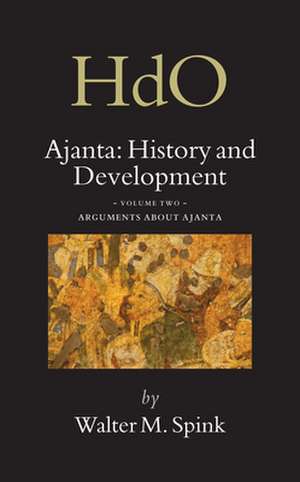
Ajanta: Brill
Autor Walter Spinken Limba Engleză Hardback – mai 2006
Din seria Brill
- 23%
 Preț: 1443.23 lei
 - 23%
 Preț: 1353.67 lei
 - 23%
 Preț: 1577.07 lei
 - 23%
 Preț: 825.62 lei
 - 23%
 Preț: 1035.24 lei
 - 23%
 Preț: 1022.79 lei
 - 23%
 Preț: 1213.16 lei
 - 23%
 Preț: 1343.53 lei
 - 23%
 Preț: 1075.67 lei
 - 23%
 Preț: 2042.06 lei
 - 23%
 Preț: 1014.15 lei
 - 23%
 Preț: 2353.36 lei
 - 23%
 Preț: 1012.65 lei
 - 23%
 Preț: 992.70 lei
 - 23%
 Preț: 1713.75 lei
 - 23%
 Preț: 1047.35 lei
 - 23%
 Preț: 1555.13 lei
 - 23%
 Preț: 1686.01 lei
 - 23%
 Preț: 1048.54 lei
 - 23%
 Preț: 910.21 lei
 - 23%
 Preț: 1025.05 lei
 - 23%
 Preț: 1316.22 lei
 - 23%
 Preț: 1577.27 lei
 - 23%
 Preț: 1401.73 lei
 - 23%
 Preț: 966.42 lei
 - 23%
 Preț: 846.81 lei
 - 23%
 Preț: 1072.60 lei
 - 23%
 Preț: 1203.22 lei
 - 23%
 Preț: 1051.50 lei
 - 23%
 Preț: 1554.04 lei
 - 23%
 Preț: 1917.59 lei
 - 23%
 Preț: 904.54 lei
 - 23%
 Preț: 822.69 lei
 - 23%
 Preț: 1143.87 lei
 - 23%
 Preț: 1824.78 lei
 - 23%
 Preț: 1816.81 lei
 - 23%
 Preț: 1211.59 lei
 - 23%
 Preț: 1909.88 lei
 - 23%
 Preț: 1599.53 lei
 - 23%
 Preț: 835.20 lei
 - 23%
 Preț: 1032.64 lei
 - 23%
 Preț: 1038.55 lei
 - 23%
 Preț: 886.04 lei
 - 23%
 Preț: 1026.29 lei
 - 23%
 Preț: 1831.04 lei
 - 23%
 Preț: 950.95 lei
 - 23%
 Preț: 1688.73 lei
 - 23%
 Preț: 974.71 lei
 - 23%
 Preț: 2026.99 lei
 - 19%
 Preț: 633.04 lei
Preț: 751.33 lei
Preț vechi: 916.25 lei
-18%
Puncte Express: 1127
Carte indisponibilă temporar
Doresc să fiu notificat când acest titlu va fi disponibil:
Se trimite...
Specificații
ISBN-13: 9789004150720
ISBN-10: 9004150722
Pagini: 350
Dimensiuni: 155 x 234 x 24 mm
Greutate: 0.67 kg
Editura: Koninklijke Brill Bv
Colecția Brill
Seria Brill
ISBN-10: 9004150722
Pagini: 350
Dimensiuni: 155 x 234 x 24 mm
Greutate: 0.67 kg
Editura: Koninklijke Brill Bv
Colecția Brill
Seria Brill
V-ar putea interesa
-
 Central Asia in World HistoryPeter B. Golden-17%Preț: 213.20 lei256.69 lei
 -
 Preț: 371.20 lei
 -
 -27%Preț: 525.09 lei723.05 lei
 -
 The Mongols: A Very Short IntroductionMorris RossabiPreț: 67.98 lei
 -
 The Northern Region of KoreaSun Joo KimPreț: 346.15 lei
 -
 Preț: 182.98 lei
 -
 Preț: 332.97 lei
 -
 Al- TabarAl-Tabar?Preț: 344.99 lei
 -
 The Great WallJohn Man-31%Preț: 64.32 lei92.94 lei
 -
 The Dome of the RockOleg GrabarPreț: 199.78 lei
 -
 Sacred SpacesJames Pallister-18%Preț: 281.31 lei342.97 lei
 -
 -27%Preț: 67.84 lei92.32 lei
 -
 -26%Preț: 176.17 lei239.16 lei
 -
 The Imperial Capitals of ChinaArthur Cotterell-18%Preț: 89.00 lei107.98 lei
 -
 Story of IndiaMichael Wood-20%Preț: 84.74 lei105.64 lei
 -
 English Cathedrals: A HistoryStanford Lehmberg-38%Preț: 210.49 lei340.80 lei
 -
 In Search of Kazakhstan: The Land that DisappearedChristopher Robbins-19%Preț: 68.14 lei84.57 lei
 -
 20 Sussex ChurchesSimon WatneyPreț: 63.83 lei
 -
 Tales of Old BangkokChris BurslemPreț: 101.58 lei
Notă biografică
Walter M. Spink, Ph.D. (1954) at Harvard is Professor Emeritus, History of Art, at the University of Michigan, Ann Arbor. He has published widely on Indian Art in general, and Ajanta and related sites in particular.
Recenzii
"(..) allows a larger audience to experience Ajanta not as a monolithic manmade wonder but as a site that reveals the complexities of Buddhist artistic and devotional practice in the late fifth century CE."
Lisa N. Owen, University of Texas, JAS
Lisa N. Owen, University of Texas, JAS