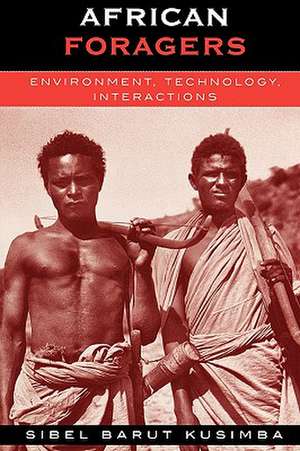
African Foragers: Environment, Technology, Interactions: African Archaeology Series
Autor Sibel Barut Kusimbaen Limba Engleză Paperback – 21 ian 2003
Preț: 365.63 lei
Preț vechi: 463.74 lei
-21%
Puncte Express: 548
Carte tipărită la comandă
Livrare economică 17 noiembrie-01 decembrie
Livrare prin curier în România Termenul estimat este afișat lângă disponibilitate.
Transport gratuit de la 400.00 lei Plată online sau ramburs, în funcție de opțiunile comenzii.
Retur gratuit în 14 zile Comandă securizată și suport în română.
Specificații
ISBN-13: 9780759101548
ISBN-10: 075910154X
Pagini: 312
Dimensiuni: 149 x 227 x 20 mm
Greutate: 0.48 kg
Ediția:New.
Editura: Bloomsbury Publishing
Colecția AltaMira Press
Seria African Archaeology Series
Locul publicării:New York, United States
ISBN-10: 075910154X
Pagini: 312
Dimensiuni: 149 x 227 x 20 mm
Greutate: 0.48 kg
Ediția:New.
Editura: Bloomsbury Publishing
Colecția AltaMira Press
Seria African Archaeology Series
Locul publicării:New York, United States
Cuprins
Chapter 1 List of Figures, Maps and Tables
Chapter 2 Foreword by Joseph O. Vogel
Chapter 3 Preface
Chapter 4 Chapter 1: Monuments of the Past
Chapter 5 Chapter 2: Human Landscapes
Chapter 6 Chapter 3: Humans, Tool Makers
Chapter 7 Chapter 4: Hunters, Gatherers, and a Social Universe
Chapter 8 Chapter 5: The Emergence of the Hunter-Gatherer
Chapter 9 Chapter 6: Microlithic Episodes
Chapter 10 Chapter 7: Preludes to the Neolithic
Chapter 11 Chapter 8: Twilight of the Hunterers-Gatherers
Chapter 12 Appendix: Nelson Bay Cave, Lukenya Hill, and Kisio Rockshelter
Chapter 13 Bibliography
Chapter 14 Author Index
Chapter 15 Subject Index
Chapter 16 About the Author
Chapter 2 Foreword by Joseph O. Vogel
Chapter 3 Preface
Chapter 4 Chapter 1: Monuments of the Past
Chapter 5 Chapter 2: Human Landscapes
Chapter 6 Chapter 3: Humans, Tool Makers
Chapter 7 Chapter 4: Hunters, Gatherers, and a Social Universe
Chapter 8 Chapter 5: The Emergence of the Hunter-Gatherer
Chapter 9 Chapter 6: Microlithic Episodes
Chapter 10 Chapter 7: Preludes to the Neolithic
Chapter 11 Chapter 8: Twilight of the Hunterers-Gatherers
Chapter 12 Appendix: Nelson Bay Cave, Lukenya Hill, and Kisio Rockshelter
Chapter 13 Bibliography
Chapter 14 Author Index
Chapter 15 Subject Index
Chapter 16 About the Author
Recenzii
If modern humans originated in Africa, it is obvious that one should look there to understand the fundamental processes involved. Kusimba's book helps one to focus on the lifestyles and history of African foragers in such a way that no one can escape the implications of this basic truth.
African Foragers is a tour de force. Dr. Kusimba explores African Foragers lifestyles with dedication, competence and clarity. In her crystal-clear style, she paints in eight incisive chapters a nuanced picture of Hunter-Gatherers research and spells out key episodes of Foragers odyssey, mostly in Africa, but sometimes beyond.
Sibel Barut Kusimba's African Foragers will serve as an excellent introductory text for students, not just for those working in African archaeology but also beyond. This is a comprehensive, up-to-date synthesis of outstanding research on the archaeology of African hunter-gatherers.
The work is very well written, with a wealth of theoretical argument that will be extremely useful for graduate seminars in African Prehistory.
Kusimba presents a lucid, up-to-date review of the theoretical underpinnings of the archaeological interpretation of hunter-gatherers... the author interprets the later stone-age archaeology of the region in light of these ideas and underscores the dynamic and resilient value of the hunter-gatherer adaptation. The result is a volume that will be essential in college and university libraries...Essential.
Sibel Kusimba is one of a new generation of archaeologist who are invigorating the study of African prehistory. African Foragers: Environment, Technology, Interactions is an outstanding synthesis of current research on the prehistory of African foragers from earliest times through the Neolithic and into the colonial era. Unlike older works focused on artifact typologies and culture histories, Kusimba illustrates the ways in which environment, technology, and interaction combine in process of cultural adaptation. This process has created foraging societies that, on the surface, appear remarkably stable over long periods of time but which, when examined closely, are as dynamic as any other cultures on earth. Kusimba's writing is clear, engaging, and unburdened with jargon. Her examples are well-chosen and serve to illustrate both the stability and dynamism in African foraging societies. African Foragers is a rare example of a book that both students and scholars will find useful, one that can be used both as a course text and as a research source. It is sure to become a standard by which future works on the prehistory of African foragers are measured.
Kusimba's African Foragers is a clearly written undergraduate textbook that highlights environment, technology, and social interactions among ancient (and modern) African foragers.
This wide-ranging book explores ethnographic and archaeological evidence related to foraging societies, with a focus on eastern and southern Africa, in order to establish 'the hunting and gathering of naturally occurring seasonal harvests' as a way of life all its own, successful and long lived.
African Foragers is a tour de force. Dr. Kusimba explores African Foragers lifestyles with dedication, competence and clarity. In her crystal-clear style, she paints in eight incisive chapters a nuanced picture of Hunter-Gatherers research and spells out key episodes of Foragers odyssey, mostly in Africa, but sometimes beyond.
Sibel Barut Kusimba's African Foragers will serve as an excellent introductory text for students, not just for those working in African archaeology but also beyond. This is a comprehensive, up-to-date synthesis of outstanding research on the archaeology of African hunter-gatherers.
The work is very well written, with a wealth of theoretical argument that will be extremely useful for graduate seminars in African Prehistory.
Kusimba presents a lucid, up-to-date review of the theoretical underpinnings of the archaeological interpretation of hunter-gatherers... the author interprets the later stone-age archaeology of the region in light of these ideas and underscores the dynamic and resilient value of the hunter-gatherer adaptation. The result is a volume that will be essential in college and university libraries...Essential.
Sibel Kusimba is one of a new generation of archaeologist who are invigorating the study of African prehistory. African Foragers: Environment, Technology, Interactions is an outstanding synthesis of current research on the prehistory of African foragers from earliest times through the Neolithic and into the colonial era. Unlike older works focused on artifact typologies and culture histories, Kusimba illustrates the ways in which environment, technology, and interaction combine in process of cultural adaptation. This process has created foraging societies that, on the surface, appear remarkably stable over long periods of time but which, when examined closely, are as dynamic as any other cultures on earth. Kusimba's writing is clear, engaging, and unburdened with jargon. Her examples are well-chosen and serve to illustrate both the stability and dynamism in African foraging societies. African Foragers is a rare example of a book that both students and scholars will find useful, one that can be used both as a course text and as a research source. It is sure to become a standard by which future works on the prehistory of African foragers are measured.
Kusimba's African Foragers is a clearly written undergraduate textbook that highlights environment, technology, and social interactions among ancient (and modern) African foragers.
This wide-ranging book explores ethnographic and archaeological evidence related to foraging societies, with a focus on eastern and southern Africa, in order to establish 'the hunting and gathering of naturally occurring seasonal harvests' as a way of life all its own, successful and long lived.