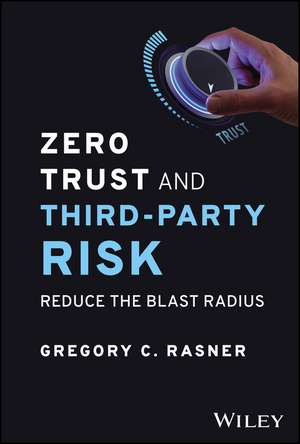
Zero Trust and Third-Party Risk
Autor Gregory C Rasneren Limba Engleză Hardback – 3 oct 2023
Remarcăm în Zero Trust and Third-Party Risk o abordare riguroasă a metodologiei de securitate, axată pe reducerea „razei de explozie” (blast radius) în cazul compromiterii lanțului de aprovizionare digital. Gregory C Rasner nu se limitează la teorie, ci propune un cadru de lucru structurat în jurul a cinci piloni esențiali pentru gestionarea riscurilor asociate partenerilor externi. Descoperim aici o progresie logică, de la definirea suprafeței de protecție și maparea fluxurilor de tranzacții (DAAS - Data, Applications, Assets, Services), până la construcția efectivă a arhitecturii și monitorizarea continuă a rețelei. Pe linia practică a volumului Zero Trust Security de Jason Garbis, dar cu un focus distinct pe ecosistemul vendorilor, lucrarea de față transformă filozofia „never trust, always verify” într-un set de controale aplicabile. Observăm că autorul utilizează scenariul organizației fictive KC Enterprises pentru a ancora conceptele tehnice în realitatea operațională. Această metodă permite cititorului să urmărească un ciclu complet: de la breșa inițială de securitate, la implementarea microsegmentării și a autentificării multifactor, până la faza de mentenanță a programului de securitate cibernetică. Structura cărții, împărțită în secțiuni dedicate explicațiilor doctrinare și aplicațiilor practice, oferă o claritate rară în literatura de specialitate. Spre deosebire de Zero Trust Architecture de Cindy Green-Ortiz, care se concentrează pe arhitectura generală a sistemelor, Zero Trust and Third-Party Risk izolează și analizează veriga cea mai vulnerabilă a infrastructurii moderne: software-ul și serviciile furnizate de terți. Este o resursă tehnică ce pune accent pe guvernanță și pe maturizarea programelor de risc, fiind esențială pentru alinierea departamentelor de IT cu obiectivele de reziliență ale afacerii.
Preț: 159.95 lei
Preț vechi: 199.93 lei
-20%
Carte disponibilă
Livrare economică 21 iulie-04 august
Livrare express 04-10 iulie pentru 28.58 lei
Specificații
ISBN-10: 1394203144
Pagini: 240
Dimensiuni: 160 x 232 x 12 mm
Greutate: 0.45 kg
Ediția:1
Editura: Wiley
Locul publicării:Hoboken, United States
V-ar putea interesa
-
 DevSecOps in Oracle CloudErik Benner-20%Preț: 416.03 lei520.04 lei
 -
 -20%Preț: 534.01 lei667.51 lei
 -
 -20%Preț: 451.04 lei563.80 lei
 -
 -20%Preț: 146.54 lei183.17 lei
 -
 Systematic Security: A CISO’s PlaybookTimur Qader-20%Preț: 354.20 lei442.75 leiRecomandat
 -
 CompTIA Security+ Review Guide - Exam SY0-601James Michael StewartPreț: 195.23 lei
 -
 Preț: 271.16 lei
 -
 The Official (ISC)2 CISSP CBK ReferenceAaron Kraus-20%Preț: 568.73 lei710.91 lei
 -
 Casp+ Comptia Advanced Security Practitioner Study GuideNadean H Tanner-20%Preț: 323.58 lei404.47 lei
 -
 Threat Hunting in the CloudChris Peiris-20%Preț: 250.22 lei312.78 lei
 -
 Cybersecurity and Third-Party RiskGregory C Rasner-20%Preț: 208.90 lei261.13 lei
 -
 -20%Preț: 314.06 lei392.57 lei
 -
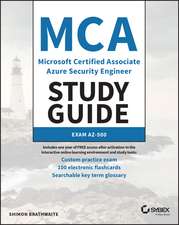 MCA Microsoft Certified Associate Azure Security Engineer Study GuideShimon Brathwaite-20%Preț: 304.48 lei380.61 lei
 -
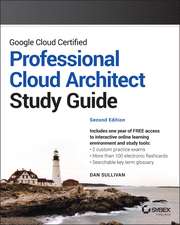 -20%Preț: 334.64 lei418.30 lei
 -
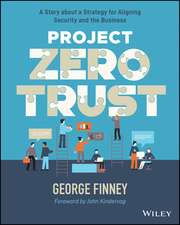 Project Zero TrustGeorge Finney-20%Preț: 132.65 lei165.80 lei
 -
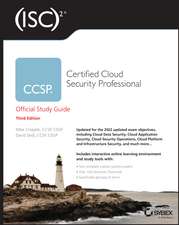 -20%Preț: 405.59 lei506.99 lei
 -
 Securing Microsoft Azure OpenAIKarl Ots-20%Preț: 321.13 lei401.42 lei
 -
 Microsoft Azure Security InfrastructureYuri Diogenes-20%Preț: 178.02 lei222.53 lei
De ce să citești această carte
Recomandăm această carte profesioniștilor IT și managerilor de risc care trebuie să securizeze infrastructuri complexe dependente de furnizori externi. Cititorul câștigă o metodologie clară pentru implementarea conceptelor de microsegmentare și acces cu privilegiu minim. Este un ghid indispensabil pentru a trece de la concepte abstracte la un program de securitate matur, capabil să limiteze impactul atacurilor asupra lanțului de aprovizionare.
Despre autor
Gregory C Rasner este un lider recunoscut în domeniul securității cibernetice, cu o experiență vastă în managementul riscurilor și implementarea arhitecturilor de tip Zero Trust. Expertiza sa se concentrează pe intersecția dintre securitatea operațională și guvernanța corporativă, fiind un susținător al integrării securității în procesele de business. Prin publicațiile sale la editura Wiley, Rasner contribuie la definirea standardelor moderne de protecție a datelor, aducând claritate în domenii complexe precum securitatea lanțului de aprovizionare și conformitatea digitală.