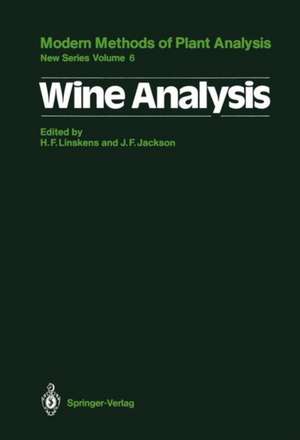
Wine Analysis: Molecular Methods of Plant Analysis, cartea 6
Editat de Hans-Ferdinand Linskens, John F. Jacksonen Limba Engleză Paperback – 15 apr 2014
Adresat în principal cercetătorilor, chimiștilor alimentari și specialiștilor din industria viticolă, Wine Analysis reprezintă un pilon tehnic în studiul compoziției și calității vinului. Notăm cu interes rigoarea cu care editorii Hans-Ferdinand Linskens și John F. Jackson au structurat acest al șaselea volum din seria Molecular Methods of Plant Analysis, menținând standardul de precizie stabilit încă de la debutul seriei în 1954. Considerăm că valoarea fundamentală a lucrării rezidă în abordarea sa metodologică: descrierile sunt suficient de detaliate pentru a asigura reproductibilitatea experimentelor, eliminând lacunele informaționale adesea întâlnite în jurnalele de specialitate. Structura volumului urmărește o progresie logică, pornind de la cadrul legal și procedurile de degustare, trecând prin analiza senzorială și corelarea acesteia cu datele instrumentale, până la tehnici avansate precum cromatografia de gaze pentru studiul aromelor. Pe linia practică a volumului Fruit Analysis, dar cu focus pe specificul fermentației și compușilor volatili ai strugurilor, această lucrare detaliază și aspecte critice precum detectarea falsurilor și analiza microelementelor. În contextul operei editorului, Wine Analysis completează o suită de referință care include Seed Analysis sau Cell Components, păstrând aceeași filozofie de a oferi protocoale de lucru „complete în sine”. Credem că integrarea metodelor de „taxonomie enologică” și studiul acizilor organici fac din acest volum un instrument indispensabil pentru controlul calității și cercetarea avansată în enologie.
Din seria Molecular Methods of Plant Analysis
- 15%
 Preț: 654.16 lei
 - 15%
 Preț: 652.96 lei
 - 15%
 Preț: 646.51 lei
 - 18%
 Preț: 899.67 lei
 - 18%
 Preț: 1267.31 lei
 - 15%
 Preț: 645.78 lei
 - 15%
 Preț: 641.76 lei
 - 15%
 Preț: 639.02 lei
 - 15%
 Preț: 640.06 lei
 - 15%
 Preț: 637.53 lei
 - 18%
 Preț: 979.63 lei
 - 15%
 Preț: 640.86 lei
 - 18%
 Preț: 910.71 lei
 - 18%
 Preț: 979.63 lei
 - 18%
 Preț: 1263.02 lei
 - 18%
 Preț: 1257.00 lei
 - 15%
 Preț: 647.63 lei
 - 15%
 Preț: 645.20 lei
 - 15%
 Preț: 644.47 lei
 - 15%
 Preț: 648.44 lei
 -
 Preț: 403.57 lei
 - 15%
 Preț: 650.98 lei
Preț: 627.48 lei
Preț vechi: 738.22 lei
-15%
Carte tipărită la comandă
Livrare economică 05-19 decembrie
Specificații
ISBN-10: 364283342X
Pagini: 400
Ilustrații: XV, 381 p. 9 illus.
Dimensiuni: 170 x 244 x 22 mm
Greutate: 0.69 kg
Ediția:Softcover reprint of the original 1st ed. 1988
Editura: Springer
Colecția Molecular Methods of Plant Analysis
Seria Molecular Methods of Plant Analysis
Locul publicării:Berlin, Heidelberg, Germany
V-ar putea interesa
-
 Wine GrapesJancis Robinson-14%Preț: 1210.95 lei1408.09 lei
 -
 The Oxford Companion to WineJulia Harding MW-12%Preț: 390.64 lei442.14 lei
 -
 Wine A Tasting Course: From Grape to GlassMarnie Old-15%Preț: 139.80 lei164.84 leiRecomandat
 -
 Adventures in FermentationJohnny DrainPreț: 166.76 lei
 -
 -10%Preț: 356.70 lei396.06 lei
 -
 -19%Preț: 526.33 lei649.78 lei
 -
 Understanding Wine ChemistryAndrew L. Waterhouse-23%Preț: 698.10 lei906.63 lei
 -
 -24%Preț: 187.28 lei245.15 lei
 -
 The Wine Merchants Manual 1845 ReprintRoss BrownPreț: 81.74 lei
 -
 Wine: Phenolic Composition, Classification & Health BenefitsYoussef El Rayess-27%Preț: 1637.84 lei2230.30 lei
 -
 -24%Preț: 177.44 lei234.75 lei
 -
 Hugh Johnson's Pocket Wine Book 2026Hugh Johnson-25%Preț: 86.68 lei115.65 lei
 -
 One Thousand Vines: A New Way to Understand WinePascaline Lepeltier-23%Preț: 278.73 lei360.84 lei
 -
 -24%Preț: 39.06 lei51.46 lei
 -
 A Taste for Wine: A New Tasting Masterclass for Wine LoversRose Murray Brown MW-28%Preț: 141.37 lei196.50 lei
 -
 Wine GrapesJancis Robinson-20%Preț: 1063.07 lei1324.84 lei
 -
 Making Award Winning Wines at HomeBill SmithPreț: 81.04 lei
Public țintă
ResearchDe ce să citești această carte
Recomandăm această lucrare profesioniștilor din laboratoarele de enologie și cercetătorilor care au nevoie de protocoale de analiză precise și reproductibile. Cititorul câștigă acces la o metodologie riguroasă ce acoperă atât proprietățile senzoriale, cât și compoziția chimică detaliată a vinului, fiind un instrument esențial pentru asigurarea calității și autenticității produselor viticole.