
White Fang
Autor Jack Londonen Limba Engleză Paperback
Ritmul lecturii în White Fang este unul stratificat, alternând între tensiunea viscerală a vânătorii în sălbăticie și o observație psihologică lentă, aproape clinică. Jack London nu se grăbește să umanizeze instinctele; el ne invită să urmărim o evoluție organică, dictată de legile dure ale naturii. Notăm cu interes felul în care autorul reușește să redea lumea prin simțurile unui protagonist non-uman, transformând zăpada, foamea și ierarhia haitei în elemente narative palpabile. Imaginați-vă tensiunea supraviețuirii din The Call of the Wild, mutată într-un decor de iarnă necruțătoare unde, spre deosebire de Buck, protagonistul parcurge drumul invers: de la ferocitatea lupului la loialitatea câinelui. În contextul operei lui Jack London, acest roman reprezintă piesa de rezistență care completează viziunea sa asupra „Legii Clubului și a Colțului”. Dacă în The Call of the Wild asistăm la o regresie spre instinctele ancestrale, în White Fang explorăm posibilitatea adaptării și a domesticirii sub influența mediului și a interacțiunii umane. Reținem că această ediție de la HarperCollins Publishers, inclusă în seria Collins Classics, păstrează forța descriptivă a prozei originale, oferind o perspectivă crudă, dar profund empatică asupra luptei pentru existență. Este o operă care, deși adesea catalogată drept lectură pentru tineret, își păstrează relevanța prin realismul său neîndulcit.
Preț: 61.09 lei
Carte disponibilă
Livrare economică 12-26 noiembrie
Specificații
ISBN-10: 1500987255
Pagini: 192
Dimensiuni: 152 x 229 x 11 mm
Greutate: 0.29 kg
Editura: CreateSpace Independent Publishing Platform
V-ar putea interesa
-
 A Christmas CarolCharles DickensPreț: 28.32 lei
 -
 Gulliver's TravelsJonathan SwiftPreț: 28.01 lei
 -
 Preț: 70.50 lei
 -
 Preț: 53.86 lei
 -
 -10%Preț: 53.30 lei59.43 lei
 -
 The Call of the Wild and White FangJack LondonPreț: 40.60 lei
 -
 The Call of the Wild & White FangJack LondonPreț: 121.02 lei
 -
 -26%Preț: 59.24 lei79.60 lei
 -
 Classic Starts(r) White FangJack LondonPreț: 54.58 lei
 -
 Preț: 93.41 lei
 -
 Classic Starts®: The Call of the WildJack London-29%Preț: 38.99 lei55.00 lei
 -
 The Call of the Wild & White FangJack LondonPreț: 50.39 lei
 -
 First BloodDavid MorrellPreț: 57.99 lei
 -
 The Call of the WildJack LondonPreț: 34.41 lei
 -
 Preț: 206.37 lei
 -
 London, J: The Call of the WildJack London-22%Preț: 43.35 lei55.88 lei
 -
 Call of the Wild & White FangJack LondonPreț: 36.40 lei
 -
 Gulliver's TravelsJonathan SwiftPreț: 36.47 lei
 -
 A Christmas CarolCharles DickensPreț: 47.69 lei
 -
 Huckleberry FinnMark TwainPreț: 56.11 lei
 -
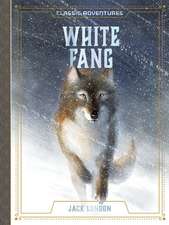 White FangJack LondonPreț: 60.97 lei
 -
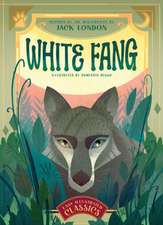 White FangDomenico RussoPreț: 79.25 lei
De ce să citești această carte
Recomandăm White Fang cititorilor care caută o explorare autentică a naturii umane reflectată în oglinda sălbăticiei. Veți câștiga o perspectivă unică asupra procesului de domesticire și a modului în care mediul modelează caracterul. Este mai mult decât o aventură în Klondike; este un studiu despre reziliență și transformare, ideal pentru cei care apreciază proza descriptivă bogată și temele clasice ale supraviețuirii.
Despre autor
John Griffith London, cunoscut sub numele de Jack London (1876–1916), a fost un romancier, jurnalist și activist social american, pionier al ficțiunii comerciale. Celebritatea sa internațională a fost clădită pe experiențele sale directe, în special cele din perioada goanei după aur din Klondike, care au servit drept fundament pentru cele mai faimoase lucrări ale sale. Autorul a fost un inovator în literatura de aventură și un promotor al drepturilor muncitorilor, scriind lucrări diverse, de la distopii precum The Iron Heel până la eseuri sociale. Opera sa rămâne definită de explorarea luptei dintre civilizație și instinct.
Descriere scurtă
Much of White Fang is written from the viewpoint of the titular canine character, enabling London to explore how animals view their world and how they view humans. White Fang examines the violent world of wild animals and the equally violent world of humans. The book also explores complex themes including morality and redemption.
White Fang has been adapted for the screen numerous times, including a 1991 film starring Ethan Hawke.
Reception
Upon its release, White Fang was an immediate success worldwide. The novel became popular, especially among younger readers. Robert Greenwood called White Fang "one of London's most interesting and ambitious works." Virginia Crane claims that the novel is "generally regarded as artistically inferior to its companion piece The Call of the Wild], but that it] helped establish London as a popular American literary figure."
Shortly after the book's publication, Jack London became a target in what would later be called the nature fakers controversy, a literary debate highlighting the conflict between science and sentiment in popular nature writing. President Theodore Roosevelt, who first spoke out against the "sham naturalists" in 1907, specifically named London as one of the so-called "nature fakers." Citing an example from White Fang, Roosevelt referred to the fight between the bulldog and the wolf "the very sublimity of absurdity." London only responded to the criticism after the controversy had ended. He wrote in an 1908 entitled "The Other Animals"
I have been guilty of writing two animal---two books about dogs. The writing of these two stories, on my part, was in truth a protest against the "humanizing" of animals, of which it seemed to me several "animal writers" had been profoundly guilty. Time and again, and many times, in my narratives, I wrote, speaking of my dog-heroes: "He did not think these things; he merely did them," etc. And I did this repeatedly, to the clogging of my narrative and in violation of my artistic canons; and I did it in order to hammer into the average human understanding that these dog-heroes of mine were not directed by abstract reasoning, but by instinct, sensation, and emotion, and by simple reasoning. Also, I endeavored to make my stories in line with the facts of evolution; I hewed them to the mark set by scientific research, and awoke, one day, to find myself bundled neck and crop into the camp of the nature-fakers.
Descriere
White Fang is an allegorical adventure story about a part wolf, part dog who is born in the violent, harsh environment of the Canadian Yukon territory. The novel begins with two men attempting to bring a corpse back to civilization as they are followed by a pack of starving wolves. The novel, in its second act, switches to the perspective of the wolves. As a pup, White Fang endures battles of survival with his mother, One-Eye, against other wolves and a lynx. When One-Eye is in the close vicinity to a Native Indian village, she is recognized as an animal who had been part of the encampment at one point. Grey Beaver, a young hunter, adopts White Fang. The other dogs and pups resent the new addition to the village, and torment White Fang, who in turn becomes contentious. He is sold to a dog fighter, and into a brutal life of violence. He is eventually rescued and brought to California, to start a very different life in the care of a loving master and his family.
Although White Fang has become a very popular classic among readers, as an allegorical novel it is of great interest to sophisticated readers. The book has been adapted into many film versions, TV series, and animations.
With an eye-catching new cover, and professionally typeset manuscript, this edition of White Fang is both modern and readable.
Notă biografică
London wurde als uneheliches Kind einer Frau aus gutem Hause und eines unsteten Astrologen und Wanderpredigers geboren, der die Vaterschaft abstritt. Als seine Mutter den Geschäftsmann John London heiratete, nahm dieser ihn als seinen Sohn an.
Da der Stiefvater Invalide wurde, wuchs London in ärmlichen Verhältnissen auf und musste schon in seiner Kindheit Geld verdienen. Mit 14 brach er die Schule ab und lief weg. Er begann ein Leben als Landstreicher, Abenteurer und Matrose. 1895 absolvierte er nachträglich seinen Abschluss auf der High School und besuchte dann die Universität von Berkeley. Sein Studium beendete er nicht.
1897 brach London stattdessen zum großen Goldrausch nach Klondike auf - jedoch erfolglos. Zurück in Kalifornien gelang ihm der Durchbruch als Schriftsteller, und er heiratete seine erste Frau, mit der er zwei Kinder bekam. Schon nach vier Jahren folgte die Scheidung und London brach mit seiner Yacht zu Abenteuerreisen nach Hawaii und Australien auf. 1905 heiratete er erneut und führte bis zu seinem Tod eine glückliche Ehe. 1910 zog das Paar auf eine Ranch, die London als sein eigentliches Lebenswerk betrachtete. Seine letzten Jahre waren allerdings geprägt von Depressionen und Alkoholkonsum.
London verfasste ab 1900 hunderte von Romanen, Kurzgeschichten und Reportagen, die auch Vorlage für zahlreiche Verfilmungen wurden. Darunter die Welterfolge "The Call of the Wild", "The Sea-Wolf" und "White Fang". Sein Hauptthema: die Spannung zwischen Natur und Kultur.
Jack London starb im Alter von 40 Jahren am 22. November 1916 auf seiner Ranch an akutem Nierenversagen, doch auch über Selbstmord wird bis heute spekuliert.