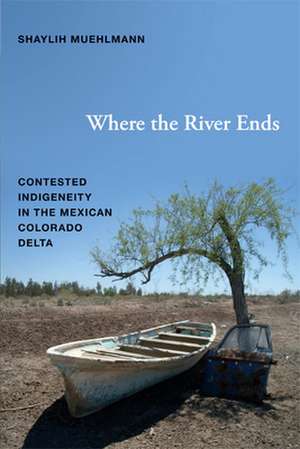
Where the River Ends: Contested Indigeneity in the Mexican Colorado Delta
Autor Shaylih Muehlmannen Limba Engleză Paperback – 22 mai 2013
Recomandăm acest volum ca o referință esențială pentru studiile de licență și master în antropologie, ecologie politică și studii indigene. Where the River Ends oferă o analiză riguroasă a modului în care criza de mediu și politicile de stat se intersectează pentru a redefini identitatea etnică în nord-vestul Mexicului. Considerăm că forța acestei lucrări rezidă în capacitatea autoarei Shaylih Muehlmann de a documenta viața poporului Cucapá, o comunitate prinsă între dispariția resurselor de apă și reglementările guvernamentale stricte.
Descoperim aici o structură narativă care trece dincolo de simpla cronică a unei crize de mediu. Primele capitole investighează „topologiile invizibilității” și conflictul legat de autenticitatea indigenă, în timp ce secțiunile mediane explorează alternativele economice și dinamica de gen sub presiunea militarizării zonelor de pescuit. Where the River Ends extinde cadrul propus de Strength from the Waters de James V. Mestaz cu date noi din perioada post-1993, mutând accentul de la istoria socială a accesului la apă către modul în care birocrația modernă folosește conservarea naturii ca instrument de excludere socială.
Spre deosebire de Tributary Voices, care se concentrează pe explorarea retorică și literară a fluviului Colorado, lucrarea publicată de Duke University Press este o etnografie vie, bazată pe observație directă. Autorul demonstrează cum pierderea limbii indigene și integrarea în rețele sociale moderne sunt folosite de stat pentru a nega drepturile ancestrale ale comunității. Tonul este precis și empatic, oferind o perspectivă critică asupra modului în care „indigenitatea” este construită și contestată în tribunale și pe malurile secate ale râului.
Preț: 217.70 lei
Carte tipărită la comandă
Livrare economică 18 noiembrie-02 decembrie
Specificații
ISBN-10: 0822354454
Pagini: 240
Ilustrații: 11 photographs, 1 map
Dimensiuni: 150 x 229 x 15 mm
Greutate: 0.34 kg
Ediția:New.
Editura: Duke University Press
V-ar putea interesa
-
 Columbia River BasketryMary Dodds SchlickPreț: 232.82 lei
 -
 When the River Ran Wild!George W AguilarPreț: 232.27 lei
 -
 The CheyenneJohn H. MoorePreț: 433.95 lei
 -
 Indian OrphanagesMarilyn Irvin HoltPreț: 302.26 lei
 -
 Indigenous Peoples and ColonialismColin SamsonPreț: 210.66 lei
 -
 After LoveNoelle M Stout-15%Preț: 660.48 lei777.03 lei
 -
 Around the Sacred FireJ. TreatPreț: 401.55 lei
 -
 The EncounterPetru PopescuPreț: 93.28 lei
 -
 The North American IndianEdward Sheriff CurtisPreț: 191.19 lei
De ce să citești această carte
Adresată studenților și profesioniștilor din științe sociale, această carte oferă o înțelegere profundă a „dublei constrângeri” în care se află popoarele indigene contemporane. Cititorul câștigă o perspectivă clară asupra modului în care politicile de mediu pot deveni instrumente de marginalizare. Este o lectură esențială pentru a înțelege realitățile geopolitice ale apei la granița dintre SUA și Mexic și reziliența culturală în fața degradării ecologice.
Recenzii
Descriere
Cuprins
Acknowledgments xi
Introduction 1
1. "Listen for When Your Get There": Topologies of Invisibility on the Colorado River 25
2. The Fishing Conflict and the Making and Unmaking of Indigenous Authenticity 55
3. "What Else Can I Do with a Boat and No Nets?" Ideologies of Work and the Alternatives at Home 83
4. Mexican Machismo and a Woman's Worth 118
5. "Spread Your Ass Cheeks": And Other Things That Shouldn't Get Said in Indigenous Languages 146
Conclusions 171
Notes 181
References 189
Index 215