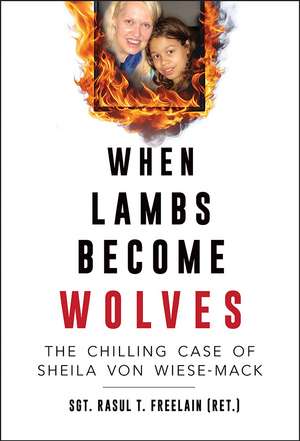
When Lambs Become Wolves: The Chilling Case of Sheila von Wiese-Mack: Illinois Lives
Autor Sgt. Rasul T. Freelain, (Ret.)en Limba Engleză Paperback – 17 iun 2026
On August 12, 2014, the body of 62-year-old Sheila von Wiese-Mack—the wealthy Oak Park, Illinois, widow of famed composer James L. Mack—was found stuffed inside a suitcase in the trunk of a taxi in Bali. Back in the Midwest, listening to the radio, Sgt. Rasul Freelain of the Oak Park Police Department pulled his car over to absorb the unthinkable news. Amid his shock, one coherent thought surfaced: “Heather did this.”
Freelain had met the Macks more than three years earlier, when Sheila first reached out to the police for help with her increasingly volatile daughter. Although Heather Mack was just a teenager, she had already displayed a disturbing pattern of escalating violence. Freelain did everything he could to intervene. But as the abuse worsened, he found himself sidelined by a justice system unprepared to deal with child-to-parent violence and abuse (CPVA).
In this gripping and empathetic memoir, Freelain traces the Mack family’s descent from privilege to tragedy, bringing overdue attention to CPVA as a critical yet overlooked public health crisis. He recounts the glamorous but troubled world of the Macks—the parties, the talent, the dysfunction—and his efforts to support both mother and daughter. With rare insight into the web of trauma, race, wealth, and grief that surrounded them, he shows how the system failed them both—and how, even after Sheila’s death, he remained committed to seeking justice and change.
When Lambs Become Wolves moves beyond sensational headlines to examine the roots of one of America’s most hidden forms of domestic violence. While media coverage fixated on the exotic setting and shocking brutality of the crime, along with the growing notoriety of the teenage killer, Freelain urges readers—and institutions in law enforcement, child welfare, and mental health—to focus instead on those harmed. Sheila was more than a victim; she was a sharp, compassionate, creative woman who loved her daughter to the very end. Through meticulous research and raw personal reflection, Freelain explores how abuse cycles form, how institutions look away, and what it means to try—and fail—to protect someone in crisis.
This memoir, with a foreword by Sheila’s brother William Wiese, is a call to action, offering a rare blend of true crime, compassion, and advocacy. This deeply human account of a police officer caught in an impossible situation shows the price of ignoring the violence that starts at home.





Preț: 134.33 lei
Puncte Express: 201
Carte disponibilă
Livrare economică 14-28 noiembrie
Livrare prin curier în România Termenul estimat este afișat lângă disponibilitate.
Transport gratuit de la 400.00 lei Plată online sau ramburs, în funcție de opțiunile comenzii.
Retur gratuit în 14 zile Comandă securizată și suport în română.
Specificații
ISBN-13: 9780809339945
ISBN-10: 0809339943
Pagini: 296
Ilustrații: 36
Dimensiuni: 156 x 229 x 20 mm
Greutate: 0.45 kg
Ediția:First Edition
Editura: Southern Illinois University Press
Colecția Southern Illinois University Press
Seria Illinois Lives
ISBN-10: 0809339943
Pagini: 296
Ilustrații: 36
Dimensiuni: 156 x 229 x 20 mm
Greutate: 0.45 kg
Ediția:First Edition
Editura: Southern Illinois University Press
Colecția Southern Illinois University Press
Seria Illinois Lives
V-ar putea interesa
-
 One ChildTorey HaydenPreț: 78.75 lei
 -
 ViolatedSara Wilson (nf)Preț: 71.60 lei
 -
 In Harm's WayTeresa ThornhillPreț: 78.03 lei
 -
 HelplessCathy GlassPreț: 71.41 lei
 -
 My Inner Child Wants to Murder MindfullyKarsten DussePreț: 74.18 lei
 -
 Saving Five: A Memoir of HopeAmanda NguyenPreț: 118.67 lei
 -
 -18%Preț: 65.21 lei79.27 lei
 -
 -25%Preț: 48.88 lei65.36 lei
 -
 -26%Preț: 57.98 lei78.87 lei
 -
 -18%Preț: 59.12 lei72.26 lei
 -
 -26%Preț: 118.60 lei159.30 lei
 -
 Liliana's Invincible Summer: A Sister's Search for JusticeCristina Rivera Garza-25%Preț: 59.39 lei79.70 lei
 -
 Nobody's GirlVirginia Roberts GiuffrePreț: 193.75 lei
 -
 Monique EscapesÉdouard LouisPreț: 106.76 lei
 -
 -14%Preț: 95.89 lei111.07 lei
 -
 Chain of Evidence: Hal Challis Investigation 4Garry Disher-16%Preț: 61.65 lei73.45 lei
 -
 Preț: 141.16 lei
 -
 The LetterAnn CusackPreț: 70.83 lei
 -
 For My BoysClaire ThrossellPreț: 70.68 lei
Notă biografică
Sgt. Rasul T. Freelain (Ret.) served twenty years with the Oak Park Police Department in Illinois. He is certified by CIT (Crisis Intervention Team) International as a coordinator and teaches for the Illinois CIT Training Unit. Currently he is working to bring increased awareness to the problem of child-to-parent violence and abuse (CPVA).
Extras
Chapter 1. “NO!”
“Smoke and flames filled the air as civil unrest continued for a third straight night in St. Louis following the controversial shooting of an unarmed Black man in Ferguson, Missouri. According to the Associated Press, the Missouri State Highway Patrol has assumed police duties in the area following several days of protests. The change comes amid reports of officers with armored vehicles and military-style weapons confronting unarmed protestors...Meanwhile, a former Oak Park resident identified as Sheila von Wiese – widow of famed jazz composer James L. Mack – has been found murdered…”
A jolt of adrenaline rushed through me as I was immediately drawn to the news story playing through the car’s AM radio.
“According to reports, she was murdered in an exclusive resort in Bali, Indonesia. Government officials say two suspects...”
That can’t be right, I told myself as I quickly pulled over and threw the gear shifter into park.
“The first suspect is the victim’s daughter, Heather Mack...”
I struggled to wrap my brain around what I was hearing. It all seemed nonsensical, like mismatched puzzle pieces.
“The second is the daughter’s 21-year-old boyfriend, Tommy Schaefer...”
“Tommy?” I asked in nearly a shriek as I began vigorously shaking my head.
“Both are in custody for their suspected roles in the killing of von Wiese,” the story continued.
The throbbing in the pit of my stomach intensified as the dark news shifted from tragic to unthinkable.
“Disturbing details have emerged...the wealthy socialite was reportedly beaten to death and stuffed into a suitcase before being abandoned in the trunk of a taxi at the St. Regis Hotel in Nusa Dua. According to reports obtained through a Freedom of Information Act request, von Wiese and her daughter had a long and tumultuous history of domestic problems in the Chicago suburb where they once lived. A spokesperson for the Village has indicated that police were repeatedly contacted for domestic problems and other related crimes in a ten-year period. This is a developing story. In other news, Chicago Mayor Rahm Emanuel...”
I let out an audible gasp as the radio blurred into background noise.
Sitting alone, I began talking to myself as I tried deciphering the madness I had just heard.
“Sheila is...?” I started, unable to finish my sentence.
“That’s crazy. She’s...” I tried again as my words again trailed off.
I paused momentarily before continuing.
“A suitcase? A damned suitcase?” I questioned indignantly.
My family had recently returned from a vacation in Missouri the morning after protests began in Ferguson. My wife and I had also lived in St. Louis more than a decade earlier, and we were deeply troubled by published accounts of the recent killing of Michael Brown.
But the breaking story of Sheila’s bizarre murder hit me like a brick-hard uppercut.
I recalled handling more than a few of the dozens of Mack family domestic violence cases as cold sweat began to soak through the “Freelain/Hewitt Family Reunion 2014” t-shirt I was wearing.
“Damn! She was RIGHT!” I started to say as I was suddenly overcome with outrage and denial.
“NO! NO! NO! NO!” I yelled, slamming my palms against the steering wheel before hitting the radio’s off button.
After crumpling into my seat, I sat silently and alone for over a minute.
When I eventually regained my composure, I looked around and met my own bloodshot eyes in the rearview mirror. I quickly turned from their accusatory gaze.
A trickle of text messages told me that some fellow officers had also learned the shocking news. Then, a quick internet search on my phone confirmed the reality I was not ready to accept. Sheila was dead.
Heather did this! I initially thought.
Heather and... Tommy? I was afraid to ask.
It all seemed unfathomable.
Except that the victim had predicted it.
Since first meeting the Macks more than three years earlier, I had tried virtually everything within my power as a police officer to stop the teenager from hurting her mother. Yet, as the girl’s threats, aggression, and violence spiked over time, it felt like trying to stop a powerful rip current from dragging a helpless swimmer from shore. Despite my natural optimism, I long worried that fellow officers and I had been relegated to the position of armed scribes and second-hand witnesses who documented—but were unable to interrupt—Heather’s pattern of domestic violence.
It was a dangerous cycle that repeated until the bitter end.
Sheila had hoped love would save Heather.
Sadly, it alone couldn’t save either of them.
Objectively, I knew Sheila’s death was not my fault.
Nor was it the fault of other professionals.
Nor that of the victim.
The blame rested squarely at the feet of the killers who took her life.
But the knot in my stomach pointed to questions with no easy answers.
What had triggered the victim’s self-fulfilling prophecy?
When did Heather first decide to kill her mother?
Where did Tommy fit into the tragedy?
Why had Sheila become so vulnerable?
How might professionals have handled things differently?
With a heavy heart, I thought back to the advice and warnings I shared with Sheila, the admonishments and second chances I gave Heather as a detective and arresting officer, and the encouragement and counsel I offered Tommy when he was a teenager.And I reflected on the day a kind and dignified widow first came to the Oak Park Police Station and asked for my help.
[end of excerpt]
“Smoke and flames filled the air as civil unrest continued for a third straight night in St. Louis following the controversial shooting of an unarmed Black man in Ferguson, Missouri. According to the Associated Press, the Missouri State Highway Patrol has assumed police duties in the area following several days of protests. The change comes amid reports of officers with armored vehicles and military-style weapons confronting unarmed protestors...Meanwhile, a former Oak Park resident identified as Sheila von Wiese – widow of famed jazz composer James L. Mack – has been found murdered…”
A jolt of adrenaline rushed through me as I was immediately drawn to the news story playing through the car’s AM radio.
“According to reports, she was murdered in an exclusive resort in Bali, Indonesia. Government officials say two suspects...”
That can’t be right, I told myself as I quickly pulled over and threw the gear shifter into park.
“The first suspect is the victim’s daughter, Heather Mack...”
I struggled to wrap my brain around what I was hearing. It all seemed nonsensical, like mismatched puzzle pieces.
“The second is the daughter’s 21-year-old boyfriend, Tommy Schaefer...”
“Tommy?” I asked in nearly a shriek as I began vigorously shaking my head.
“Both are in custody for their suspected roles in the killing of von Wiese,” the story continued.
The throbbing in the pit of my stomach intensified as the dark news shifted from tragic to unthinkable.
“Disturbing details have emerged...the wealthy socialite was reportedly beaten to death and stuffed into a suitcase before being abandoned in the trunk of a taxi at the St. Regis Hotel in Nusa Dua. According to reports obtained through a Freedom of Information Act request, von Wiese and her daughter had a long and tumultuous history of domestic problems in the Chicago suburb where they once lived. A spokesperson for the Village has indicated that police were repeatedly contacted for domestic problems and other related crimes in a ten-year period. This is a developing story. In other news, Chicago Mayor Rahm Emanuel...”
I let out an audible gasp as the radio blurred into background noise.
Sitting alone, I began talking to myself as I tried deciphering the madness I had just heard.
“Sheila is...?” I started, unable to finish my sentence.
“That’s crazy. She’s...” I tried again as my words again trailed off.
I paused momentarily before continuing.
“A suitcase? A damned suitcase?” I questioned indignantly.
My family had recently returned from a vacation in Missouri the morning after protests began in Ferguson. My wife and I had also lived in St. Louis more than a decade earlier, and we were deeply troubled by published accounts of the recent killing of Michael Brown.
But the breaking story of Sheila’s bizarre murder hit me like a brick-hard uppercut.
I recalled handling more than a few of the dozens of Mack family domestic violence cases as cold sweat began to soak through the “Freelain/Hewitt Family Reunion 2014” t-shirt I was wearing.
“Damn! She was RIGHT!” I started to say as I was suddenly overcome with outrage and denial.
“NO! NO! NO! NO!” I yelled, slamming my palms against the steering wheel before hitting the radio’s off button.
After crumpling into my seat, I sat silently and alone for over a minute.
When I eventually regained my composure, I looked around and met my own bloodshot eyes in the rearview mirror. I quickly turned from their accusatory gaze.
A trickle of text messages told me that some fellow officers had also learned the shocking news. Then, a quick internet search on my phone confirmed the reality I was not ready to accept. Sheila was dead.
Heather did this! I initially thought.
Heather and... Tommy? I was afraid to ask.
It all seemed unfathomable.
Except that the victim had predicted it.
Since first meeting the Macks more than three years earlier, I had tried virtually everything within my power as a police officer to stop the teenager from hurting her mother. Yet, as the girl’s threats, aggression, and violence spiked over time, it felt like trying to stop a powerful rip current from dragging a helpless swimmer from shore. Despite my natural optimism, I long worried that fellow officers and I had been relegated to the position of armed scribes and second-hand witnesses who documented—but were unable to interrupt—Heather’s pattern of domestic violence.
It was a dangerous cycle that repeated until the bitter end.
Sheila had hoped love would save Heather.
Sadly, it alone couldn’t save either of them.
Objectively, I knew Sheila’s death was not my fault.
Nor was it the fault of other professionals.
Nor that of the victim.
The blame rested squarely at the feet of the killers who took her life.
But the knot in my stomach pointed to questions with no easy answers.
What had triggered the victim’s self-fulfilling prophecy?
When did Heather first decide to kill her mother?
Where did Tommy fit into the tragedy?
Why had Sheila become so vulnerable?
How might professionals have handled things differently?
With a heavy heart, I thought back to the advice and warnings I shared with Sheila, the admonishments and second chances I gave Heather as a detective and arresting officer, and the encouragement and counsel I offered Tommy when he was a teenager.And I reflected on the day a kind and dignified widow first came to the Oak Park Police Station and asked for my help.
[end of excerpt]
Cuprins
Acknowledgments
Foreword
Preface
Introduction
Note on Terminology and Language
Part I
1. No!
2. A Lady in the Lobby
3. Revolving Doors
4. Less than 24 Hours
5. Green Light
6. Ground Zero
7. West Wall
8. Flashing Lights
9. Before
Part II
10. Triage
11. Threat to Self
12. Detention
13. The Nuclear Option
14. Conviction
15. Tombstone Courage
Part III
16. Proof
17. Invasion
18. If Something Isn't Done
19. The Devil You Know
20. Assurances
21. Rising Star
22. More Than Hope
Part IV
23. 86 Calls
24. Wicked Deeds
25. Warning Bells
26. 15 minutes
27. '17 Problems
28. Jeopardy
29. Smear Campaign
30. Guilty
Appendices
Notes
Foreword
Preface
Introduction
Note on Terminology and Language
Part I
1. No!
2. A Lady in the Lobby
3. Revolving Doors
4. Less than 24 Hours
5. Green Light
6. Ground Zero
7. West Wall
8. Flashing Lights
9. Before
Part II
10. Triage
11. Threat to Self
12. Detention
13. The Nuclear Option
14. Conviction
15. Tombstone Courage
Part III
16. Proof
17. Invasion
18. If Something Isn't Done
19. The Devil You Know
20. Assurances
21. Rising Star
22. More Than Hope
Part IV
23. 86 Calls
24. Wicked Deeds
25. Warning Bells
26. 15 minutes
27. '17 Problems
28. Jeopardy
29. Smear Campaign
30. Guilty
Appendices
Notes
Recenzii
“In When Lambs Become Wolves, Sgt. Rasul T. Freelain shares his haunting firsthand account of Sheila von Wiese-Mack’s desperate struggle to save her daughter from a path of violence and destruction. Through his unique perspective as both investigator and confidant, Freelain reveals the tragic collision of love, denial, and betrayal that ended in unthinkable violence.”—Esther Sanchez Ludlow, host and producer, Once Upon a Crime podcast
“A heartbreaking exploration of a complex family tragedy, exposing a system not yet reconciled to the possibility of needing to protect a parent from their own child.”—Helen Bonnick, author of Child to Parent Violence and Abuse: A Practitioner’s Guide to Working with Families
“Freelain delivers the most revealing, honest, and human account to date of Sheila von Wiese-Mack’s struggle to save herself and her teenage daughter. His book is a must-read for anyone who truly hopes to understand this terrible tragedy.”—Jon Seidel, reporter, Chicago Sun-Times
“A thought-provoking and insightful book on a very timely issue that deserves the focus and effort required to identify needed changes in both law enforcement training and in laws dealing with victims of abuse. Issues affecting children may have come full circle that are being reflected in teen violence on our streets and in our schools today.”—Gary Schenkel, chairman, Illinois Terrorism Task Force
“Freelain draws on his professional experience as a sergeant, detective, school resource officer, and teacher and takes us into the world of child-to-parent violence and abuse (CPVA), a troubling aspect of family violence for which, until recently, we had no language. While it may reflect a harsh societal reality, he does us a service by leading us toward facing the problem and starting discussions on how to fix it.”—John F. S. Williams, Crisis Intervention Team (C.I.T.) Coordinator for Northern Illinois
“A profoundly jarring effort to make both clinical and personal sense of a tragedy that has left a trail of horror across multiple generations and beyond global boundaries; the story of Sheila von Wiese-Mack lingers, haunts, and unsettles anew as the author seeks to shed some light on this most grim chapter of loss told from the middle-American heartland.”—Bayo Ojikutu, author of 47th Street Black and Free Burning
“A heartbreaking exploration of a complex family tragedy, exposing a system not yet reconciled to the possibility of needing to protect a parent from their own child.”—Helen Bonnick, author of Child to Parent Violence and Abuse: A Practitioner’s Guide to Working with Families
“Freelain delivers the most revealing, honest, and human account to date of Sheila von Wiese-Mack’s struggle to save herself and her teenage daughter. His book is a must-read for anyone who truly hopes to understand this terrible tragedy.”—Jon Seidel, reporter, Chicago Sun-Times
“A thought-provoking and insightful book on a very timely issue that deserves the focus and effort required to identify needed changes in both law enforcement training and in laws dealing with victims of abuse. Issues affecting children may have come full circle that are being reflected in teen violence on our streets and in our schools today.”—Gary Schenkel, chairman, Illinois Terrorism Task Force
“Freelain draws on his professional experience as a sergeant, detective, school resource officer, and teacher and takes us into the world of child-to-parent violence and abuse (CPVA), a troubling aspect of family violence for which, until recently, we had no language. While it may reflect a harsh societal reality, he does us a service by leading us toward facing the problem and starting discussions on how to fix it.”—John F. S. Williams, Crisis Intervention Team (C.I.T.) Coordinator for Northern Illinois
“A profoundly jarring effort to make both clinical and personal sense of a tragedy that has left a trail of horror across multiple generations and beyond global boundaries; the story of Sheila von Wiese-Mack lingers, haunts, and unsettles anew as the author seeks to shed some light on this most grim chapter of loss told from the middle-American heartland.”—Bayo Ojikutu, author of 47th Street Black and Free Burning
Descriere
A compelling true crime memoir about a high-profile criminal case in Chicagoland and Indonesia that made headlines worldwide, this book offers a personal, heartfelt glimpse of child to parent violence and abuse (CPVA) and its capability for incredible destruction. With keen insight and empathy the author, a police officer who tried to change the trajectory of domestic violence in a well-known family, tells the tragic story of the murder of Sheila von Wiese-Mack at the hands of her daughter, Heather Mack.