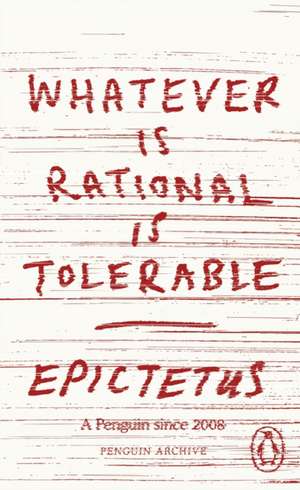
Whatever is Rational is Tolerable: Penguin Archive
Autor Epictetusen Limba Engleză Paperback – 17 apr 2025
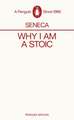
90 classic titles celebrating 90 years of Penguin Books
'I must die. But must I die bawling?'
What does it mean to live a virtuous life? How can we rise above pain and anguish? In these teachings from Book 1 of his Discourses, ancient philosopher Epictetus outlines a practical approach to Stoicism that has inspired thinkers for centuries, from Marcus Aurelius to Theodore Roosevelt, offering enduring wisdom on resilience, virtue and the pursuit of meaning.
Din seria Penguin Archive
-
 Preț: 42.88 lei
 -
 Preț: 42.52 lei
 -
 Preț: 42.68 lei
 -
 Preț: 42.50 lei
 -
 Preț: 42.98 lei
 -
 Preț: 42.65 lei
 -
 Preț: 42.75 lei
 -
 Preț: 42.75 lei
 -
 Preț: 42.66 lei
 -
 Preț: 42.78 lei
 -
 Preț: 42.88 lei
 -
 Preț: 42.58 lei
 -
 Preț: 42.75 lei
 -
 Preț: 42.45 lei
 -
 Preț: 42.65 lei
 -
 Preț: 42.98 lei
 -
 Preț: 42.75 lei
 -
 Preț: 42.98 lei
 -
 Preț: 42.96 lei
 -
 Preț: 42.58 lei
 -
 Preț: 43.05 lei
 -
 Preț: 42.41 lei
 -
 Preț: 42.88 lei
 -
 Preț: 41.84 lei
 -
 Preț: 42.75 lei
 -
 Preț: 42.65 lei
 -
 Preț: 42.88 lei
 -
 Preț: 42.41 lei
 -
 Preț: 42.07 lei
 -
 Preț: 42.52 lei
 -
 Preț: 42.65 lei
 -
 Preț: 42.75 lei
 -
 Preț: 42.88 lei
 -
 Preț: 42.88 lei
 -
 Preț: 43.01 lei
 -
 Preț: 42.62 lei
 -
 Preț: 42.65 lei
 -
 Preț: 42.46 lei
 -
 Preț: 42.72 lei
 -
 Preț: 42.81 lei
 -
 Preț: 42.71 lei
 -
 Preț: 42.81 lei
 -
 Preț: 42.14 lei
 -
 Preț: 42.75 lei
 -
 Preț: 42.65 lei
 -
 Preț: 42.00 lei
 -
 Preț: 42.88 lei
 -
 Preț: 42.69 lei
 -
 Preț: 42.69 lei
Preț: 41.94 lei
Carte disponibilă
Livrare economică 11-25 noiembrie
Livrare express 27-31 octombrie pentru 13.85 lei
Specificații
ISBN-10: 0241752337
Pagini: 112
Dimensiuni: 106 x 176 x 12 mm
Greutate: 0.08 kg
Editura: Penguin Books
Colecția Penguin Classics
Seria Penguin Archive
Notă biografică
Epictetus (c.ad 55-135) was a teacher and Graeco-Roman philosopher. Originally a slave from Hierapolis in Anatolia (modern Turkey), he was owned for a time by a prominent freedman at the court of the emperor Nero. After gaining his freedom he moved to Nicopolis on the Adriatic coast of Greece and opened a school of philosophy there. His informal lectures (the Discourses) were transcribed and published by his student Arrian, who also composed a digest of Epictetus' teaching known as the Manual (or Enchiridion). Late in life Epictetus retired from
teaching, adopted an orphan child and lived out his remaining years in domestic obscurity. His thought owes most to Stoicism, but also reflects the influence of other philosophers, Plato and Socrates in particular. His influence has been deep and enduring, from Marcus Aurelius in his Meditations to the contemporary psychologist Albert Ellis, who has acknowledged his debt to Epictetus in devising the school of Rational-Emotive Behavioural Therapy.