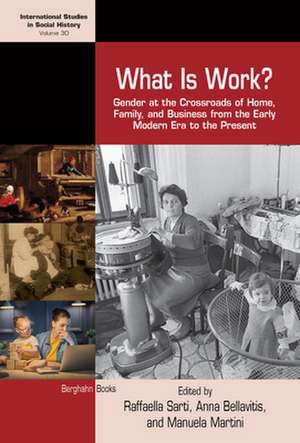
What is Work?: International Studies in Social History, cartea 30
Editat de Raffaella Sarti, Anna Bellavitis, Manuela Martinien Limba Engleză Paperback – noi 2020
Din seria International Studies in Social History
-
 Preț: 251.97 lei
 - nou
 Preț: 336.17 lei
 -
 Preț: 261.63 lei
 - 23%
 Preț: 761.52 lei
 - 23%
 Preț: 760.37 lei
 - 23%
 Preț: 1017.80 lei
 - 23%
 Preț: 757.24 lei
 - 23%
 Preț: 759.82 lei
 - 23%
 Preț: 761.93 lei
 - 23%
 Preț: 761.56 lei
 - 23%
 Preț: 758.97 lei
 - 23%
 Preț: 755.53 lei
 - 23%
 Preț: 762.13 lei
 - 23%
 Preț: 759.81 lei
 -
 Preț: 165.16 lei
 -
 Preț: 268.94 lei
 - 23%
 Preț: 758.37 lei
 - 23%
 Preț: 844.58 lei
 - 23%
 Preț: 851.48 lei
 -
 Preț: 270.27 lei
 - 23%
 Preț: 757.69 lei
 -
 Preț: 263.72 lei
 - 23%
 Preț: 849.63 lei
 -
 Preț: 231.26 lei
 - 23%
 Preț: 1034.04 lei
 -
 Preț: 265.79 lei
 -
 Preț: 251.28 lei
 - 23%
 Preț: 758.37 lei
 -
 Preț: 266.66 lei
 - 23%
 Preț: 850.56 lei
 - 23%
 Preț: 760.17 lei
 - 23%
 Preț: 760.44 lei
 - 15%
 Preț: 479.61 lei
Preț: 237.73 lei
Puncte Express: 357
Carte tipărită la comandă
Livrare economică 20 noiembrie-04 decembrie
Livrare prin curier în România Termenul estimat este afișat lângă disponibilitate.
Transport gratuit de la 400.00 lei Plată online sau ramburs, în funcție de opțiunile comenzii.
Retur gratuit în 14 zile Comandă securizată și suport în română.
Specificații
ISBN-13: 9781789208023
ISBN-10: 1789208025
Pagini: 398
Ilustrații: 10 illustrations
Dimensiuni: 152 x 229 x 21 mm
Greutate: 0.58 kg
Editura: BERGHAHN BOOKS
Colecția International Studies in Social History
Seria International Studies in Social History
ISBN-10: 1789208025
Pagini: 398
Ilustrații: 10 illustrations
Dimensiuni: 152 x 229 x 21 mm
Greutate: 0.58 kg
Editura: BERGHAHN BOOKS
Colecția International Studies in Social History
Seria International Studies in Social History
V-ar putea interesa
-
 Black Codes in GeorgiaDan Moore SrPreț: 62.00 lei
 -
 Sawdust MemoriesNorma Hammond MC LoughlinPreț: 156.89 lei
 -
 TaprootsDavid WoodruffPreț: 128.50 lei
 -
 Libro del Poblamiento de TenerifeJose -. Luis MachadoPreț: 202.06 lei
 -
 Life in the Northern DalesFrank SandersonPreț: 114.61 lei
 -
 Libro del Poblamiento de Tenerife. Tomo II. Volumen 3Jose -. Luis MachadoPreț: 253.97 lei
 -
 Perpetuation of the United States of AmericaJohn H. DavisPreț: 111.58 lei
 -
 Nineteen Centuries of Drink in EnglandMR Richard Valpy FrenchPreț: 111.83 lei
 -
 LearmonthAlly LearmonthPreț: 60.73 lei
 -
 Bedbugs and ChamberpotsElizabeth PoynterPreț: 56.33 lei
 -
 Lipsticks and Library BooksJackie WinterPreț: 52.06 lei
 -
 Dramaturgas Cubanas del Siglo XIXRamon Muniz SarmientoPreț: 64.45 lei
 -
 GameJoan SullivanPreț: 125.86 lei
 -
 Women's ILOEileen Boris-23%Preț: 1445.95 lei1877.85 lei
Notă biografică
Manuela Martini is Professor of Modern History at the Université Lumière Lyon 2. She has directed international research projects on labor history, family and gender history, and labor migration. A member of Gender & History's editorial collective, she has published extensively in multiple languages and has authored or edited sixteen books and special journal issues.
Cuprins
List of Figures and Tables
Introduction: What is Work? Gender at the Crossroads of Home, Family, and Business from the Early Modern Era to the Present
Raffaella Sarti, Anna Bellavitis, and Manuela Martini
PART I: SETTING THE SCENE: THE FEMINIST CHALLENGES TO THE "DELABORIZATION" OF HOUSEHOLD WORK
Chapter 1. Family Work: A Policy-Relevant Intellectual History
Nancy Folbre
Chapter 2. Productive and Reproductive Work: Uses and Abuses of an Old Dichotomy
Alessandra Pescarolo
Chapter 3. The Home as a Factory: Rethinking the Debate on Housewives' Wages in Italy, 1929-1980
Alessandra Gissi
PART II: THE CUNNING HISTORIAN: UNVEILING AND OVERCOMING THE GENDER BIAS OF SOURCES
Chapter 4. The Statistical Construction of Women's Work and the Male Breadwinner Economy in Spain (1856-1930)
Cristina Borderías
Chapter 5. Toiling Women, Non-Working Housewives and Rightful Citizens: Statistical and Legal Constructions of Female Work and Citizenship in Italy
Raffaella Sarti
Chapter 6. The Complexities of Work: Analyzing Men's and Women's Work in the Early Modern World with the Verb-Oriented Method
Maria Ågren
Chapter 7. The Visibility of Women's Work: Logics and Contexts of Documents' Production
Margareth Lanzinger
PART III: THE VALUE OF CARE AND UNPAID HOME-BASED WORK: THE ROLE OF THE LAW
Chapter 8. Regulating Home Labours: The ILO and the Feminization of Work
Eileen Boris
Chapter 9. Family-Relations Law between "Stratification" and "Resistance". Housework and Family Law Exceptionalism
Maria Rosaria Marella
Chapter 10. Could Family (Care) Work Be Paid? From French Agricultural Inheritance Law (1939) to Legal Recognition of Excessive Filial Duty (1994)
Florence Weber
PART IV: CONCLUSION
Conclusion: Can We Construct a Holistic Approach to Women's Labor History over the Longue Durée?
Laura Lee Downs
Index
Introduction: What is Work? Gender at the Crossroads of Home, Family, and Business from the Early Modern Era to the Present
Raffaella Sarti, Anna Bellavitis, and Manuela Martini
PART I: SETTING THE SCENE: THE FEMINIST CHALLENGES TO THE "DELABORIZATION" OF HOUSEHOLD WORK
Chapter 1. Family Work: A Policy-Relevant Intellectual History
Nancy Folbre
Chapter 2. Productive and Reproductive Work: Uses and Abuses of an Old Dichotomy
Alessandra Pescarolo
Chapter 3. The Home as a Factory: Rethinking the Debate on Housewives' Wages in Italy, 1929-1980
Alessandra Gissi
PART II: THE CUNNING HISTORIAN: UNVEILING AND OVERCOMING THE GENDER BIAS OF SOURCES
Chapter 4. The Statistical Construction of Women's Work and the Male Breadwinner Economy in Spain (1856-1930)
Cristina Borderías
Chapter 5. Toiling Women, Non-Working Housewives and Rightful Citizens: Statistical and Legal Constructions of Female Work and Citizenship in Italy
Raffaella Sarti
Chapter 6. The Complexities of Work: Analyzing Men's and Women's Work in the Early Modern World with the Verb-Oriented Method
Maria Ågren
Chapter 7. The Visibility of Women's Work: Logics and Contexts of Documents' Production
Margareth Lanzinger
PART III: THE VALUE OF CARE AND UNPAID HOME-BASED WORK: THE ROLE OF THE LAW
Chapter 8. Regulating Home Labours: The ILO and the Feminization of Work
Eileen Boris
Chapter 9. Family-Relations Law between "Stratification" and "Resistance". Housework and Family Law Exceptionalism
Maria Rosaria Marella
Chapter 10. Could Family (Care) Work Be Paid? From French Agricultural Inheritance Law (1939) to Legal Recognition of Excessive Filial Duty (1994)
Florence Weber
PART IV: CONCLUSION
Conclusion: Can We Construct a Holistic Approach to Women's Labor History over the Longue Durée?
Laura Lee Downs
Index
Descriere
What Is Work? offers a multi-disciplinary approach to understanding labor within the highly gendered realm of household economies.