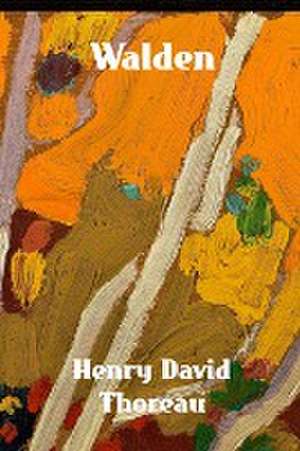
Walden
Autor Henry David Thoreauen Limba Engleză Paperback – 10 iun 2023
Pornind de la datele din cataloagele bibliografice și istoricul editorial al textului, analizăm această ediție integrală (unabridged) a lucrării Walden, Or, Life in the Woods, publicată de Dover Publications. Ne-a atras atenția structura de 224 de pagini în format paperback, care oferă textul original, esențial pentru studiul transcendentalismului în cadrul curriculei de literatură universală și istorie culturală americană. Premisa volumului este bine cunoscută: la 4 iulie 1845, Henry David Thoreau s-a mutat într-o cabină construită de el pe malul lacului Walden Pond, inițiând un experiment de viață simplă și izolare autoimpusă. În contextul operei sale, această lucrare reprezintă cristalizarea ideilor dezvoltate în The Journal of Henry David Thoreau, 1837-1861, jurnalul fiind laboratorul său zilnic de scriere, și completează abordările radicale din eseul său politic cuprins în Über die Pflicht zum Ungehorsam gegen den Staat und andere Essays. Dacă în jurnale vedem observația brută a naturii și a anotimpurilor, în Walden, Or, Life in the Woods filosoful construiește o pledoarie structurată împotriva risipei și a iluziilor societății moderne, căutând nevoile esențiale ale existenței. Apreciem la această ediție fidelitatea față de textul de bază, ritmul narativ alternând între descrierile minuțioase ale faunei și reflecția filosofică austeră. Merită menționat că viziunea sa ecologică timpurie și ideile despre nesupunerea civică, prezente și în culegerile despre mișcarea descrisă în The American Transcendentalists, au influențat direct gândirea unor personalități marcante precum Mahatma Gandhi și Martin Luther King Jr. Volumul rămâne un instrument didactic excelent și un punct de referință pentru înțelegerea ecologismului modern și a filosofiei individualiste.
Preț: 104.05 lei
Carte tipărită la comandă
Livrare economică 16-30 decembrie
Specificații
ISBN-10: 1774419726
Pagini: 244
Dimensiuni: 152 x 229 x 13 mm
Greutate: 0.36 kg
Editura: Binker North
V-ar putea interesa
-
 -16%Preț: 194.86 lei232.08 lei
-
 It's All About the BikeRobert Penn-31%Preț: 63.81 lei92.31 lei
-
 -18%Preț: 58.93 lei72.16 lei
-
 The Catcher in the RyeJ. D. SalingerPreț: 54.79 lei
-
 Tuesdays with MorrieMitch AlbomPreț: 63.21 lei
-
 Favorite PoemsWilliam Wordsworth-25%Preț: 19.43 lei25.86 lei
-
 Self RelianceRalph Waldo Emerson-33%Preț: 23.91 lei35.82 lei
-
 The Scarlet LetterNathaniel HawthornePreț: 37.00 lei
-
 The Autobiography of Benjamin FranklinBenjamin Franklin-64%Preț: 19.01 lei53.52 lei
-
 A Game of ThronesGeorge R. R. MartinPreț: 71.64 lei
-
 E-Myth RevisitedMichael E. GerberPreț: 134.77 lei
-
 Cycling For Dummies - UKBen WilliamsPreț: 140.69 lei
-
 The Game of Life and How to Play ItFlorence Scovel ShinnPreț: 32.75 lei
-
 Dragon Age The Stolen ThroneDavid Gaider-16%Preț: 54.93 lei65.67 lei
-
 The Little PrinceAntoine De Saint-ExuperyPreț: 35.80 lei
-
 The City And The StarsSir Arthur C. Clarke-25%Preț: 59.42 lei79.29 lei
De ce să citești această carte
Recomandăm această ediție integrală studenților la litere, cercetătorilor curentului transcendentalist și oricărui cititor interesat de ecologie și minimalism. Prin parcurgerea celor 224 de pagini, câștigați o perspectivă directă asupra unui experiment istoric de independență față de rigorile sociale. Este o oportunitate excelentă de a studia textul exact așa cum a fost conceput de autor, fără adaptări sau omisiuni.
Despre autor
Henry David Thoreau (1817–1862) a fost un naturalist, eseist, poet și filosof american, o figură centrală a transcendentalismului. Opera sa, care cuprinde peste 20 de volume de jurnale, eseuri și poezii, anticipează metodele ecologiei moderne și ale istoriei mediului. Stilul său literar îmbină observația empirică a naturii cu retorica tăioasă și sensibilitatea poetică. Recunoscut pentru eseul său despre nesupunerea civică, scris ca protest împotriva sclaviei și a politicilor expansioniste, Henry David Thoreau a exercitat o influență profundă asupra mișcărilor pentru drepturi civile din întreaga lume, modelând gândirea politică a unor lideri ca Leo Tolstoy și Mahatma Gandhi.
Descriere scurtă
Descriere
`The mass of men lead lives of quiet desperation' In 1845 Henry David Thoreau left his home town of Concord, Massachusetts to begin a new life alone, in a rough hut he built himself a mile and a half away on the north-west shore of Walden Pond. Walden is Thoreau's classic autobiographical account of this experiment in solitary living, his refusal to play by the rules of hard work and the accumulation of wealth and above all the freedom it gave him to adapt his living to the natural world around him. This new edition of Walden traces the sources of Thoreau's reading and thinking and considers the author in the context of his birthplace and his sense of its history - social, economic and natural. In addition, an ecological appendix provides modern identifications of the myriad plants and animals to which Thoreau gave increasingly close attention as he became acclimatized to his life in the woods by Walden Pond. ABOUT THE SERIES: For over 100 years Oxford World's Classics has made available the widest range of literature from around the globe. Each affordable volume reflects Oxford's commitment to scholarship, providing the most accurate text plus a wealth of other valuable features, including expert introductions by leading authorities, helpful notes to clarify the text, up-to-date bibliographies for further study, and much more.
Textul de pe ultima copertă
Nature was a form of religion for naturalist, essayist, and early environmentalist Henry David Thoreau (1817 62). In communing with the natural world, he wished to "live deliberately, to front only the essential facts of life, and learn what it had to teach." Toward that end Thoreau built a cabin in the spring of 1845 on the shores of Walden Pond on land owned by Ralph Waldo Emerson outside Concord, Massachusetts. There he observed nature, farmed, built fences, surveyed, and wrote in his journal.
One product of his two-year sojourn was this book a great classic of American letters. Interwoven with accounts of Thoreau's daily life (he received visitors and almost daily walked into Concord) are mediations on human existence, society, government, and other topics, expressed with wisdom and beauty of style.
"Walden" offers abundant evidence of Thoreau's ability to begin with observations on a mundane incident or the minutiae of nature and then develop these observations into profound ruminations on the most fundamental human concerns. Credited with influencing Tolstoy, Gandhi, and other thinkers, the volume remains a masterpiece of philosophical reflection."
Notă biografică
Thoreau's books, articles, essays, journals, and poetry amount to more than 20 volumes. Among his lasting contributions are his writings on natural history and philosophy, in which he anticipated the methods and findings of ecology and environmental history, two sources of modern-day environmentalism. His literary style interweaves close observation of nature, personal experience, pointed rhetoric, symbolic meanings, and historical lore, while displaying a poetic sensibility, philosophical austerity, and Yankee attention to practical detail.[5] He was also deeply interested in the idea of survival in the face of hostile elements, historical change, and natural decay; at the same time he advocated abandoning waste and illusion in order to discover life's true essential needs.
He was a lifelong abolitionist, delivering lectures that attacked the Fugitive Slave Law while praising the writings of Wendell Phillips and defending the abolitionist John Brown. Thoreau's philosophy of civil disobedience later influenced the political thoughts and actions of such notable figures as Leo Tolstoy, Mahatma Gandhi, and Martin Luther King Jr.
Thoreau is sometimes referred to as an anarchist.[7][8] Though "Civil Disobedience" seems to call for improving rather than abolishing government-"I ask for, not at once no government, but at once a better government"[9]-the direction of this improvement contrarily points toward anarchism: "'That government is best which governs not at all;' and when men are prepared for it, that will be the kind of government which they will have."