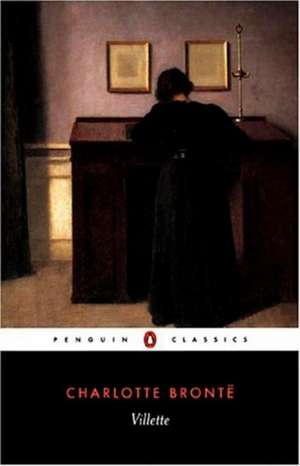
Villette
Autor Charlotte Brontë Editat de Helen M Cooperen Limba Engleză Paperback – 28 dec 2004
Observăm în această ediție Oxford World's Classics a romanului Villette o structură riguroasă, menită să ofere cititorului nu doar textul literar, ci și contextul biografic și social care i-a dat naștere. Volumul este organizat metodologic pentru a facilita o înțelegere profundă: textul propriu-zis este precedat de o introducere semnată de Tim Dolin și urmat de patru apendice esențiale care includ corespondența privată a autoarei și extrase din presa vremii. Această arhitectură editorială ne permite să urmărim cum experiența personală a lui Charlotte Brontë din Bruxelles se transformă în ficțiune.
Suntem de părere că Villette reprezintă vârful maturității artistice a autoarei, extinzând cadrul propus de The Professor cu date noi din perioada petrecută la pensionnatul familiei Héger. Dacă în Jane Eyre regăseam o pasiune debordantă, aici Charlotte Brontë adoptă o perspectivă mai sobră și mai complexă asupra independenței feminine. Cartea este o reprelucrare a temelor din primul său roman, însă cu o profunzime psihologică sporită, oferind o voce distinctă personajului Lucy Snowe, care navighează între datoria profesională și dorințele reprimate într-un mediu străin.
Progresia narativă indicată de cuprins subliniază tranziția de la peisajul rural englezesc la atmosfera gotică a orașului Villette. Includerea scrisorilor către Constantin Héger în anexe este crucială, deoarece acestea servesc drept ancoră factuală pentru relația dintre Lucy și Paul Emanuel. Această ediție reușește să pună în dialog literatura cu istoria socială prin secțiunile dedicate muncii și educației femeilor în secolul al XIX-lea, făcând din acest volum un instrument indispensabil pentru studiile literare.
Preț: 64.21 lei
Preț vechi: 82.25 lei
-22%
Carte disponibilă
Livrare economică 06-17 noiembrie
Livrare express 21-27 octombrie pentru 49.71 lei
Specificații
ISBN-10: 0140434798
Pagini: 672
Dimensiuni: 129 x 199 x 32 mm
Greutate: 0.49 kg
Ediția:Revizuită
Editura: Penguin Books
Locul publicării:London, United Kingdom
V-ar putea interesa
-
 Jane EyreCharlotte BrontëPreț: 28.01 lei
 -
 The Mysterious Affair at StylesAgatha ChristiePreț: 72.03 lei
 -
 JazzToni Morrison-20%Preț: 56.84 lei70.77 lei
 -
 Postcards from PenguinPenguinPreț: 162.15 lei
 -
 EvelinaFrances Burney-24%Preț: 55.14 lei72.65 lei
 -
 The House of MirthEdith Wharton-32%Preț: 49.58 lei73.08 lei
 -
 The Tenant of Wildfell HallAnne Brontë-23%Preț: 57.13 lei74.35 lei
 -
 Penguin English Library Two On a TowerThomas Hardy-18%Preț: 53.96 lei65.50 lei
 -
 EmmaJane Austen-24%Preț: 50.51 lei66.77 lei
 -
 DublinersJames Joyce-27%Preț: 46.79 lei64.47 lei
 -
 Sense and SensibilityJane Austen-25%Preț: 49.62 lei66.16 lei
 -
 -27%Preț: 47.46 lei64.87 lei
 -
 A Room with a ViewE. M. Forster-27%Preț: 47.22 lei64.74 lei
 -
 A Thief in the VillageJames Berry-28%Preț: 45.05 lei62.98 lei
 -
 The Woman in WhiteWilkie Collins-21%Preț: 59.80 lei75.92 lei
 -
 For Two Thousand YearsMihail Sebastian-27%Preț: 56.78 lei77.29 leiRecomandat
 -
 Moon TigerPenelope LivelyPreț: 71.08 lei
 -
 The Name of the Wind: The legendary must-read fantasy masterpiecePatrick Rothfuss-13%Preț: 83.34 lei96.24 lei
 -
 Glass SwordVictoria Aveyard-25%Preț: 60.74 lei80.52 lei
 -
 Marimekko: 100 PostcardsMarimekkoPreț: 147.47 lei
 -
 ShirleyCharlotte BrontëPreț: 38.92 lei
 -
 ProfessorCharlotte BrontëPreț: 36.06 lei
 -
 Agnes GreyAnne BrontëPreț: 35.73 lei
 -
 Tenant of Wildfell HallAnne BrontëPreț: 38.69 lei
De ce să citești această carte
Recomandăm această ediție cititorilor care caută o analiză psihologică profundă a condiției feminine. Dincolo de povestea de dragoste și misterul gotic, veți câștiga o perspectivă documentată asupra vieții lui Charlotte Brontë, datorită scrisorilor și eseurilor critice incluse. Este o lectură esențială pentru a înțelege evoluția de la romantismul victorian spre modernismul introspectiv, oferind un context istoric pe care edițiile standard îl omit.
Despre autor
Charlotte Brontë (1816–1855) a fost o romancieră și poetă engleză, cea mai mare dintre cele trei surori Brontë care au marcat literatura universală. După o perioadă petrecută ca guvernantă și studii în Bruxelles, a debutat sub pseudonimul Currer Bell. Deși primul său roman, The Professor, a fost inițial respins, succesul răsunător al volumului Jane Eyre în 1847 a consacrat-o în cercurile literare londoneze. Viața sa a fost marcată de pierderea timpurie a fraților și de o luptă constantă pentru independență intelectuală, teme care răzbat în întreaga sa operă. Villette rămâne ultimul său roman finalizat, publicat cu doar doi ani înainte de moartea sa prematură.
Notă biografică
Descriere scurtă
With neither friends nor family, Lucy Snowe sets sail from England to find employment in a girls' boarding school in the small town of Villette. There, she struggles to retain her self-possession in the face of unruly pupils, the hostility of headmistress Madame Beck, and her own complex feelings - first for the school's English doctor and then for the dictatorial professor Paul Emanuel. Drawing on her own deeply unhappy experiences as a governess in Brussels, Charlotte Brontë'sautobiographical novel, the last published during her lifetime, is a powerfully moving study of loneliness and isolation, and the pain of unrequited love, narrated by a heroine determined to preserve an independent spirit in the face of adverse circumstances.
Helen M. Cooper's new introduction places the novel in the context of Brontë's life and career and argues for the importance of the novel as an exploration of imperialism.
Charlotte Brontë (1816-55), eldest of the Brontë sisters, was born in Thornton, West Yorkshire. Jane Eyre was first published in 1847 under the pen-name Currer Bell, and was followed by Shirley (1848) and Vilette (1853). In 1854 Charlotte Brontë married her father's curate, Arthur Bell Nicholls. She died during her pregnancy on 31 March 1855 in Haworth, Yorkshire. The Professor was posthumously published in 1857.
If you liked Villette, you may enjoy Elizabeth Gaskell's Cranford, also available in Penguin Classics.
'I am only just returned to a sense of real wonder about me, for I have been reading Villette'
George Eliot
'Her finest novel'
Virginia Woolf
Textul de pe ultima copertă
Descriere
'I am only just returned to a sense of the real world about me, for I have been reading Villette, a still more wonderful book than Jane Eyre.' George Eliot Lucy Snowe, in flight from an unhappy past, leaves England and finds work as a teacher in Madame Beck's school in 'Villette'. Strongly drawn to the fiery autocratic schoolmaster Monsieur Paul Emanuel, Lucy is compelled by Madame Beck's jealous interference to assert her right to love and be loved. Based in part on Charlotte Brontë's experience in Brussels ten years earlier, Villette (1853) is a cogent and dramatic exploration of a woman's response to the challenge of a constricting social environment. Its deployment of imagery comparable in power to that of Emily Brontë's Wuthering Heights, and its use of comedy–ironic or exuberant–in the service of an ultimately sombre vision, make Villette especially appealing to the modern reader. ABOUT THE SERIES: For over 100 years Oxford World's Classics has made available the widest range of literature from around the globe. Each affordable volume reflects Oxford's commitment to scholarship, providing the most accurate text plus a wealth of other valuable features, including expert introductions by leading authorities, helpful notes to clarify the text, up-to-date bibliographies for further study, and much more.
Extras
When I was a girl I went to Bretton about twice a year, and well I liked the visit. The house and its inmates specially suited me. The large peaceful rooms, the well-arranged furniture, the clear wide windows, the balcony outside, looking down on a fine antique street, where Sundays and holidays seemed always to abide—so quiet was its atmosphere, so clean its pavement—these things pleased me well.
One child in a household of grown people is usually made very much of, and in a quiet way I was a good deal taken notice of by Mrs. Bretton, who had been left a widow, with one son, before I knew her; her husband, a physician, having died while she was yet a young and handsome woman.
She was not young, as I remember her, but she was still handsome, tall, well-made, and though dark for an English-woman, yet wearing always the clearness of health in her brunette cheek, and its vivacity in a pair of fine, cheerful black eyes. People esteemed it a grievous pity that she had not conferred her complexion on her son, whose eyes were blue—though, even in boyhood, very piercing—and the colour of his long hair such as friends did not venture to specify, except as the sun shone on it, when they called it golden. He inherited the lines of his mother's features, however; also her good teeth, her stature (or the promise of her stature, for he was not yet full-grown), and, what was better, her health without flaw, and her spirits of that tone and equality which are better than a fortune to the possessor.
In the autumn of the year——I was staying at Bretton, my godmother having come in person to claim me of the kinsfolk with whom was at that time fixed my permanent residence. I believe she then plainly saw events coming, whose very shadow I scarce guessed; yet of which the faint suspicion sufficed to impart unsettled sadness, and made me glad to change scene and society.
Time always flowed smoothly for me at my godmother's side; not with tumultuous swiftness, but blandly, like the gliding of a full river through a plain. My visits to her resembled the sojourn of Christian and Hopeful beside a certain pleasant stream, with "green trees on each bank, and meadows beautified with lilies all the year round." The charm of variety there was not, nor the excitement of incident; but I liked peace so well, and sought stimulus so little, that when the latter came I almost felt it a disturbance, and wished rather it had still held aloof.
One day a letter was received of which the contents evidently caused Mrs. Bretton surprise and some concern. I thought at first it was from home, and trembled, expecting I know not what disastrous communication: to me, however, no reference was made, and the cloud seemed to pass.
The next day, on my return from a long walk, I found, as I entered my bedroom, an unexpected change. In addition to my own French bed in its shady recess, appeared in a corner a small crib, draped with white; and in addition to my mahogany chest of drawers, I saw a tiny rosewood chest. I stood still, gazed, and considered.
"Of what are these things the signs and tokens?" I asked. The answer was obvious. "A second guest is coming; Mrs. Bretton expects other visitors."
On descending to dinner, explanations ensued. A little girl, I was told, would shortly be my companion: the daughter of a friend and distant relation of the late Dr. Bretton's. This little girl, it was added, had recently lost her mother; though, indeed, Mrs. Bretton ere long subjoined, the loss was not so great as might at first appear. Mrs. Home (Home it seems was the name) had been a very pretty, but a giddy, careless woman, who had neglected her child, and disappointed and disheartened her husband. So far from congenial had the union proved, that separation at last ensued—separation by mutual consent, not after any legal process. Soon after this event, the lady having over-exerted herself at a ball, caught cold, took a fever, and died after a very brief illness. Her husband, naturally a man of very sensitive feelings, and shocked inexpressibly by too sudden communication of the news, could hardly, it seems, now be persuaded but that some over-severity on his part—some deficiency in patience and indulgence—had contributed to hasten her end. He had brooded over this idea till his spirits were seriously affected; the medical men insisted on travelling being tried as a remedy, and meanwhile Mrs. Bretton had offered to take charge of his little girl. "And I hope," added my godmother in conclusion, "the child will not be like her mamma; as silly and frivolous a little flirt as ever sensible man was weak enough to marry. For," said she, "Mr. Home is a sensible man in his way, though not very practical: he is fond of science, and lives half his life in a laboratory trying experiments—a thing his butterfly wife could neither comprehend nor endure; and indeed," confessed my godmother, "I should not have liked it myself."
In answer to a question of mine, she further informed me that her late husband used to say, Mr. Home had derived this scientific turn from a maternal uncle, a French savant: for he came, it seems, of mixed French and Scottish origin, and had connections now living in France, of whom more than one wrote de before his name, and called himself noble.
That same evening at nine o'clock, a servant was despatched to meet the coach by which our little visitor was expected. Mrs. Bretton and I sat alone in the drawing-room waiting her coming; John Graham Bretton being absent on a visit to one of his schoolfellows who lived in the country. My godmother read the evening paper while she waited; I sewed. It was a wet night; the rain lashed the panes, and the wind sounded angry and restless.
"Poor child!" said Mrs. Bretton from time to time. "What weather for her journey! I wish she were safe here."
A little before ten the door-bell announced Warren's return. No sooner was the door opened than I ran down into the hall; there lay a trunk and some bandboxes, beside them stood a person like a nurse girl, and at the foot of the staircase was Warren with a shawled bundle in his arms.
"Is that the child?" I asked.
"Yes, miss."
I would have opened the shawl, and tried to get a peep at the face, but it was hastily turned from me to Warren's shoulder.
"Put me down, please," said a small voice when Warren opened the drawing-room door, "and take off this shawl," continued the speaker, extracting with its minute hand the pin, and with a sort of fastidious haste doffing the clumsy wrapping. The creature which now appeared made a deft attempt to fold the shawl; but the drapery was much too heavy and large to be sustained or wielded by those hands and arms. "Give it to Harriet, please," was then the direction, "and she can put it away." This said, it turned and fixed its eyes on Mrs. Bretton.
Recenzii
This Broadview edition includes a critical introduction by Kate Lawson and Lynn Shakinovsky. The many contextual documents include contemporary writings on surveillance and espionage, anti-Catholicism, and working women, as well as letters describing Brontë’s own time in Brussels.
“This edition of Villette gives readers the understanding necessary to fully enter what Kate Lawson and Lynn Shakinovsky call its ‘demanding, sometimes punishing narrative mode.’ Their introduction justifies and celebrates the gaps and evasions in the text as the ‘heretic narrative’ of a protagonist who does not always understand herself. The useful appendices—notably on women and love, women and work, and anti-Catholicism—provide the historical material to contextualise the story. The edition admirably demonstrates that this paradoxical narrative—a domestic novel about work, a love story about repression, and a realist text that embraces the supernatural—repays and rewards close examination.” — Maggie Berg, Queen’s University
“Kate Lawson’s edition of Villette is expansive and precise, like the novel it contextualizes and introduces so well. Providing a rich analysis of the complex themes of the novel, the introduction at once acknowledges and limns the text’s resistance to codification and carefully suggests the beautiful patterns in its seeming inconsistencies. The primary materials provide further context for the novel, particularly in regards to the ‘Woman Question.’ Arranged to be in dialogue with each other about this pivotal topic, these materials provide the background necessary for understanding the novel’s involvement with those discussions.” — Gail Turley Houston, University of New Mexico
Cuprins
Introduction
Charlotte Brontë: A Brief Chronology
A Note on the Text
Villette
Appendix A: Brontë and Brussels
- Letter from Charlotte Brontë to Emily Brontë, 2 September 1843
- Letter from Charlotte Brontë to Constantin Heger, 8 January 1845 (translation)
- Letter from Charlotte Brontë to Constantin Heger, 18 November 1845 (translation)
- Mark 4: 35-41
- Acts 27: 1, 9-16, 18-31, 39-44
- From Sarah Stickney Ellis, The Daughters of England (1842)
- From Dinah Maria Mulock Craik, Olive (1850)
- From Harriet Martineau, Review of Villette. Daily News (3 February 1853)
- From William Makepeace Thackeray, letter to Lucy Baxter (11 March 1853)
- From Sarah Stickney Ellis, The Women of England (1839)
- From Margaret Fuller, Woman in the Nineteenth Century (1845)
- Letter from Charlotte Brontë to Ellen Nussey, 24 June 1851
- From Harriet Taylor Mill, “The Enfranchisement of Women.” Westminster Review, July 1851
- Letter from Charlotte Brontë to Elizabeth Gaskell, 20 September 1851
- From Dinah Maria Mulock Craik, A Woman’s Thoughts About Women (1858)
- The Post Office Espionage Case, 1844-45
- “Opening Letters at the Post Office.” Hansard: House of Lords, 17 June 1844
- “Alleged Post-Office Espionage,” The Times, 25 June 1844
- The Times, 7 August 1844
- The Times, 5 June 1845
- From “Reflections Suggested by the Career of the Late Premier.” Blackwood’s Edinburgh Magazine,January 1847
- From Charlotte Brontë, The Professor (1857)
- From Mary Elizabeth Braddon, Aurora Floyd (1863)
- From Patrick Brontë, “The Maid of Killarney; or Albion and Flora: A Modern Tale; In Which Are Interwoven someCursory Remarks on Religion and Politics” (1818)
- From Maria Monk, Awful Disclosures of Maria Monk, as Exhibited in a Narrative of her Sufferings during a residence of five years as a novice, two as a black nun in the Hotel DieuNunnery at Montreal (1836)
- From Thomas De Quincey, “Maynooth.” Blackwood’s Edinburgh Magazine, May 1845
- From Charles Neaves, “Priests, Women and Families.” Blackwood’s Edinburgh Magazine, May 1845
- “Papal Aggression”
- From Nicholas Wiseman, Archbishop of Westminster. A Pastoral Letter, “From Outside the Flaminian Gate,” 7October 1850
- The Times, 14 October 1850