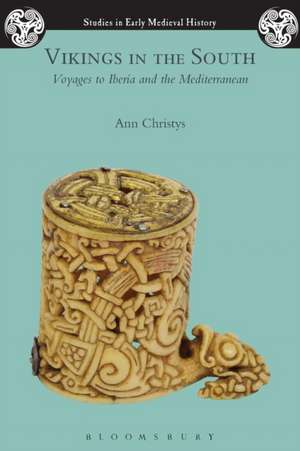
Vikings in the South: Voyages to Iberia and the Mediterranean: Studies in Early Medieval History
Autor Dr Ann Christysen Limba Engleză Paperback – 27 aug 2015
Observăm în cercetarea istorică recentă o tendință de a privi dincolo de granițele nordice tradiționale, iar Vikings in the South se înscrie perfect în această direcție, explorând expansiunea scandinavă în bazinul mediteraneean și Peninsula Iberică. Lucrarea scrisă de Dr Ann Christys propune o abordare academică riguroasă, mutând atenția de la bine-cunoscutele raiduri din nordul Europei către confruntările complexe din al-Andalus, nordul Africii și Italia. Suntem de părere că valoarea acestui volum rezidă în capacitatea autoarei de a pune în dialog surse divergente: cronici latine, hărți, dovezi arheologice și, esențial, texte arabe care au fost mult timp considerate doar simple note de subsol în istoria epocii vikinge.
Structura cărții, publicată de Bloomsbury Academic în seria Studies in Early Medieval History, urmează o progresie logică, de la primele incursiuni din secolul al IX-lea până la transformarea acestor evenimente în legende și saga. Cititorii care au parcurs Ibn Fadlan and the Land of Darkness de Ibn Fadlan vor aprecia aici o analiză mult mai critică a modului în care autorii arabi și contemporanii lor latini au perceput „barbarii” din nord, oferind o perspectivă simetrică asupra modului în care ambele culturi au procesat amenințarea externă. Spre deosebire de relatările de tip jurnal de călătorie, Dr Ann Christys investighează cum memoria acestor raiduri a fost distilată prin timp, transformându-se din documente administrative și hrisov în narațiuni eroice.
Apreciem în mod deosebit prezența anexelor, precum glosarul de istorici și cronologia detaliată, care ancorează narațiunea într-un cadru temporal clar. Tonul este unul academic, dar accesibil, axat pe deconstrucția miturilor și pe analiza modului în care identitatea medievală s-a format prin interacțiunea dintre creștini, musulmani și pagâni.

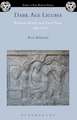
Preț: 253.87 lei
Preț vechi: 302.79 lei
-16%
Carte tipărită la comandă
Livrare economică 02-16 decembrie
Specificații
ISBN-10: 1474213758
Pagini: 152
Ilustrații: 10 bw illus
Dimensiuni: 152 x 232 x 12 mm
Greutate: 0.23 kg
Editura: Bloomsbury Publishing
Colecția Bloomsbury Academic
Seria Studies in Early Medieval History
Locul publicării:London, United Kingdom
V-ar putea interesa
-
 Medieval Britain: A Very Short IntroductionJohn Gillingham-19%Preț: 57.85 lei71.53 lei
 -
 -20%Preț: 56.47 lei70.70 lei
 -
 The Oxford Illustrated History of Medieval EuropeGeorge Holmes-16%Preț: 210.21 lei251.46 lei
 -
 Charters of St AlbansJulia Crick-35%Preț: 451.80 lei689.92 lei
 -
 Medieval Marriage: Symbolism and SocietyDavid d'Avray-28%Preț: 405.62 lei566.12 lei
 -
 Europe after Rome: A New Cultural History 500-1000Julia M. H. Smith-22%Preț: 187.49 lei240.04 lei
 -
 The Central Middle Ages: 950-1320Daniel Power-13%Preț: 287.97 lei330.07 lei
 -
 -28%Preț: 482.87 lei671.17 lei
 -
 The Autumn of the Middle AgesJohan HuizingaPreț: 283.73 lei
 -
 Early Medieval Europe, 300-1000Roger Collins-25%Preț: 249.51 lei332.30 lei
 -
 A Distant MirrorBarbara W. TuchmanPreț: 161.69 lei
 -
 Terry Jones'' Medieval LivesAlan Ereira-26%Preț: 83.13 lei111.73 lei
 -
 Object in Focus: The Sutton Hoo HelmetSonja Marzinzik-18%Preț: 35.20 lei43.05 lei
 -
 -25%Preț: 82.75 lei109.73 lei
 -
 Fallen BodiesDyan ElliottPreț: 293.04 lei
 -
 -27%Preț: 68.42 lei93.17 lei
 -
 Knights Templar EncyclopediaKaren Ralls-22%Preț: 121.33 lei156.38 lei
 -
 In Search of the Holy Grail: The Quest for the Middle AgesVeronica Ortenberg-40%Preț: 145.40 lei242.31 lei
De ce să citești această carte
Această carte este esențială pentru studenții și pasionații de istorie medievală care doresc să înțeleagă dimensiunea globală a epocii vikinge. Cititorul câștigă o perspectivă rară asupra impactului scandinav în lumea islamică și mediteraneeană, beneficiind de expertiza unui specialist în al-Andalus. Este un instrument critic valoros care demonstrează că istoria vikingilor nu se limitează la fiordurile nordice, ci se întinde până la porțile Bizanțului și coastele Africii.
Descriere
These Vikings have been only a footnote to the history of the Viking Age. Many stories about their activities survive only in elaborate versions written centuries after the event, and in Arabic. This book reconsiders the Arabic material as part of a dossier that also includes Latin chronicles and charters as well as archaeological and place-name evidence. Arabic authors and their Latin contemporaries remembered Vikings in Iberia in surprisingly similar ways. How they did so sheds light on contemporary responses to Vikings throughout the medieval world.
Cuprins
Preface and Acknowledgments
Chapter 1. Introduction: Don Teudo Rico Defeats a Viking raid
Chapter 2. From the Encircling Ocean
Chapter 3. So the Story Goes
Chapter 4. A Mediterranean Adventure
Chapter 5. Waiting for the Barbarians
Chapter 6. The Wars of Santiago and Cordoba against Vikings
Chapter 7. Conclusion: from Charter to History to Saga
Appendix 1: Glossary of Histories and Historians
Appendix 2: Timeline
Bibliography
Index
Recenzii
Christys has a profound knowledge of both Arabic and Latin sources on the Viking voyages to the south ... She discusses every work of any importance, evaluates them critically and shows that only few are indeed reliable ... This book is invaluable for every student and researcher of Viking Age history.
The contribution of this volume is more than filling in a 'blank' spot in the wider modern histories of Vikings ...
The books offers approaches to understanding how Islamic and Christian writers thought about themselves and their attackers and in particular the historiographic analysis is a thorough scrutiny of themes, differences and sources for the history of Vikings in the south.
[A]n important work that fills a gap in English-language scholarship ... Christys is to be commended for opening up this ... material for further study.
Ann Christys's concise and well-written book fills a real need; she has read carefully all relevant sources, in Arabic, Old Norse and Latin, concerning possible Viking visits to the coasts of the Iberian Peninsula in the ninth and tenth centuries, stripped away many romanticized details that have attached to the accounts over the years, and come up with a sober assessment: that there were indeed occasional such attacks, but the shock and fear which the Vikings generated in coastal areas of the Iberian Peninsula were lasting, and greater than the actual threat.
Ann Christys has made what might at first seem a small contribution to Viking history recognisable as not just significant but, in its field, definitive. Her knowledge of Arabic as well as Latin (and relevant modern languages) gives her work the edge on previous discussions of Vikings in the South. In methodological terms, her sifting-out of the grist in ninth-century sources adds something new to Viking historiography, while her critical analysis of later myths and their contexts is exemplary, illuminating, and enjoyable.
The Vikings in Iberia are remarkably elusive - our picture of them shaped by genres as diverse as Ptolemaic geography, Scandinavian saga and crusading narrative, affected by the recurring need of foils for heroes - saintly or secular. Dr Christys uses her formidable linguistic range and scholarly judgment to track them. On the way we lose Viking cheese, but gain Viking mice! The overall result is a major addition to our knowledge not only of Vikings, but of early medieval Iberia, and especially of Iberian historiography, both Christian and Muslim.
This is the first study of the Vikings in Iberia to be based on modern methodological principles and a profound knowledge of Muslim historiography. It puts this field of study on an entirely new footing and amounts to a true spring cleaning.
This account of Scandinavian activity in Iberia and around the Mediterranean from the ninth to the eleventh centuries is based mainly on a thorough and very welcome analysis of the problems posed by medieval Muslim and Christian texts. It will be an invaluable guide to future students of the Vikings.