
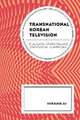
Transnational Korean Television: Cultural Storytelling and Digital Audiences: Transnational Communication and Critical/Cultural Studies
Autor Hyejung Juen Limba Engleză Hardback – 29 noi 2019


Preț: 498.68 lei
Preț vechi: 789.67 lei
-37%
Puncte Express: 748
Carte tipărită la comandă
Livrare economică 08-22 iunie
Specificații
ISBN-13: 9781498565172
ISBN-10: 1498565174
Pagini: 146
Ilustrații: 7 b/w illustrations; 2 tables;
Dimensiuni: 150 x 232 x 14 mm
Greutate: 0.38 kg
Editura: Bloomsbury Publishing
Colecția Lexington Books
Seria Transnational Communication and Critical/Cultural Studies
Locul publicării:New York, United States
ISBN-10: 1498565174
Pagini: 146
Ilustrații: 7 b/w illustrations; 2 tables;
Dimensiuni: 150 x 232 x 14 mm
Greutate: 0.38 kg
Editura: Bloomsbury Publishing
Colecția Lexington Books
Seria Transnational Communication and Critical/Cultural Studies
Locul publicării:New York, United States
V-ar putea interesa
-
 -34%Preț: 518.19 lei790.56 lei
 -
 -22%Preț: 292.41 lei376.08 lei
 -
 Technology and ValuesDr. Kristin Shrader-Frechette-33%Preț: 359.64 lei538.25 lei
 -
 Preț: 417.70 lei
 -
 -18%Preț: 1068.05 lei1302.51 lei
 -
 -18%Preț: 1244.68 lei1517.90 lei
 -
 Preț: 315.07 lei
 -
 The Art of CommunicationRandy FujishinPreț: 339.15 lei
 -
 Persuasive Communication, Third EditionJames B. Stiff-15%Preț: 431.98 lei508.21 lei
 -
 -29%Preț: 366.60 lei515.52 lei
 -
 -24%Preț: 312.29 lei412.41 lei
 -
 Gender in a Transitional Era: Changes and ChallengesAmanda R. Martinez-29%Preț: 367.58 lei516.04 lei
 -
 -34%Preț: 587.51 lei884.58 lei
 -
 -25%Preț: 296.21 lei392.96 lei
 -
 -35%Preț: 512.68 lei790.88 lei
 -
 Communication Perspectives on Popular CultureAndrew F Herrmann-18%Preț: 703.06 lei857.40 lei
 -
 -34%Preț: 586.29 lei883.54 lei
 -
 Underserved Communities and Digital Discourse: Getting Voices HeardVictoria L. LaPoe-34%Preț: 555.78 lei837.65 lei
 -
 Guide to Reflective Practice in Conflict ResolutionMichael D. LangPreț: 305.68 lei
Cuprins
List of Tables
List of Figures
Introduction
Part I: Transnational Korean Television With East Asia
1. Transforming the Korean Television Industry: the Korean Wave
2. Korean TV Drama Narratives: Are Korean Dramas a Transcultural Story?
3. Korean TV Shows with East Asian Partnership
Part II: Transnational Korean Television In America
4. Digital Audiences, Fans, and Fandom
5. The Power of Streaming TV: Netflix, DramaFever, and American Viewers
6. Korean Television Formats
Conclusion
Bibliography
List of Figures
Introduction
Part I: Transnational Korean Television With East Asia
1. Transforming the Korean Television Industry: the Korean Wave
2. Korean TV Drama Narratives: Are Korean Dramas a Transcultural Story?
3. Korean TV Shows with East Asian Partnership
Part II: Transnational Korean Television In America
4. Digital Audiences, Fans, and Fandom
5. The Power of Streaming TV: Netflix, DramaFever, and American Viewers
6. Korean Television Formats
Conclusion
Bibliography
Recenzii
Hyejung Ju offers very useful analyses of transnational influences of South Korean television dramas.... Transnational Korean Television is, basically, the first book length publication that provides outstanding explanations of the complex South Korean television in the context of the television industry of the country.... Readers should benefit from the very detailed bibliography and the useful index. Also, as a succinct book, Transnational Korean Television can easily be used as a two-term textbook for college students of all levels.
Much has been written and published about the presence of the Korean Wave in recent years. However, this seems to be the first book that provides outstanding explanations in the entangled national, regional, and global contexts enabling the worldwide move of South Korean television in tandem with the Korean television industry and programs, global media transformation, digital impacts to Korean TV production and distribution, and burgeoning transnational Korean TV viewers. Rich economic, cultural, and policy data; popular TV cases; fan culture; and organic structures of each chapter are delightful to read-I highly recommend.
Hyejung Ju has written a compelling book that fills a gap in our understanding of transnational media studies. Ju explains how and why South Korean television dramas appeal to both Eastern and Western audiences. This is a groundbreaking work that should receive the attention of media scholars and fans of Korean drama alike.
Much has been written and published about the presence of the Korean Wave in recent years. However, this seems to be the first book that provides outstanding explanations in the entangled national, regional, and global contexts enabling the worldwide move of South Korean television in tandem with the Korean television industry and programs, global media transformation, digital impacts to Korean TV production and distribution, and burgeoning transnational Korean TV viewers. Rich economic, cultural, and policy data; popular TV cases; fan culture; and organic structures of each chapter are delightful to read-I highly recommend.
Hyejung Ju has written a compelling book that fills a gap in our understanding of transnational media studies. Ju explains how and why South Korean television dramas appeal to both Eastern and Western audiences. This is a groundbreaking work that should receive the attention of media scholars and fans of Korean drama alike.