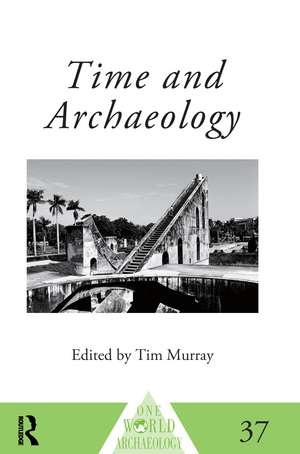
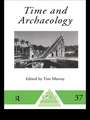
Time and Archaeology: One World Archaeology
Editat de Tim Murrayen Limba Engleză Hardback – 23 sep 1999
| Toate formatele și edițiile | Preț | Express |
|---|---|---|
| Paperback (1) | 457.02 lei 6-8 săpt. | |
| Taylor & Francis – 15 aug 2014 | 457.02 lei 6-8 săpt. | |
| Hardback (1) | 1012.40 lei 6-8 săpt. | |
| Taylor & Francis – 23 sep 1999 | 1012.40 lei 6-8 săpt. |
Din seria One World Archaeology
-
 Preț: 396.29 lei
 - 15%
 Preț: 569.06 lei
 -
 Preț: 386.26 lei
 -
 Preț: 429.56 lei
 - 15%
 Preț: 418.64 lei
 -
 Preț: 412.37 lei
 - 18%
 Preț: 346.21 lei
 -
 Preț: 373.98 lei
 -
 Preț: 457.02 lei
 -
 Preț: 390.61 lei
 -
 Preț: 464.02 lei
 -
 Preț: 431.92 lei
 - 20%
 Preț: 103.04 lei
 - 18%
 Preț: 1072.90 lei
 - 28%
 Preț: 339.30 lei
 - 18%
 Preț: 1345.26 lei
 -
 Preț: 373.40 lei
 -
 Preț: 472.25 lei
 - 18%
 Preț: 1016.04 lei
 -
 Preț: 375.81 lei
 - 15%
 Preț: 425.85 lei
 -
 Preț: 458.65 lei
 - 18%
 Preț: 1023.30 lei
 -
 Preț: 419.57 lei
 - 28%
 Preț: 340.90 lei
 - 15%
 Preț: 420.52 lei
 -
 Preț: 386.89 lei
 - 18%
 Preț: 1020.90 lei
 -
 Preț: 375.44 lei
 - 15%
 Preț: 410.87 lei
 - 15%
 Preț: 473.32 lei
 -
 Preț: 477.06 lei
 - 34%
 Preț: 790.14 lei
Preț: 1012.40 lei
Preț vechi: 1234.63 lei
-18% Nou
Puncte Express: 1519
Preț estimativ în valută:
179.15€ • 210.07$ • 157.33£
179.15€ • 210.07$ • 157.33£
Carte tipărită la comandă
Livrare economică 13-27 februarie
Preluare comenzi: 021 569.72.76
Specificații
ISBN-13: 9780415117623
ISBN-10: 0415117623
Pagini: 192
Dimensiuni: 156 x 234 x 19 mm
Greutate: 0.41 kg
Ediția:1
Editura: Taylor & Francis
Colecția Routledge
Seria One World Archaeology
Locul publicării:Oxford, United Kingdom
ISBN-10: 0415117623
Pagini: 192
Dimensiuni: 156 x 234 x 19 mm
Greutate: 0.41 kg
Ediția:1
Editura: Taylor & Francis
Colecția Routledge
Seria One World Archaeology
Locul publicării:Oxford, United Kingdom
V-ar putea interesa
-
 -17%Preț: 436.21 lei527.83 lei
 -
 Archaeological Artefacts as Material CultureLinda Hurcombe-34%Preț: 792.08 lei1196.81 lei
 -
 Preț: 378.41 lei
 -
 Early Urbanism on the Syrian EuphratesLisa Cooper-18%Preț: 682.02 lei831.73 lei
 -
 The Archaeology of the ColonizedMichael GivenPreț: 370.62 lei
 -
 The Archaeology of Identities: A ReaderTimothy InsollPreț: 397.08 lei
 -
 -18%Preț: 1068.05 lei1302.51 lei
 -
 Preț: 285.64 lei
 -
 Preț: 374.91 lei
 -
 Preț: 419.57 lei
 -
 Identity and Power in the Ancient Andes: Tiwanaku Cities through TimeJohn Wayne JanusekPreț: 375.65 lei
 -
 Preț: 331.38 lei
 -
 Deconstructing PrehumanityJorge SerranoPreț: 259.85 lei
 -
 Jefferson's Poplar ForestBarbara J HeathPreț: 117.46 lei
 -
 -28%Preț: 337.97 lei471.05 lei
 -
 -55%Preț: 398.02 lei877.46 lei
 -
 World Antiquarianism: Comparitive PerspectivesAlain SchnappPreț: 428.95 lei
 -
 The Commonwealth Block, MelbourneTim MurrayPreț: 153.88 lei
 -
 -15%Preț: 622.29 lei732.10 lei
Cuprins
Preface Introduction 1 A return to the ‘Pompeii premise’ 2 Indian and other concepts of time: a holistic framework 3 Puranic time and the archaeological record 4 German Romantic chronology and its impact on the interpretation of prehistory 5 Keeping industrial time 6 Developing an Indian stone age chronology 7 Appraising the urban future: an archaeological time Perspective 8 The Hochdorf ‘princely’ grave and the question of the nature of archaeological funerary assemblages 9 The times of history: archaeology, narrative and non-linear causality
Notă biografică
Tim Murray is Professor of Archaeology at LaTrobe University, Melbourne, Australia.
Descriere
This pioneering collection illustrates and explores the diversity of archaeological approaches to time. The contributors contrast a scientific understanding with social, cultural and religious ideas of time.