
Thus Spoke Zarathustra
Autor Friedrich Wilhelm Nietzsche Editat de Angel Sanchezen Limba Engleză Paperback
Preț: 102.66 lei
Puncte Express: 154
Carte tipărită la comandă
Livrare economică 08-22 decembrie
Livrare prin curier în România Termenul estimat este afișat lângă disponibilitate.
Transport gratuit de la 400.00 lei Plată online sau ramburs, în funcție de opțiunile comenzii.
Retur gratuit în 14 zile Comandă securizată și suport în română.
Specificații
ISBN-13: 9781534696174
ISBN-10: 1534696172
Pagini: 268
Dimensiuni: 152 x 229 x 14 mm
Greutate: 0.36 kg
ISBN-10: 1534696172
Pagini: 268
Dimensiuni: 152 x 229 x 14 mm
Greutate: 0.36 kg
V-ar putea interesa
-
 The Portable NietzscheFriedrich Nietzsche-17%Preț: 103.26 lei123.90 lei
 -
 A Nietzsche ReaderR J Hollingdale-37%Preț: 58.80 lei92.87 lei
 -
 Why I am So WiseFriedrich Nietzsche-21%Preț: 43.63 lei55.31 lei
 -
 Nietzsche: A Very Short IntroductionMichael Tanner-19%Preț: 57.23 lei70.82 lei
 -
 The Birth of Tragedy and The Case of WagnerFriedrich NietzschePreț: 78.08 lei
 -
 Beyond Good and EvilFriedrich NietzschePreț: 40.66 lei
 -
 Thus Spake ZarathustraFriedrich NietzschePreț: 67.57 lei
 -
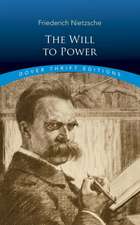 The Will to PowerFriedrich NietzschePreț: 71.58 lei
 -
 Nietzsche's Thus Spoke ZarathustraDouglas Burnham-11%Preț: 156.07 lei175.31 lei
 -
 Friedrich NietzscheTony Lee MoralPreț: 72.78 lei
 -
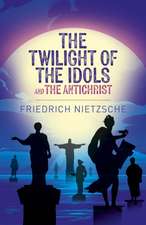 The Twilight of the Idols and The AntichristFrederich NietzschePreț: 56.65 lei
 -
 World Classics Library: Friedrich NietzscheFrederich NietzschePreț: 154.48 lei
 -
 Thus Spoke Zarathustra (Signature Editions)Friedrich Nietzsche-28%Preț: 62.53 lei86.86 lei
 -
 Human, All Too HumanFriedrich NietzschePreț: 48.22 lei
 -
 Beyond Good And EvilFriedrich NietzschePreț: 46.16 lei
 -
 Thus Spake ZarathustraFrederich NietzschePreț: 51.50 lei
 -
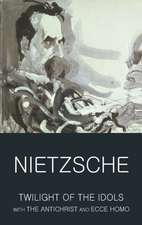 Twilight of the Idols with The Antichrist and Ecce HomoFriedrich NietzschePreț: 44.08 lei
 -
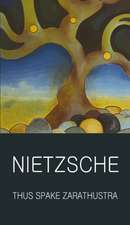 Thus Spake ZarathustraFriedrich NietzschePreț: 44.51 lei
 -
 Thus Spoke Zarathustra - ClassicsFriedrich NietzschePreț: 55.63 lei