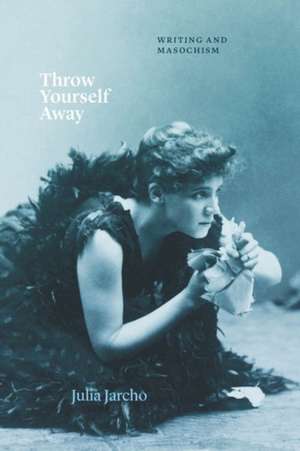
Throw Yourself Away: Writing and Masochism: Thinking Literature
Autor Professor Julia Jarchoen Limba Engleză Hardback – 6 sep 2024
Descoperim în Throw Yourself Away o examinare riguroasă a modului în care actul scrierii poate fi înțeles ca un act sexual masochist, o perspectivă care reîmprospătează teoria literară contemporană. Structura volumului urmărește o progresie metodologică clară: pornește de la fundamentele psihanalitice (Freud și Deleuze) în capitolul dedicat lui Mary Gaitskill, trece prin analiza dramaturgică a lui Ibsen și ajunge la formele radicale de negație din opera lui Adrienne Kennedy. În final, Professor Julia Jarcho explorează conceptul de „autoteorie” ca un spațiu în care corpul scriitorului se supune voluntar rigorilor formale.
Notăm cu interes centralitatea teatrului în acest studiu. Spre deosebire de abordările care se limitează la textul narativ, Jarcho demonstrează cum scena oferă cadrul ideal pentru fanteziile de dominare și supunere care definesc modernitatea literară. Această lucrare reprezintă o alternativă necesară la The Masochistic Pleasures of Sentimental Literature de Marianne Noble pentru cursurile de teorie literară și studii de gen, având avantajul unei deschideri mai largi către secolul XXI și a unei analize care depășește sfera sentimentalismului american de secol XIX.
Tonul analitic este susținut de o metodologie care refuză simplificările clinice, preferând să vadă în masochism nu o patologie, ci o strategie de rezistență a subiectului în fața sistemelor sociale opresive. Rezultatul este o imagine a autoratului mult mai nuanțată, unde vulnerabilitatea devine o forță creativă. Această ediție publicată de University of Chicago Press se distinge prin capacitatea de a conecta estetica formei literare cu experiența viscerală a corpului doritor.
Din seria Thinking Literature
-
 Preț: 148.27 lei
 -
 Preț: 173.83 lei
 -
 Preț: 189.21 lei
 -
 Preț: 175.50 lei
 -
 Preț: 211.50 lei
 -
 Preț: 268.11 lei
 -
 Preț: 225.34 lei
 -
 Preț: 223.85 lei
 -
 Preț: 232.47 lei
 -
 Preț: 200.18 lei
 -
 Preț: 207.50 lei
 -
 Preț: 137.33 lei
 -
 Preț: 224.41 lei
 -
 Preț: 173.00 lei
 -
 Preț: 187.86 lei
 -
 Preț: 205.71 lei
 -
 Preț: 189.55 lei
 -
 Preț: 206.88 lei
 - nou
 Preț: 254.78 lei
 - nou
 Preț: 211.07 lei
 - nou
 Preț: 211.07 lei
Preț: 646.28 lei
Preț vechi: 839.32 lei
-23%
Carte tipărită la comandă
Livrare economică 25 noiembrie-09 decembrie
Specificații
ISBN-10: 0226835022
Pagini: 256
Dimensiuni: 152 x 229 x 20 mm
Greutate: 0.45 kg
Ediția:First Edition
Editura: University of Chicago Press
Colecția University of Chicago Press
Seria Thinking Literature
De ce să citești această carte
Recomandăm această carte cercetătorilor și studenților la litere interesați de intersecția dintre psihanaliză, teatru și gen. Cititorul va câștiga o înțelegere profundă a modului în care masochismul modelează structura narativă și actul scrierii. Este un instrument teoretic esențial pentru oricine dorește să exploreze literatura nu doar ca text, ci ca un spațiu de negociere a puterii și a identității corporale.
Despre autor
Professor Julia Jarcho este critic literar și dramaturg, ocupând poziția de profesor asociat la New York University (NYU). Experiența sa dublă, de teoretician și creator de teatru, îi conferă o perspectivă unică asupra textului ca spațiu de performanță. Opera sa se concentrează pe relația dintre estetică, dorință și formă, fiind distinsă cu premii importante pentru dramaturgie (cum ar fi premiul Obie). Această expertiză se reflectă în Throw Yourself Away, unde analiza literară este permanent dublată de o înțelegere profundă a mecanismelor scenice.
Notă biografică
Cuprins
Chapter 1. “You’re Not a Masochist”: Sadism, Realism, and Fantasy in Gaitskill, Deleuze, and Freud
Chapter 2. Cruel Theater: Hedda Gabler and “Nona Vincent”
Chapter 3. “Caught Fire in My Mind”: Adrienne Kennedy’s Intimacies of Negation
Chapter 4. “With Both Hands”: Autotheory’s Masochistic Theater
Chapter 5. Pure Love
Chapter 5b. Curtains
Acknowledgments
Notes
Bibliography
Index
Recenzii
Descriere
Proposes that we can best understand literature’s relationship to sex through a renewed focus on masochism. In a series of readings that engage American and European works of fiction, drama, and theory from the late nineteenth through the early twenty-first centuries, critic and playwright Julia Jarcho argues that these works conceive writing itself as masochistic, and masochism as sexuality enacted in writing. Throw Yourself Away is distinctive in its sustained focus on masochism as an engine of literary production across multiple authors and genres. In particular, Jarcho shows that theater has played a central role in modern erotic fantasies of the literary. Jarcho foregrounds writing as a project of distressed subjects: When masochistic writing is examined as a strategy of response to injurious social systems, it yields a surprisingly feminized—and less uniformly white—image of both masochism and authorship. Ultimately, Jarcho argues that a retheorized concept of masochism helps us understand literature itself as a sex act and shows us how writing can tend to our burdened, desirous bodies. With startling insights into such writers as Henry James, Henrik Ibsen, Mary Gaitskill, and Adrienne Kennedy, Throw Yourself Away furnishes a new masochistic theory of literature itself.