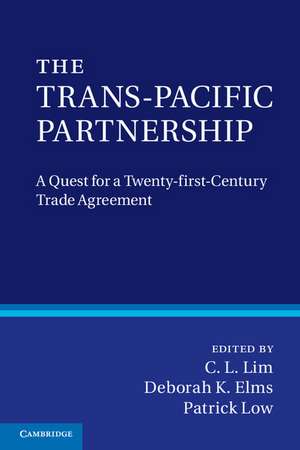
The Trans-Pacific Partnership
Editat de C. L. Lim, Deborah Kay Elms, Patrick Lowen Limba Engleză Paperback – 30 sep 2013
Subliniem o realitate inconfortabilă pentru arhitecții politicilor comerciale: extinderea accesului pe piață nu mai este suficientă pentru succesul unui tratat modern. În timp ce abordările tradiționale se concentrează strict pe tarife, The Trans-Pacific Partnership demonstrează că viitorul comerțului global depinde de integrarea unor standarde etice și de mediu în însăși structura fluxurilor de capital. Remarcăm modul în care editorii C. L. Lim, Deborah Kay Elms și Patrick Low analizează tranziția de la simplul schimb de mărfuri la un ecosistem complex ce include proprietatea intelectuală și coerența reglementară între continente diferite. Credem că valoarea acestui volum rezidă în capacitatea de a anticipa tensiunile dintre ambițiile secolului XXI și inerția modelelor economice vechi. Complementar volumului The Trans-Pacific Partnership (Tpp) Negotiations and Issues for Congress, care oferă o perspectivă administrativă americană, lucrarea de față acoperă dimensiunea sistemică și riscul de regres către acorduri bilaterale rigide. Dacă Paradigm Shift in International Economic Law Rule-Making se concentrează pe diversitatea economică a membrilor, editorii de la Cambridge University Press pun accentul pe mecanismele tehnice care pot transforma TPP într-un model pentru Organizația Mondială a Comerțului. Această lucrare se înscrie organic în traiectoria academică a editorilor, continuând temele de fragmentare a dreptului economic explorate în International Economic Law after the Global Crisis și analizele structurale din Alternative Visions of the International Law on Foreign Investment. Cititorul va înțelege nu doar mecanica tratatului, ci și modul în care arbitrajul internațional și protecția investițiilor devin piloni de stabilitate într-o geopolitică în continuă schimbare.
Preț: 421.15 lei
Preț vechi: 473.19 lei
-11%
Carte tipărită la comandă
Livrare economică 01-15 decembrie
Specificații
ISBN-10: 110761242X
Pagini: 356
Ilustrații: 2 b/w illus. 15 tables
Dimensiuni: 152 x 229 x 21 mm
Greutate: 0.58 kg
Ediția:New.
Editura: Cambridge University Press
Locul publicării:New York, United States
V-ar putea interesa
-
 The New Geography of InnovationMehran GulPreț: 123.61 lei
 -
 Principles of International Economic LawMatthias Herdegen-19%Preț: 591.59 lei730.36 lei
 -
 The Sustainability Revolution in International Trade AgreementsGeraldo Vidigal-31%Preț: 746.66 lei1083.93 lei
 -
 Trade Agreements and Women: Transcending BarriersAmrita Bahri-32%Preț: 695.88 lei1024.93 lei
 -
 CETA Implementation and Implications: Unravelling the PuzzleRobert G. Finbow-23%Preț: 761.44 lei988.88 lei
 -
 The Great Global TransformationBranko MilanovicPreț: 191.67 lei
 -
 Principles of International Environmental LawProfessor Philippe SandsPreț: 445.51 lei
 -
 The Travels of a T-Shirt in the Global EconomyPietra RivoliPreț: 130.70 lei
 -
 -31%Preț: 131.05 lei190.84 lei
 -
 The Politics of Transatlantic Trade Negotiations: TTIP in a Globalized WorldJean-Frederic MorinPreț: 425.46 lei
 -
 -32%Preț: 597.48 lei879.50 lei
 -
 New Developments in Globalization: Agreements & NegotiationsAndreo Lamorena-27%Preț: 1217.78 lei1659.69 lei
 -
 -27%Preț: 999.62 lei1362.49 lei
 -
 The New Politics of TradeAlasdair R Young-23%Preț: 659.22 lei856.12 lei
 -
 -15%Preț: 670.36 lei788.66 lei
 -
 -18%Preț: 1158.86 lei1413.25 lei
 -
 Going Global: The Textile and Apparel Industry with STUDIOElena E. Karpova, Ph.D.-26%Preț: 552.28 lei743.48 lei
 -
 Preț: 156.99 lei
De ce să citești această carte
Recomandăm această carte profesioniștilor din drept internațional și analiștilor politici care doresc să înțeleagă arhitectura noilor mega-acorduri comerciale. Veți câștiga o perspectivă clară asupra modului în care standardele de mediu și muncă devin instrumente de negociere economică. Este o resursă esențială pentru a decoda viitorul comerțului în Asia-Pacific și impactul acestuia asupra normelor globale.
Despre autor
C. L. Lim, Deborah Kay Elms și Patrick Low sunt experți recunoscuți în guvernanță economică și drept comercial. C. L. Lim are o experiență vastă în analiza arbitrajului, fiind editorul lucrării The Cambridge Companion to International Arbitration. Deborah Kay Elms este o autoritate în politicile comerciale din Asia, în timp ce Patrick Low a activat ca economist-șef în cadrul OMC. Împreună, aceștia au coordonat lucrări fundamentale care investighează evoluția dreptului investițional și răspunsul sistemului economic global la crizele financiare recente, oferind o expertiză academică și practică de neegalat în domeniul comerțului transfrontalier.