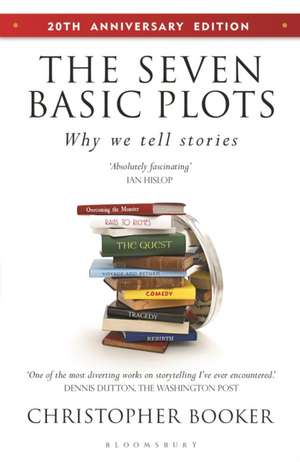
The Seven Basic Plots
Autor Christopher Bookeren Limba Engleză Paperback – 18 iul 2024
Remarcăm în The Seven Basic Plots o resursă fundamentală pentru studenții la litere, scenariști și profesioniștii din industriile creative, fiind un instrument indispensabil pentru înțelegerea structurilor narative care stau la baza culturii universale. Christopher Booker propune o teză ambițioasă: există doar șapte tipare fundamentale de poveste, iar orice narațiune, de la epopeile antice la producțiile cinematografice contemporane, se încadrează într-unul dintre aceste arhetipuri. Găsim în această lucrare monumentală de peste 700 de pagini o cartografiere precisă a modului în care mintea umană este „programată” să imagineze conflicte și rezoluții. Cartea este organizată riguros în trei părți. Prima secțiune analizează cele șapte „porți”: Înfrângerea Monstrului, De la sărăcie la bogăție, Căutarea, Călătoria și Întoarcerea, Comedia, Tragedia și Renașterea. Partea a doua explorează valorile psihologice și arhetipurile familiale, în timp ce ultima parte, „Missing the Mark”, investighează modul în care narațiunile moderne au pierdut contactul cu scopul lor simbolic profund. Considerăm că această abordare transformă volumul dintr-un simplu tratat de teorie literară într-o investigație psihologică asupra dezvoltării umane. Ca alternativă la The Storytelling Animal de Jonathan Gottschall pentru cursurile de studii culturale sau naratologie, The Seven Basic Plots are avantajul unei profunzimi istorice și analitice superioare, oferind o taxonomie mult mai detaliată a structurilor de complot. În timp ce Evolution and Popular Narrative se concentrează pe lentila evoluționistă, Booker reușește să integreze literatura clasică (Proust, Sade) cu elemente de cultură populară (E.T. sau seriale TV), demonstrând universalitatea acestor tipare indiferent de format sau epocă.
Preț: 105.65 lei
Preț vechi: 141.99 lei
-26%
Carte disponibilă
Livrare economică 05-19 august
Livrare express 21-25 iulie pentru 70.07 lei
Specificații
ISBN-10: 1399415921
Pagini: 725
Dimensiuni: 196 x 130 x 48 mm
Greutate: 0.52 kg
Editura: Bloomsbury Publishing
Colecția Bloomsbury Continuum
Locul publicării:London, United Kingdom
V-ar putea interesa
-
 SCIENCE OF STORYTELLING PBWill StorrPreț: 78.11 lei
 -
 Made to StickChip Heath-31%Preț: 62.98 lei91.82 lei
 -
 The Examined LifeStephen Grosz-38%Preț: 56.35 lei91.01 lei
 -
 Into The WoodsJohn Yorke-32%Preț: 62.94 lei91.95 lei
 -
 Preț: 135.56 lei
 -
 When Everyone Knows That Everyone Knows...Steven PinkerPreț: 135.80 lei
 -
 The Narrative Brain: The Stories Our Neurons TellFritz Alwin Breithaupt Ph.D.Preț: 201.51 lei
 -
 The Storytelling AnimalJonathan GottschallPreț: 102.19 lei
 -
 Preț: 189.33 lei
 -
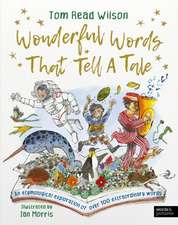 Wonderful Words That Tell a TaleTom Read Wilson-16%Preț: 93.57 lei111.65 lei
 -
 Change Your Life In Seven DaysPaul McKenna-5%Preț: 120.28 lei126.61 lei
 -
 The Interpretation of Fairy TalesMarie-Louise Von Franz-27%Preț: 116.86 lei160.89 lei
 -
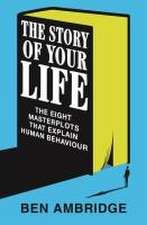 The Stories of Your LifeBen Ambridge-35%Preț: 78.62 lei120.69 lei
 -
 The Pocket Book of JungLily YuanPreț: 69.76 lei
 -
 Metamorphosis: A Natural and Human HistoryOren Harman-31%Preț: 131.42 lei191.14 lei
 -
 Our StoryColin Butfield-22%Preț: 128.54 lei165.49 lei
 -
 Night Club Marketing SystemsKevin TamPreț: 149.69 lei
 -
 TED Talks: The Official TED Guide to Public SpeakingChris Anderson-28%Preț: 65.90 lei91.35 lei
 -
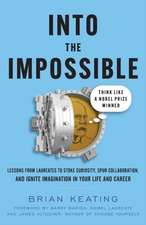 Into the ImpossibleBrian KeatingPreț: 80.62 lei
 -
 The Hero with a Thousand FacesJoseph CampbellPreț: 153.77 lei
 -
 The Story Solution: Change Your Toxic Self-Stories and ThriveAnna Katharina Schaffner-20%Preț: 96.95 lei120.56 lei
 -
 Myth: Stories from World MythologySarah BartlettPreț: 85.88 lei
 -
 Preț: 225.29 lei
 -
 But: Life Isn't Like That, Is It?Boff Whalley-20%Preț: 108.40 lei134.79 lei
De ce să citești această carte
Această carte este esențială pentru oricine dorește să descifreze mecanismele interne ale poveștilor. Cititorul câștigă o perspectivă structurală asupra literaturii și filmului, învățând să identifice rapid arhetipurile care fac o narațiune să rezoneze universal. Este un ghid teoretic masiv, dar accesibil, care explică nu doar cum spunem povești, ci și de ce avem nevoie biologică și psihologică de ele pentru a înțelege lumea.
Despre autor
Christopher Booker a fost un autor și jurnalist britanic de renume, cu o carieră întinsă pe parcursul a cinci decenii. A fost editorul fondator al celebrei reviste satirice Private Eye și un colaborator constant pentru Sunday Telegraph. Expertiza sa în analiza structurilor sociale și culturale este reflectată în lucrările sale publicate la Bloomsbury Publishing, printre care se numără și volumele „The Great Deception” sau „Scared to Death”. Prin The Seven Basic Plots, Booker și-a consolidat poziția de observator critic al evoluției psihologice a umanității prin intermediul literaturii.
Descriere
But this is only the prelude to an investigation into how and why we are 'programmed' to imagine stories in these ways, and how they relate to the inmost patterns of human psychology. Drawing on a vast array of examples, from Proust to detective stories, from the Marquis de Sade to E.T., Christopher Booker then leads us through the extraordinary changes in the nature of storytelling over the past 200 years, and why so many stories have 'lost the plot' by losing touch with their underlying archetypal purpose.
Booker analyses why evolution has given us the need to tell stories and illustrates how storytelling has provided a uniquely revealing mirror to mankind's psychological development over the past 5000 years.
This seminal book opens up in an entirely new way our understanding of the real purpose storytelling plays in our lives, and will be a talking point for years to come.
Recenzii
"....remarkable parallels between the structure of the modern film Jaws and that of the Old English Beowulf." Writing Magazine
"If you have any interest in fiction and the way it works, you will enjoy this exploration of the seven basic plots and how they have been adapted and developed across the centuries." Writing Magazine
Mentioned in article about author in The Lady, 17/07/07
"This magisterial volume really does offer readers a genuinely fresh and exciting perspective on virtually every tale ever told." --Bookmark, July 2005
"Fantastically entertaining" The Times
mention in Evangelical Times, 1 May 2009
Excerpts included in Gotham Writer's Workshop monthly e-newsletter for screenwriters. http://www.writingclasses.com/mailing.php?id=2419
'This book...has mind-expanding properties. Not only for anyone interested in literature, but also for those fascinated by wider questions of how human beings organise their societies and explain the outside world to their inmost selves, it is fascinating.' Katherine Sale, FT
'Christopher Booker's mammoth account of plot types, archetypes, their role in literary history and where Western culture has gone horribly wrong.' Times Literary Supplement
'His prose is a model of clarity, and his lively enthusiamsm for fictions of every description is infectious...The Seven Basic Plots is...one of the most diverting works on storytelling I've ever encountered.' Dennis Dutton, The Washington Post
'This is the most extraordinary, exhilarating book. It always seemed to me that 'the story' was God's way of giving meaning to crude creation. Booker now interprets the mind of God, and analyses not just the novel - which will never to me be quite the same again - but puts the narrative of contemporary human affairs into a new perspective. If it took its author a lifetime to write, one can only feel gratitude that he did it.' Fay Weldon, novelist
'An enormous piece of work...nothing less than the story of all stories. And an extraordinary tale it is ... Booker ranges over vast tracts of literature, drawing together the plots of everything from Beowulf to Bond, from Sophocles to soap opera, from Homer to Homer Simpson, to show the underlying parallels in stories from what appear to be the most disparate sources. If stories are about "what happens next", this book sets out to show that the answer is always "the same things", then to explain why. I found it absolutely fascinating.' Ian Hislop, editor of Private Eye
'This is literally an incomparable book, because there is nothing to compare it with. It goes to the heart of man's cultural evolution through the stories we have told since storytelling began. It illuminates our nature, our beliefs and our collective emotions by shining a bright light on them from a completely new angle. Original, profound, fascinating - and on top of it all, a really good read.' Sir Antony Jay, co-author of Yes, Minister
'I have been quite bowled over by Christopher Booker's new book. It is so well planned with an excellent beginning and the contrasts and comparisons throughout are highly entertaining as well as informative and most original - and always extremely readable.' John Bayley
'Booker's knowledge and understanding of imaginative literature is unrivalled, his essays on the great authors both illuminating and stimulating. This is a truly important book, an accolade often bestowed and rarely deserved in our modern age.' Dame Beryl Bainbridge
Title mention in article
'some splendid links between story and reality...enjoyably provocative'
'It's hard not to admire the commitment of any writer whose book has taken 34 years to evolve. And there can be no doubting that Christopher Booker's 700-page, exhaustive examination of "Why we tell stories" - the book's subtitle - is a labour of love.'
"one of the most brilliant books of recent years"
Notă biografică
Christopher Booker writes for the Sunday Telegraph and is the bestselling author of The Seven Basic Plots, The Real Global Warming Disaster, The Great Deception and Scared to Death (all published by Bloomsbury Continuum). He has been an author and journalist for nearly 50 years, and was the founding editor of the satirical magazine Private Eye.
Cuprins
Introduction and historical notesPART ONE: THE SEVEN GATEWAYS TO THE UNDERWORLD1 Overcoming the Monster2 The Monster (II) and the Thrilling Escape from Death3 Rages to Riches4 The Quest5 Voyage and Return6 Comedy7 Comedy (II): The Plot Disguised8 Tragedy (I): The Five Stages9 Tragedy (II): The Divided Self10 Tragedy (III): The Hero as Monster11 Rebirth12 The Dark Power: From Shadow into LightEpilogue to Part One: The Rule of Three (the role played in stories by numbers)PART TWO: THE COMPLETE HAPPY ENDINGPrologue to Part Two13 The Dark Figures14 Seeing Whole: The Feminine and Masculine Values15 The Perfect Balance16 The Unrealised Value17 The Archetypal Family Drama (Continued)18 The Light Figures19 Reaching the Goal20 The Fatal FlawPART THREE: MISSING THE MARK21 The Ego Takes Over (I): Enter the Dark Inversion22 The Ego Takes Over (II): The Dark and Sentimental Versions23 The Ego Takes Over (III): Quest, Voyage and Return, Comedy24 The Ego Takes Over (IV): Tragedy and Rebirth25 Losing the Plot: Thomas Hardy - A Case History26 Going Nowhere: The Passive Ego. The Twentieth-Century Dead End - From Chekhov to Close Encounters27 Why Sex and Violence? The Active Ego. The Twentieth-Century Obsession: From de Sade to The Terminator28 Rebellion Against 'The One': From Job to Nineteen Eighty-Four29 The Mystery30 The Riddle of the Sphinx: Oedipus and HamletPART FOUR: WHY WE TELL STORIES31 Telling Us Who We Are: Ego versus Instinct32 Into the Real World: The Ruling Consciousness33 Of Gods and Men: Reconnecting with 'The One'34 The Age of Loki: The Dismantling of the SelfEpilogue: The Light and the Shadows on the WallAuthor's Personal NoteGlossary of TermsBibliography Index of Stories CitedGeneral Index