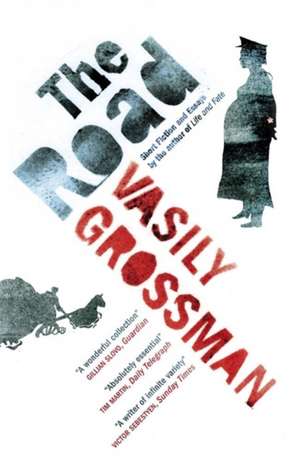
The Road: Short Fiction and Essays: Best books on Russia - Recomandări
Autor Vasily Grossman Traducere de Elizabeth Chandler, Robert Chandleren Limba Engleză Paperback – sep 2011
La prima vedere, The Road ar putea părea o simplă antologie de texte disparate, o colecție de „resturi” literare menite să completeze portretul unui autor consacrat. Însă, pe măsură ce parcurgem aceste pagini, descoperim o hartă emoțională și istorică de o densitate copleșitoare, care funcționează ca un laborator de idei pentru marile sale romane. Găsim aici nu doar jurnalismul de front care l-a făcut celebru, ci și fragmente de o intimitate dureroasă, cum sunt cele două scrisori către mama sa, pe care Vasily Grossman le-a purtat cu sine toată viața. Apreciem în mod deosebit modul în care volumul articulează trecerea de la entuziasmul ideologic de tinerețe la înțelegerea profundă a mecanismelor totalitare. Această antologie amintește de From the Frontline prin acuratețea observației jurnalistice și prin „ochiul de romancier” care surprinde detaliul uman în mijlocul masacrului, dar se diferențiază printr-o dimensiune mult mai personală și reflexivă. Dacă în Stalingrad sau Life and Fate autorul pictează o panoramă epică a societății sovietice, în The Road el coboară în straturile cele mai adânci ale conștiinței individuale. Povestirea „Mama”, de exemplu, oferă o perspectivă tulburătoare asupra memoriei și traumei, explorând destinul unei fetițe captive între afecțiunea pentru părinții adoptivi și oroarea crimelor comise de aceștia. Descoperim, de asemenea, anatomia timpurie a Holocaustului prin reportajul despre Treblinka, un text care a pus bazele reflecțiilor sale ulterioare despre libertate și rău, teme care vor domina și volumul Everything Flows. Este o lectură care nu doar completează opera lui Grossman, ci îi oferă o nouă dimensiune, transformând mărturia istorică în meditație metafizică.







Preț: 59.73 lei
Preț vechi: 79.92 lei
-25%
Carte disponibilă
Livrare economică 06-20 noiembrie
Livrare express 22-28 octombrie pentru 43.33 lei
Specificații
ISBN-10: 0857381946
Pagini: 400
Ilustrații: B and w photographs
Dimensiuni: 130 x 199 x 25 mm
Greutate: 0.28 kg
Editura: Quercus Books
Colecția MacLehose Press
Seria Best books on Russia - Recomandări
Locul publicării:London, United Kingdom
V-ar putea interesa
-
 Life and FateVasily Grossman-25%Preț: 84.52 lei112.62 lei
 -
 Everything FlowsVasily Grossman-18%Preț: 59.23 lei71.94 lei
 -
 Vasily Grossman and the Soviet CenturyAlexandra PopoffPreț: 157.92 lei
 -
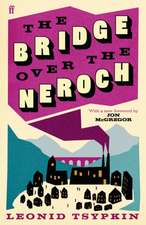 The Bridge Over The Neroch And Other WorksLeonid TsypkinPreț: 71.57 lei
 -
 Man on a Road and Other StoriesAlbert MaltzPreț: 72.73 lei
 -
 The People ImmortalVasily Grossman-27%Preț: 68.30 lei93.27 lei
 -
 An Armenian SketchbookVasily GrossmanPreț: 92.27 lei
 -
 Who Will Tell My Story?AnonymousPreț: 94.71 lei
 -
 Life and Fate (Vintage Classic Russians Series)Vasily Grossman-14%Preț: 98.98 lei114.53 lei
 -
 StalingradVasily Grossman-25%Preț: 84.89 lei112.84 lei
 -
 Cold CrematoriumJózsef Debreczeni-19%Preț: 56.79 lei70.49 lei
 -
 An Inconvenient PlaceJonathan LittellPreț: 93.06 lei
 -
 Reminiscences of Tolstoy, Chekhov and AndreevMaxim GorkyPreț: 105.54 lei
 -
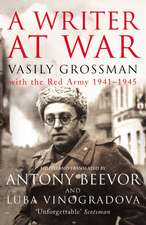 Writer At WarVasily Grossman-18%Preț: 77.87 lei94.81 lei
 -
 Nikolai GogolVladimir Nabokov-26%Preț: 58.05 lei78.60 lei
 -
 X and Other Stories: Newly Translated and AnnotatedYevgeny Zamyatin-5%Preț: 69.84 lei73.22 lei
 -
 Treblinka: A Survivor's MemoryChil Rajchman-27%Preț: 67.12 lei92.41 lei
 -
 Three Years On Fire: The Destruction of UkraineAndrey Kurkov-20%Preț: 109.34 lei135.91 leiRecomandat
De ce să citești această carte
Recomandăm această carte cititorilor care doresc să înțeleagă geneza ideilor unui gigant al literaturii secolului XX. Veți câștiga o perspectivă unică asupra modului în care experiența directă a războiului și a terorii staliniste a fost distilată în artă. Este o resursă esențială pentru cei interesați de istoria Rusiei și a Holocaustului, oferind un echilibru rar între rigoarea documentară și sensibilitatea poetică.
Despre autor
Vasily Grossman (1905-1964) a fost unul dintre cei mai importanți scriitori și corespondenți de război sovietici, a cărui operă a fost marcată de confruntarea directă cu cele mai negre capitole ale istoriei moderne. Născut într-o familie de evrei din Ucraina, el a acoperit pentru ziarul „Steaua Roșie” bătăliile cruciale de pe Frontul de Est, inclusiv cea de la Stalingrad. Deși inițial un autor acceptat de regim, onestitatea sa radicală l-a transformat într-un disident tăcut. Capodopera sa, Life and Fate, a fost confiscată de KGB și publicată abia după moartea sa. Scrierile sale rămân un testament al demnității umane în fața totalitarismului.
Descriere
By the author of Life and Fate, now a major Radio 4 drama starring Kenneth Branagh.
Vasily Grossman is widely recognized as one of the outstanding literary figures of the twentieth century. The short fiction collected here - satire, comedy, tragedy and pure narrative - illustrate the remarkable breadth of his work, and demonstrate all the bold intelligence, delicate irony and extraordinary vividness for which he has become known.
In addition to the eleven stories, this volume includes the complete text of 'The Hell of Treblinka', one of the first descriptions of a Nazi extermination camp; a powerful and harrowing piece of journalism written only weeks after the camp was dissolved.
Beautifully illuminated by Robert Chandler's introductions and endnotes, with photographs from the family archive, and an Afterword by Grossman's stepson, Fyodor Guber.
Recenzii
a richness and clarity to a fascinating period and define Grossman as one of the great literary figures of the last century' Good Book Guide.
''Grossman's trajectory is clear in his short fiction and essays: early essays explore the ardent patriotism that fired Russia; later ones such as the title story, 'The Road', an allegory of a beaten mule pulling a munitions train that offers a bitter reflection on life, hint at dangerous disillusionment ... The Road is an excellent introduction to Grossman's hauntingly powerful fiction and reportage' James Urquhart, Financial Times.
...his vivid dispatches, some newly translated for this superb collection, retain a freshness that only the finest journalism can. The 11 short stories also collected here show a writer of infinite variety, and the bulk of them will enhance his reputation ... his is a powerful voice of conscience' Sunday Times.
''This superbly edited compendium of his writing, containing short stories, journalism and letters to his dead mother, allows us to access the nature and success of his enterprise. Through its lucid notes and essays it also serves as a first-class companion to the terrible history of mid-20th-century central Europe.' Jewish Chronicle.
... it has become accepted that Vasily Grossman was one of the giants of 20th Century literature. This anthology of his stories and journalism, brilliantly translated by Robert and Elizabeth Chandler, charts his growing disillusionment with communism as well as his frontline role in the war against the Nazis' Mail on Sunday.
''The collection has humour, pathos, satire and tragedy. Grossman's superlative ability is to relay through sparse writing the fear, anxiety and compassion of those he writes of. This is an utterly absorbing, compassionate and necessary collection and once read will linger and cause true reflection, as the best writing ought.' Journal of the Law Society of Scotland.
''From satire to comedy and tragedy this is a fantastic collection translated into English for the first time. Including Stalin's purges and the Holocaust, these short stories and articles are accompanied by introductions that put Grossman's life into context' Daily Express.
''For today's reader, Grossman's work excavates from the Soviet rubble vital artefacts of the bitter, the tragic, the self-sacrificing, the indomitable and, ultimately, the inspiring' Ken Kalfus, International Herald Tribune.
''Grossman's stories are so affecting partly because they look so unflinchingly at human nature, combining a journalist's eye with a fascination for humanity enduring under near-intolerable circumstances.' Metro.
No one knew better than Grossman what people are capable of. These stories and essays are one of the cultural monuments of the 20th century' David Herman, New Statesman.
''Readers familiar with his novels will be surprised by his short fiction. They show a writer of infinite variety' Victor Sebestyen, Sunday Times.
The mystery of how to improve the human condition continued to fascinate him and is profoundly reflected in Grossman's superb writings - an enduring memorial to the man' Geoffrey Goodman, Tribune.
The only subject and the only hope is humanity' Brian Morton, Scottish Sunday Herald.
''The unstinting championing of ordinary human emotion is what strikes hardest in Grossman's style ... Grossman manages to find human simplicity in his characters at the very apex of pain and disaster' Daily Telegraph.
This collection of short fiction and essays from the remarkable and criminally under-read Soviet writer includes haunting short stories and his excoriating wartime exposé of the Treblinka death camp' Benjamin Evans, Sunday Telegraph.
Notă biografică
Robert Chandler has edited and translated numerous Russian titles, including Vasily Grossman’s Life and Fate and Everything Flows. He is the editor of Russian Short Stories from Pushkin to Buida and the author of a biography of Alexander Pushkin. He has co-translated numerous works by Andrey Platonov, including the award-winning Soul, which is published by NYRB Classics. He lives in London.
Elizabeth Chandler is a co-translator of Andrey Platonov’s Soul and Alexander Pushkin’s The Captain’s Daughter.
Olga Mukovnikova is a freelance translator, translation reviser for Amnesty International, and a member of the Chartered Institute of Linguists.