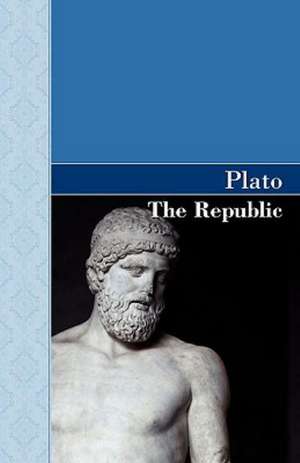
The Republic
Autor Platoen Limba Engleză Paperback – 12 noi 2009
Evoluția filozofiei politice occidentale își găsește punctul de origine în acest dialog socratic, o lucrare care a încetat de mult să fie doar un text antic, devenind fundamentul pe care s-au construit teoriile despre dreptate și guvernare. În această ediție din seria Collins Classics, remarcăm efortul de a aduce textul lui Plato mai aproape de cititorul contemporan prin traducerea lui Joe Sachs, care reușește să păstreze rigoarea filozofică fără a recurge la un limbaj excesiv de arhaic. Subliniem că Republic nu este doar un tratat politic, ci o investigație psihologică și etică asupra fericirii omului drept în raport cu cel nedrept.
Structura volumului este riguros organizată în zece cărți, fiecare fiind urmată de întrebări de studiu care facilitează integrarea în curriculumul academic sau parcurgerea individuală. Această ediție extinde cadrul propus de An Analysis of Plato's The Republic prin includerea unor anexe istorice și literare valoroase, precum fragmente din Tucidide sau Xenofon, care oferă contextul necesar înțelegerii imperialismului athenian și a statutului social al vremii. Suntem de părere că această abordare transformă lectura dintr-un exercițiu abstract într-o experiență ancorată în realitatea istorică a Războiului Peloponeziac.
În contextul operei autorului, Republic reprezintă sinteza maturității sale, rafinând dialogul dialectic început în The Apology and Related Dialogues și extinzând metafizica iubirii din Plato Symposium către o viziune sistemică asupra societății. De la alegoria peșterii până la conceptul regilor-filozofi, textul rămâne o referință critică pentru oricine dorește să înțeleagă rădăcinile idealismului și ale realismului politic.
Preț: 162.23 lei
Carte disponibilă
Livrare economică 09-23 noiembrie
Specificații
ISBN-10: 1605125393
Pagini: 484
Dimensiuni: 140 x 216 x 28 mm
Greutate: 0.68 kg
Editura: Akasha Publishing, LLC
V-ar putea interesa
-
 The PrinceNiccolo MachiavelliPreț: 28.01 lei
 -
 The Art of RhetoricAristotlePreț: 28.01 lei
 -
 Animal FarmGeorge OrwellPreț: 28.01 lei
 -
 Letters from a StoicLucius Annaeus SenecaPreț: 58.15 lei
 -
 The Affluent SocietyJohn Kenneth Galbraith-31%Preț: 64.48 lei93.10 lei
 -
 We Have Always Lived in the CastleShirley Jackson-27%Preț: 57.23 lei78.10 lei
 -
 The Hobbit Classic HardbackJ.R.R. TolkienPreț: 159.17 lei
 -
 History of the Peloponnesian WarThucydides-20%Preț: 96.26 lei119.65 lei
 -
 The CartiersFrancesca Cartier Brickell-13%Preț: 105.97 lei122.39 lei
 -
 QEDRichard P. FeynmanPreț: 106.93 lei
 -
 The Magic MountainThomas Mann-16%Preț: 80.63 lei96.20 lei
 -
 MythosStephen Fry-17%Preț: 67.22 lei80.80 lei
 -
 The Chanel SistersJudithe Little-25%Preț: 53.50 lei71.67 lei
 -
 For Your Consideration: Keanu ReevesLarissa ZagerisPreț: 77.79 lei
 -
 -19%Preț: 69.09 lei85.66 lei
 -
 Preț: 77.89 lei
 -
 -19%Preț: 70.17 lei86.28 lei
 -
 Karamazov BrothersFyodor DostoevskyPreț: 42.81 lei
 -
 General Introduction to PsychoanalysisSigmund FreudPreț: 45.09 lei
 -
 Decline and Fall of the Roman EmpireEdward GibbonPreț: 51.08 lei
 -
 FiccionesJorge Luis BorgesPreț: 113.50 lei
 -
 The Art Of SeductionRobert Greene-16%Preț: 123.58 lei147.79 lei
 -
 Euclid's ElementsEuclid AuPreț: 192.37 lei
 -
 -19%Preț: 103.51 lei128.39 lei
 -
 Leonardo da VinciWalter IsaacsonPreț: 149.00 lei
De ce să citești această carte
Această ediție din Collins Classics este ideală pentru studenți și pasionați de filozofie, oferind un aparat critic modern cu întrebări de studiu și anexe istorice. Cititorul câștigă o perspectivă clară asupra definiției dreptății și a structurii statului ideal, beneficiind de o traducere fluidă care elimină barierele limbajului academic dens, rămânând fidelă spiritului original al lui Plato.
Despre autor
Plato (cca. 427–347 î.Hr.) a fost un filozof athenian fundamental pentru cultura europeană, fondator al Academiei din Atena, prima instituție de învățământ superior din lumea vestică. Elev al lui Socrate și mentor al lui Aristotel, el a pus bazele metafizicii, eticii și filozofiei politice prin forma dialogului scris. Opera sa, descrisă adesea ca fundamentul întregii tradiții intelectuale occidentale, introduce concepte revoluționare precum Teoria Formelor și idealul guvernării luminate, influențând decisiv teologia creștină și structura gândirii politice moderne.
Descriere scurtă
Notă biografică
Descriere
An authoritative new translation of Plato's The Republic by Christopher Rowe, with notes and an introduction.
'We set about founding the best city we could, because we could be confident that if it was good we would find justice in it'
The Republic, Plato's masterwork, was first enjoyed 2,400 years ago and remains one of the most widely-read books in the world: as a foundational work of Western philosophy, and for the richness of its ideas and virtuosity of its writing. Presented as a dialogue between Plato's teacher Socrates and various interlocutors, it is an exhortation to philosophy, inviting its readers to reflect on the choices to be made if we are to live the best life available to us. This complex, dynamic work creates a picture of an ideal society governed not by the desire for money, power or fame, but by philosophy, wisdom and justice.
Christopher Rowe's accurate and enjoyable new translation remains faithful to the many variations of the Republic's tone, style and pace. This edition also contains a chronology, further reading, an outline of the work's main arguments and an introduction discussing Plato's relationship with Socrates, and the Republic's style, ideas and historical context.
Recenzii
—Charles E. Butterworth, University of Maryland
"Joe Sachs, known and respected for his excellent translations of Aristotle, deserves great praise for this new translation of Plato's Republic. Based on the latest definitive edition of the Greek text and guided by a sense that Greek in English need not read like an old, foreign tongue, Sachs' translation captures the flow of the conversation in an English that reads smoothly, even when the ideas expressed force one to pause and look again. Fluid, yet accurate, Sachs' translation allows the thoughtful reader deeper entry into this all-important book. The editorial guides and typographical signs to remind the reader of who has joined the argument most recently are all highly helpful and most welcome. I look forward to reading this with students."
—Charles E. Butterworth, University of Maryland
Joe Sachs taught for thirty years at St. John's College in Annapolis, Maryland. He has translated Aristotle's Physics, Metaphysics and On the Soul and, for the Focus Philosophical Library, Aristotle's Nicomachean Ethics and Poetics, and Plato's Theaetetus and Republic.
Cuprins
Part 2 Book I
Chapter 3 Study Questions
Part 4 Book II
Chapter 5 Study Questions
Part 6 Book III
Chapter 7 Study Questions
Part 8 Book IV
Chapter 9 Study Questions
Part 10 Book V
Chapter 11 Study Questions
Part 12 Book VI
Chapter 13 Study Questions
Part 14 Book VII
Chapter 15 Study Questions
Part 16 Book VIII
Chapter 17 Study Questions
Part 18 Book IX
Chapter 19 Study Questions
Part 20 Book X
Chapter 21 Study Questions
Part 22 Appendix 1:Cephalus and Polemarchus (Lysias, Against Eratosthenes)
Part 23 Appendix 2:Athenian Imperialism (Thucydides, "The Melian Dialogue")
Part 24 Appendix 3:The Ring of Gyges (Herodotus, Histories, Book I)
Part 25 Appendix 4:The Status of Women (Xenophon, Oeconomicus)
Part 26 Appendix 5:Athenian Constitutional History