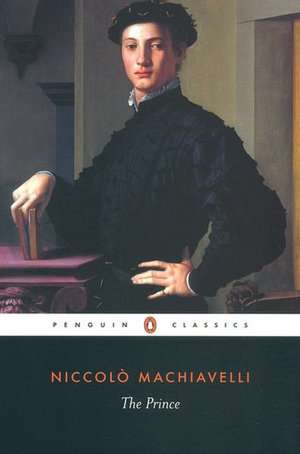
The Prince
Autor Nicolas Machiavel Traducere de George Bullen Limba Engleză Paperback – 4 feb 2003
Observăm că, în ciuda abundenței de tratate etice din perioada Renașterii, literatura academică a vremii suferea de o lacună majoră: absența unei analize pragmatice a puterii, decuplată de moralitatea creștină. The Prince a venit să umple acest gol, devenind fundamentul filosofiei politice moderne prin prioritizarea rezultatelor concrete în fața idealurilor abstracte. Suntem de părere că această ediție din seria Collins Classics reușește să păstreze forța brută a argumentației lui Niccolo Machiavelli, oferind cititorului acces direct la mecanismele conducerii de stat. Textul extinde cadrul propus de Machiavelli: Selected Political Writings cu date noi din contextul istoric al Italiei secolului al XVI-lea, punând accent pe distincția dintre conducerea prin „virtù” și cea dobândită prin noroc sau „cruzime criminală”. Remarcăm structura riguroasă a capitolelor, care deconstruiește calitățile necesare unui principe — de la gestionarea armatelor până la arta de a fi temut fără a fi urât. Această lucrare se raportează la Discourses on Livy (Discorsi) ca o piesă complementară: dacă în Discorsi autorul își exprima preferința pentru republică, în The Prince el analizează anatomia monarhiei și a statelor noi, tratând ambele forme de guvernare ca structuri de putere ce necesită prudență și calcul strategic. Stilul este unul tăios, cu o logică liniară ce refuză eufemismele, reflectând experiența diplomatică a autorului în misiuni pentru Republica Florentină. Față de alte ediții, precum The Prince (Special Student Edition), volumul de față se concentrează pe textul clasic, oferind o poartă de intrare esențială în studiul științelor politice și al constituționalismului european.
Preț: 44.69 lei
Carte disponibilă
Livrare economică 13-27 noiembrie
Specificații
ISBN-10: 0140449159
Pagini: 144
Dimensiuni: 129 x 199 x 17 mm
Greutate: 0.11 kg
Editura: Penguin Publishing Group
Locul publicării:New York, United States
V-ar putea interesa
-
 The PrinceNiccolo MachiavelliPreț: 28.01 lei
-
 The Art of WarSun TzuPreț: 28.01 lei
-
 The Art of RhetoricAristotlePreț: 28.01 lei
-
 Animal FarmGeorge OrwellPreț: 28.01 lei
-
 The TempestWilliam ShakespearePreț: 28.01 lei
-
 Letters from a StoicLucius Annaeus SenecaPreț: 58.10 lei
-
 Letters from a StoicLucius SenecaPreț: 29.76 lei
-
 RepublicPlatoPreț: 30.76 lei
-
 Fire and Blood: TV Tie-InGeorge R. R. MartinPreț: 60.59 lei
-
 The DiscoursesNicolas Machiavel-17%Preț: 78.43 lei94.91 lei
-
 The PlagueAlbert Camus-19%Preț: 58.02 lei71.63 lei
-
 RebelAlbert Camus-26%Preț: 58.75 lei79.02 lei
-
 Machiavelli: A Very Short IntroductionQuentin Skinner-20%Preț: 56.49 lei70.53 lei
-
 BreathJames Nestor-18%Preț: 65.26 lei79.63 lei
-
 The Hobbit Classic HardbackJ.R.R. TolkienPreț: 159.17 lei
-
 -26%Preț: 59.11 lei79.53 lei
-
 MeditationsMarcus AureliusPreț: 34.00 lei
-
 The Will to PowerFriedrich NietzschePreț: 71.58 lei
-
 Marx and the Robots: Networked Production, AI, and Human LabourFlorian ButolloPreț: 201.61 lei
-
 The Essential Writings of MachiavelliNicolas Machiavel-10%Preț: 100.91 lei112.44 lei
-
 The Prince: The Original ClassicNiccolo MachiavelliPreț: 73.44 lei
-
 Machiavelli: Selected Political WritingsNiccolo Machiavelli-17%Preț: 129.03 lei155.31 lei
-
 -25%Preț: 70.90 lei94.39 lei
-
 The Prince (Signature Editions): and The Art of WarNiccolo Machiavelli-30%Preț: 92.91 lei132.56 lei
-
 -36%Preț: 52.44 lei81.74 lei
-
 -19%Preț: 69.51 lei85.66 lei
-
 The ThroneFranco BerniniPreț: 71.93 lei
-
 The Prince (Hero Classics)Niccolo Machiavelli-12%Preț: 55.79 lei63.44 lei
-
 Preț: 41.78 lei
-
 The PrinceNiccolò MachiavelliPreț: 33.48 lei
De ce să citești această carte
Recomandăm această carte oricărui student la științe politice sau lider în devenire care dorește să înțeleagă rădăcinile realismului politic. Prin The Prince, cititorul câștigă o perspectivă lucidă asupra modului în care se exercită influența și autoritatea, învățând să distingă între imaginea publică și necesitatea strategică. Este o lectură fundamentală pentru a înțelege cum s-a format gândirea politică occidentală modernă, dincolo de mitul „machiavelismului” vulgar.
Despre autor
Niccolo Machiavelli (1469-1527) a fost un diplomat, filosof și istoric florentin, considerat astăzi părintele științei politice moderne. Cariera sa în serviciul public al Florenței i-a permis să observe direct manevrele politice ale unor figuri precum Cesare Borgia sau Ludovic al XII-lea, experiențe care au cristalizat viziunea sa asupra pragmatismului de stat. După revenirea familiei Medici la putere, Machiavelli s-a retras la ferma sa, unde a redactat cele mai importante lucrări ale sale, inclusiv The Prince și Discorsi, redefinind pentru totdeauna modul în care societatea raportează etica la exercițiul puterii.
Descriere scurtă
Cuprins
Notă biografică
George Bull is an author and journalist who has translated six volumes for the Penguin Classics: Benvenuto Cellini’s Autobiography, The Book of the Courtier by Castiglione, Vasari’s Lives of the Artists (two volumes), The Prince by Machiavelli and Pietro Aretino’s Selected Letters. He is also Consultant Editor to the Penguin Business Series. After reading history at Brasenose College, Oxford, George Bull worked for the Financial Times, McGraw-Hill World News, and for the Director magazine, of which he was Editor-in-Chief until 1984. His other books include Vatican Politics; Bid for Power (with Anthony Vice), a history of take-over bids; Renaissance Italy, a book for children; Venice: The Most Triumphant City; and Inside the Vatican.
Anthony Grafton teaches European intellectual history at Princeton University.
George Bull is an author and journalist who has translated six volumes for the Penguin Classics: Benvenuto Cellini’s Autobiography, The Book of the Courtier by Castiglione, Vasari’s Lives of the Artists (two volumes), The Prince by Machiavelli and Pietro Aretino’s Selected Letters. He is also Consultant Editor to the Penguin Business Series. After reading history at Brasenose College, Oxford, George Bull worked for the Financial Times, McGraw-Hill World News, and for the Director magazine, of which he was Editor-in-Chief until 1984. His other books include Vatican Politics; Bid for Power (with Anthony Vice), a history of take-over bids; Renaissance Italy, a book for children; Venice: The Most Triumphant City; and Inside the Vatican.
Extras
...Upon this a question arises: whether it be better to be loved than feared or feared than loved? It may be answered that one should wish to be both, but, because it is difficult to unite them in one person, it is much safer to be feared than loved, when, of the two, either must be dispensed with. Because this is to be asserted in general of men, that they are ungrateful, fickle, false, cowardly, covetous, and as long as you succeed, they are yours entirely; they will offer you their blood, property, life, and children, as is said above, when the need is far distant; but when it approaches they turn against you. And that prince, who, relying entirely on their promises, has neglected other precautions, is ruined; because friendships that are obtained by payments, and not by greatness or by nobility of mind, may indeed be earned, but they are not secured, and in time of need cannot be relied upon; and men have less scruple in offending one who is beloved than one who is feared, for love is preserved by the link of obligation which, owing to the baseness of men, is broken at every opportunity for their advantage; but fear preserves you by a dread of punishment which never fails....
Twenty-First Chapter: How a Prince Should Conduct Himself So as to Gain Renown
...A prince is also respected when he is either a true friend or a downright enemy, that is to say, when, without any reservation, he declares himself in favour of one party against the other; which course will always be more advantageous than standing neutral; because if two of your powerful neighbours come to blows, they are of such a character that, if one of them conquers, you have either to fear him or not. In either case it will always be more advantageous for you to declare yourself and to make war strenously; because, in the first case, if you do not declare yourself, you will invariably fall a prey to the conqueror, to the pleasure and satisfaction of his who has been conquered, and you will have no reasons to offer, nor anything to protect or to shelter you. Because he who conquers does not want doubtful friends who will not aid him in the time of trial; and he who loses will not harbour you because you did not willingly, sword in hand, court his fate....